A lot of buyers start the same way with West Maple Ridge homes. They spot a quiet street, a wider lot, mature trees, and a house that looks like it has “good bones.” Then they budget for it as if they're buying into a newer suburban pocket. That's where problems start.
West Maple Ridge draws people in because it feels established, central, and liveable right away. You're close to schools, parks, shopping, and commuter routes. But if you treat this area like a newer-build market, you can underestimate repair work, overestimate cosmetic updates, and miss the upside that older properties often carry.
That's why this neighbourhood needs a more practical lens. The usual community guide won't help much if you're trying to decide whether an older basement is usable, whether a lot has future flexibility, or whether a seller should spend money on paint, flooring, or electrical work before listing.
Thinking About West Maple Ridge
A common scenario goes like this. A family moves out from Burnaby or Coquitlam, wants more space, and starts circling West Maple Ridge because the streets feel settled and the lots often look more generous than what they've been seeing elsewhere. They assume it's a straightforward move into a newer suburban area with a bit more breathing room.
It isn't.
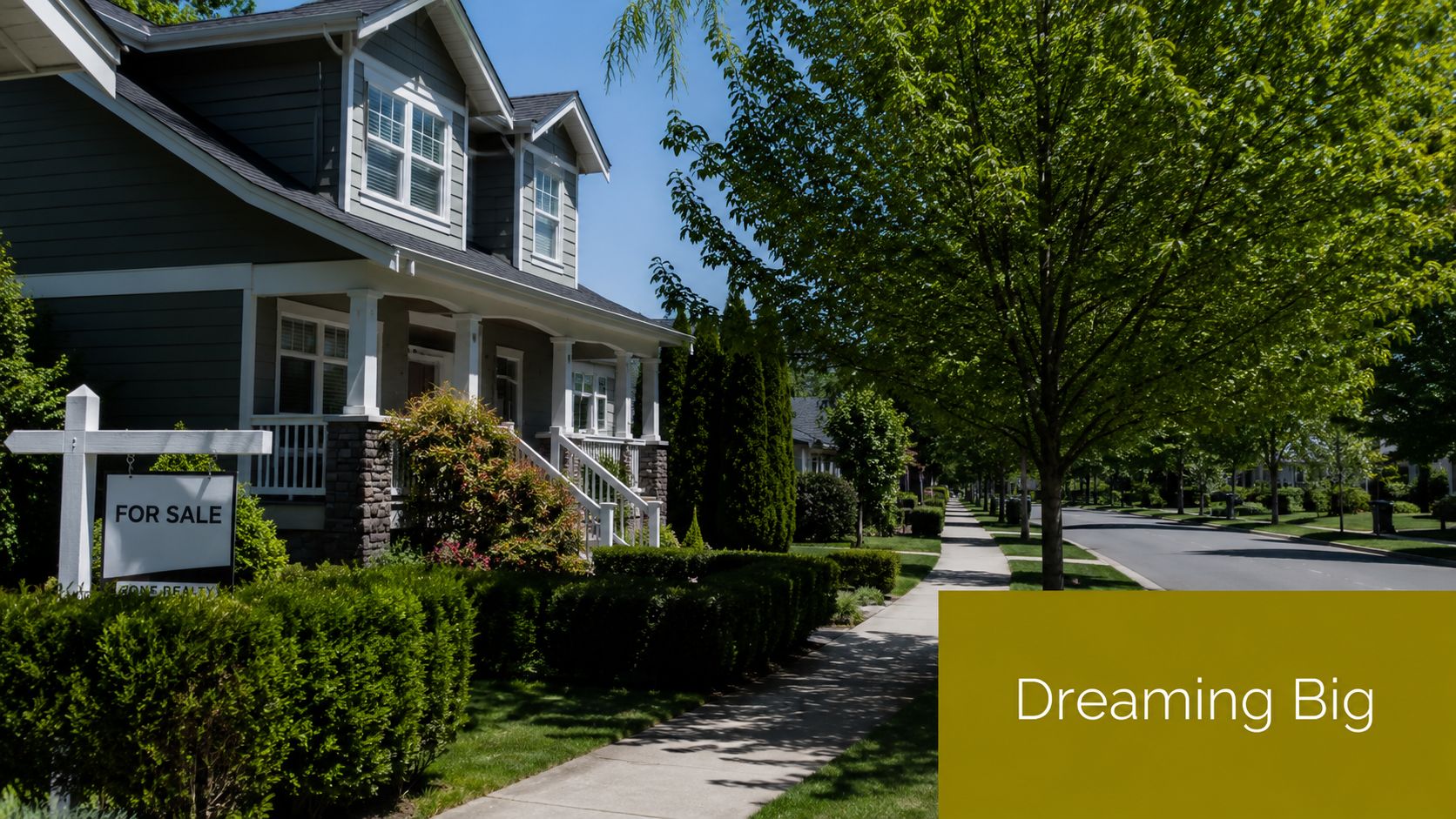
West Maple Ridge is one of Maple Ridge's most established neighbourhoods, not a fresh development. That matters more than most buyers realise. According to this West Maple Ridge overview, 68% of homes in Northwest Maple Ridge sold in 2025 were pre-2000 constructions, which helps explain why buyers often walk in focused on layout and location but walk out talking about roofs, drainage, windows, wiring, and renovation budgets instead.
That older-housing reality isn't a negative. It just changes the decision-making. In this part of Maple Ridge, age often means larger lots, more mature landscaping, and homes with renovation potential that newer areas can't match. It can also mean original finishes, prior owner updates done in stages, and systems that need a sharper eye.
What buyers usually get wrong
The biggest mistake is assuming an older home with a tidy showing condition is a low-maintenance home. Clean doesn't always mean updated. A bright kitchen and fresh paint can hide expensive issues that don't show up until inspection day or after possession.
Another mistake is judging these homes only against newer product in Albion, Silver Valley, or parts of Cottonwood. That comparison doesn't always work because the value proposition is different. West Maple Ridge often trades on location, lot appeal, and long-term flexibility more than polished, builder-grade uniformity.
Practical rule: If you're shopping West Maple Ridge homes, budget for ownership, not just purchase. The house that feels like the better deal upfront can become the more expensive option if older components are near the end of their life.
If you're still getting oriented to the broader community first, our guide to moving to Maple Ridge gives useful context before narrowing down neighbourhood choices.
The Architectural Character of West Maple Ridge Homes
The housing stock here has a pattern, and once you know how to read it, listings make more sense.
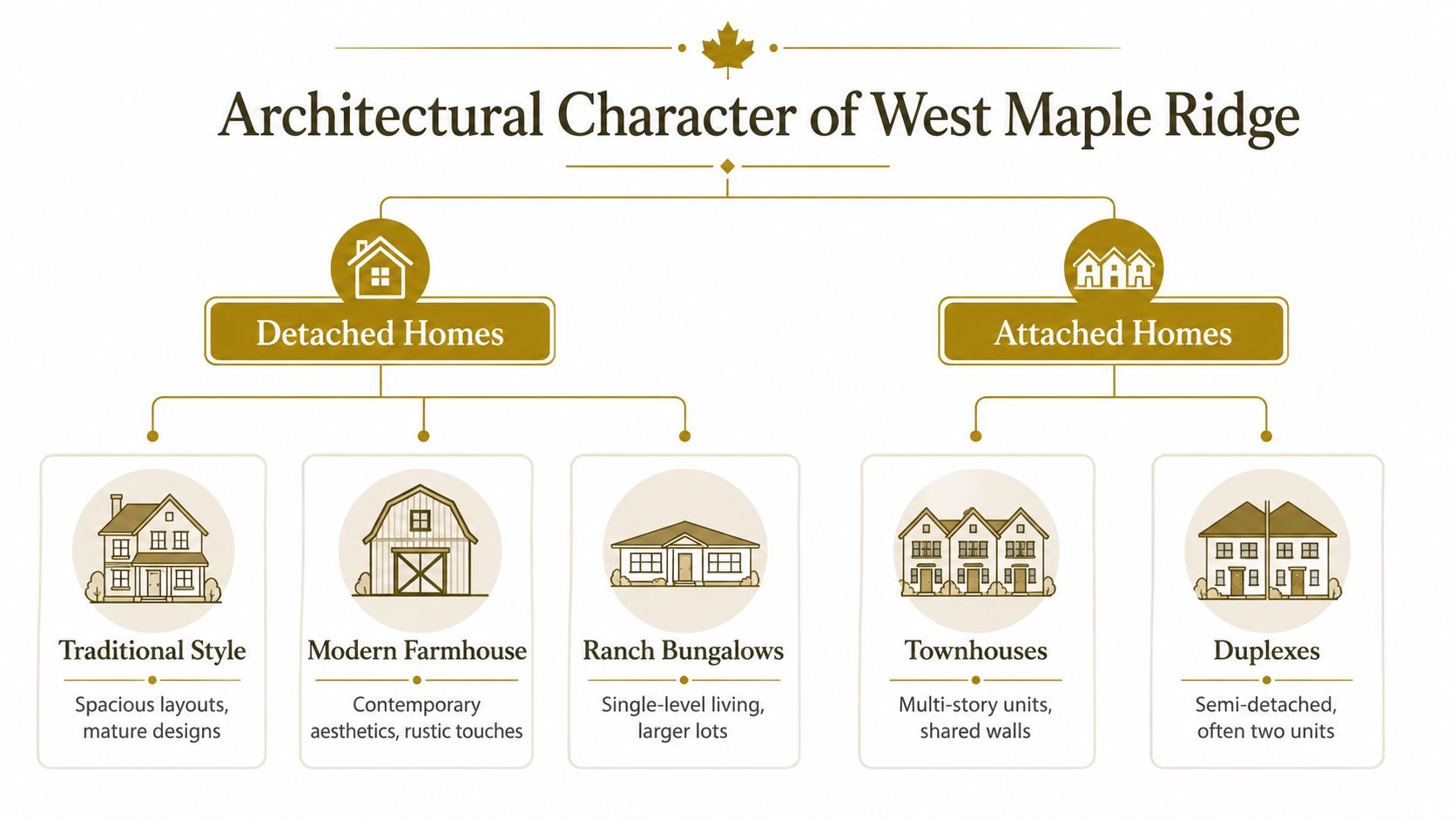
Based on West Maple Ridge property data, approximately 33% of homes were constructed during the 1960s and 1970s, while most of the remaining homes were built pre-1960 or in the 1980s. The same neighbourhood snapshot shows that about 60% of all buildings are single detached homes. That combination gives the area a very different feel from newer pockets where attached product and recent construction dominate.
What the construction eras mean in real life
Homes from the 1960s and 1970s often come with practical trade-offs that buyers should understand before getting attached to the staging. You may see more separated living spaces, lower basement finish quality by today's standards, older window packages, or previous renovations that were done one room at a time over many years.
Pre-1960 homes can be even more case-by-case. Some have been thoroughly updated and are excellent properties. Others have charm that comes with real work attached. The appeal is often the lot, the setting, and the location inside a mature neighbourhood rather than turnkey condition.
Then there are 1980s homes, which can sit in a middle ground. They may offer a bit more of the layout buyers expect today, but they can still carry age-related maintenance and design elements that affect resale appeal.
Detached homes shape the neighbourhood
Because detached housing makes up the majority of the stock, West Maple Ridge feels less compressed than many newer suburban areas. That changes how people use their properties. Backyards are more likely to be meaningful outdoor spaces rather than small decorative strips. Driveways, side yards, and older lot configurations can also create options that buyers value for storage, hobbies, or multi-generational living arrangements.
Here's the practical lens we use when reviewing these homes:
- Layout first: Older floor plans can be awkward, but awkward is often fixable. Location isn't.
- Lot before finishes: A renovated house on a constrained lot may have less long-term upside than a dated house on a better parcel.
- Basement utility matters: Not every basement in an older home functions the same way. Ceiling height, access, moisture history, and prior upgrades all matter.
- Updates need context: A “renovated” kitchen doesn't tell you whether plumbing, electrical, insulation, or drainage were addressed.
Older homes reward disciplined buyers. The people who do best here don't chase shine. They look at structure, site, and upgrade history.
For buyers comparing detached houses, duplexes, and townhomes across Maple Ridge, our Maple Ridge home types guide helps frame what each category really offers.
What sellers need to understand about character
Character only adds value when buyers can trust the house behind it. Original hardwood, a rancher layout, or a classic bungalow profile can absolutely help a listing stand out. But if the presentation leans too heavily on nostalgia and avoids the practical details, buyers get cautious fast.
That's especially true in West Maple Ridge. Buyers already know they may be taking on an older house. What they want is clarity on what has been improved, what remains original, and what ownership will likely look like in the near term.
West Maple Ridge Market Trends and Prices 2026
West Maple Ridge isn't a market where headline pricing tells the whole story. Condition, lot appeal, renovation level, and house type can create a wide spread between properties that look similar on paper. Still, buyers and sellers need a starting point grounded in current numbers.
As of June 2026, the HonestDoor market update for West Maple Ridge puts the HonestDoor Price for houses at $1,153,682, which is $22,759 above the average assessed value. That same update notes there are 161 homes for sale in the broader West Central Maple Ridge area.
What that pricing signal actually tells us
When an area's market value sits above assessed value, it doesn't automatically mean every listing is underpriced or every seller has an advantage. In a neighbourhood like this, it often means buyers are still willing to pay for the combination of central location, established streets, and detached-home inventory, even when they know many properties will require selective updating.
Inventory also needs interpretation. The 161 homes for sale figure reflects the broader West Central area, not just one street or one product type. That means buyers still need to sort through a mixed pool of homes where some are turnkey, some are value-add opportunities, and some are priced as if cosmetic work solved everything.
If you want a broader framework for reading neighbourhood pricing beyond raw listing counts, this piece on market analysis without MLS is useful because it mirrors how many buyers informally compare value before they ever book a showing.
West Maple Ridge estimated home prices 2026
Because verified price data here is limited to the area-wide house value above, the table below is intentionally conservative. It separates what can be stated precisely from what should be treated as property-specific.
| Property Type | Typical Price Range | Key Features |
|---|---|---|
| Houses | $1,153,682 as of June 2026 based on the HonestDoor Price for West Maple Ridge houses | Detached ownership, older housing stock, renovation spread from original condition to updated homes |
| Duplexes | Varies by condition, location, and updates | Shared-wall format, often considered by buyers who want lower maintenance than detached homes |
| Townhomes | Varies by complex, age, and strata setting | More compact ownership, often attractive to downsizers and first-time buyers |
| Older character properties | Varies widely | Appeal often tied to lot size, established streetscape, and renovation potential |
Market read: In West Maple Ridge, pricing is easier to understand than value. Two homes can sit close together and have completely different ownership costs over the first few years.
For a more neighbourhood-specific look at Maple Ridge pricing patterns and how local buyers read listings, our Maple Ridge real estate market page is a useful next step.
The Lifestyle Living in West Maple Ridge
West Maple Ridge works because day-to-day life is simple. That sounds basic, but it's a major reason buyers keep coming back to the area. People can live in an older detached home and still stay close to the practical things that make weekdays manageable.
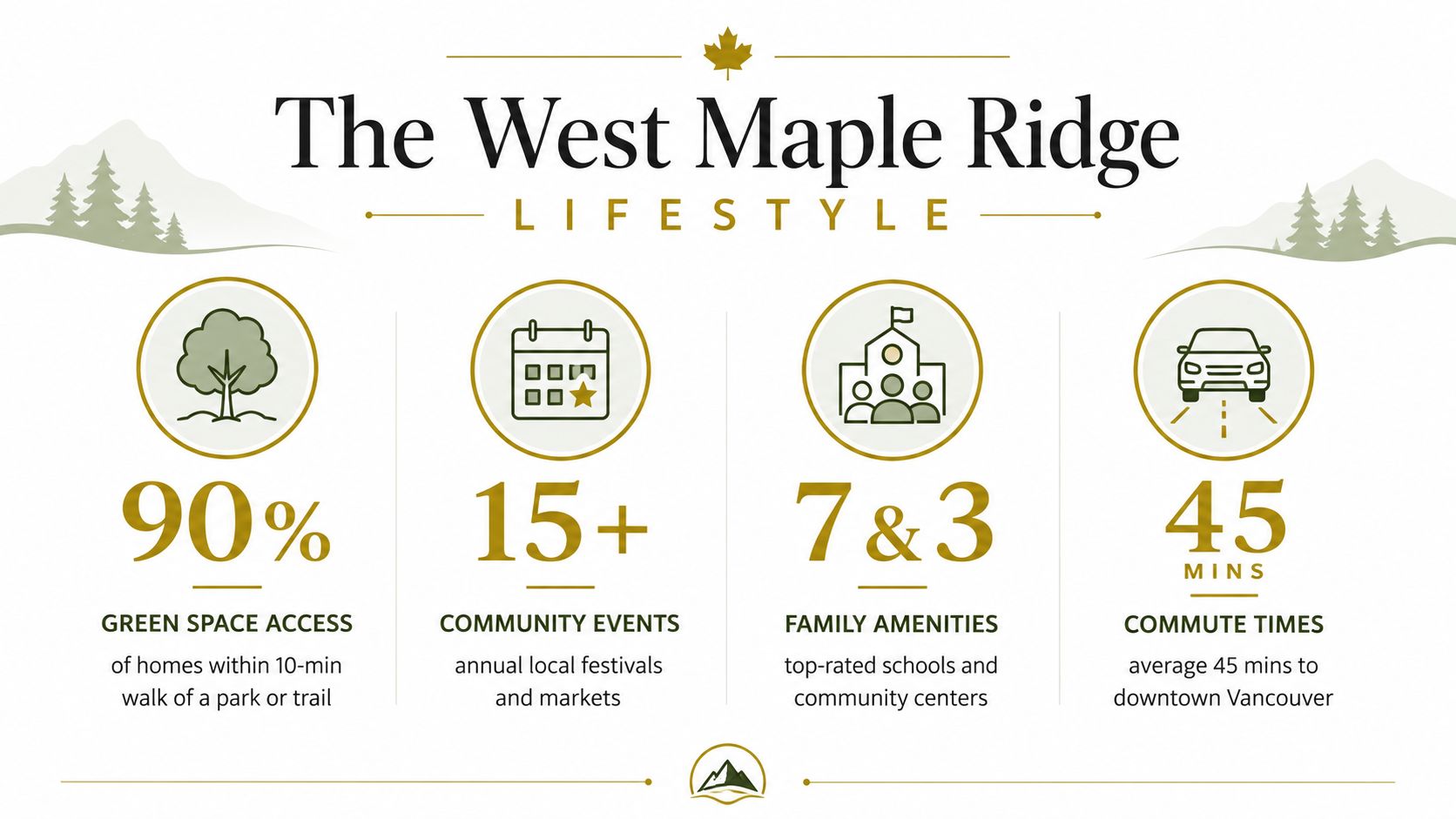
The strongest concrete signal is walkability. The neighbourhood has a Walk Score of 94, which places it in the “Walker's Paradise” tier according to the West Maple Ridge community page. In practical terms, that reflects how close residents are to central amenities and public transit within Maple Ridge's urban area.
Why walkability matters more here
In a newer area, buyers often accept that they'll drive for almost everything because the home itself feels more modern. West Maple Ridge is different. Part of the payoff for owning an older home here is that you're not isolated. You get mature neighbourhood character without giving up convenience.
That matters for families getting kids to school, downsizers who don't want to be car-dependent for every errand, and commuters trying to simplify their routine. Access to the Maple Ridge town centre, local services, and transit helps offset some of the maintenance realities that can come with older housing.
You see that in the local rhythm of the area. People use neighbourhood parks, walk to nearby services, and value quick access to key routes including the Golden Ears Bridge corridor. Schools such as Laityview Elementary and Westview Secondary are part of the conversation for many buyers, and green spaces like Laityview Park add to the lived feel of the neighbourhood.
A quick local look helps make that easier to picture:
Daily life versus brochure life
Some neighbourhoods read well online and feel inconvenient once you live there. West Maple Ridge usually works the other way around. It may not always have the polished image of a newer subdivision, but daily life tends to feel easier than buyers expect.
- For families: Established streets and access to schools matter more than trend-forward architecture.
- For commuters: Being well positioned inside Maple Ridge can save time and reduce friction even if the home itself needs updating.
- For downsizers: Walkability and central access can be more valuable than shaving a few years off the age of the building.
The people happiest in West Maple Ridge usually aren't chasing “new.” They're buying convenience, neighbourhood depth, and a property they can improve over time.
If regional transit planning affects how you're weighing Maple Ridge against other parts of the Lower Mainland, our article on the SkyTrain Evergreen Extension discussion adds useful commuting context.
Smart Strategies for Buyers and Sellers
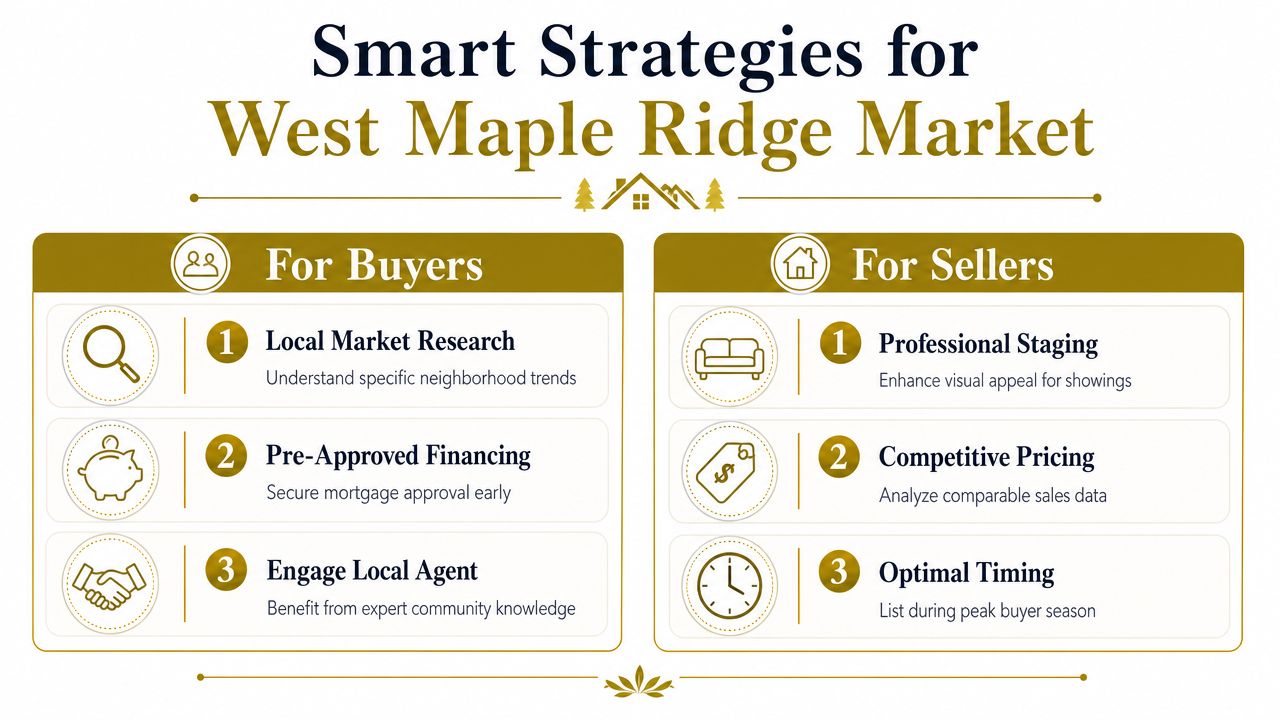
West Maple Ridge rewards clear thinking and punishes assumptions. That applies on both sides of the transaction. Buyers need to investigate beyond surface updates, and sellers need to present older homes with precision instead of generic “charming family home” language.
The local edge comes from understanding future potential as well as present condition. West Maple Ridge sits within the Residential 7500 (R-7500) sub-zone, where full buildout supports up to 98 residential units, according to the project narrative referencing the R-7500 sub-zone. Zoning always needs property-specific review, but the bigger point is simple. Land use and density rules shape long-term value, especially in established neighbourhoods where lot characteristics can matter as much as the house itself.
For buyers
Older homes need a different checklist than newer product.
- Inspect systems, not staging: A stylish kitchen doesn't answer questions about wiring, plumbing, foundation condition, drainage, roof age, or prior permit history.
- Separate urgent work from elective work: Cosmetic changes can wait. Water entry, failing components, or unsafe systems usually can't.
- Read the lot properly: In West Maple Ridge, some of the long-term value sits outside the walls of the house.
- Ask why the renovation was done: Was it a thoughtful update over time, or a quick resale prep focused only on appearance?
A disciplined buyer also keeps renovation sequencing in mind. It's common to underestimate how disruptive it is to redo flooring, electrical, windows, and bathrooms after move-in. If the house needs meaningful work, plan the order before you remove subjects.
Buyer check: If you can't explain the property's likely first two years of maintenance and upgrades, you don't understand the deal yet.
For sellers
Selling an older home in West Maple Ridge is not about pretending it's newer than it is. That usually backfires. Buyers are more receptive when a listing acknowledges the age of the home and supports its value with honest presentation and useful documentation.
Strong sellers do a few things well:
- They fix obvious defects that create distrust during showings.
- They organise records for updates and servicing.
- They price according to the actual competition, not according to emotional attachment or a nearby fully renovated home.
The best pre-listing work is usually practical. Clean up deferred maintenance. Improve lighting. Refresh paint if needed. Clarify the story of the home. If there are quality upgrades, make them easy for buyers to understand.
For owners trying to sort out which prep steps help and which ones just burn time, this guide on How to Sell Your House Faster is worth reading alongside local advice because it reinforces the basics that still matter in character-home marketing.
What works and what doesn't
Here's the blunt version.
| Works | Usually doesn't work |
|---|---|
| Clear pricing tied to condition and lot appeal | Pricing off the best renovated comp in the area |
| Honest disclosure about updates and age | Hoping buyers won't notice original systems |
| Pre-listing repairs that reduce inspection friction | Over-improving niche spaces with little buyer appeal |
| Highlighting location, walkability, and usability | Generic marketing language with no substance |
Sellers who want a sharper plan before going live should also review our local checklist on how to prepare your home for sale. In this area, preparation isn't cosmetic theatre. It's risk reduction.
Navigating Your West Maple Ridge Move with an Expert
West Maple Ridge is one of those neighbourhoods that looks simple from the outside and gets more nuanced the closer you get. Buyers see established streets, detached homes, and a central location. Sellers see a family property with history and features that newer homes often lack. Both are right, but neither view is enough on its own.
What matters here is interpretation. An older home can be a smart purchase, a costly mistake, or a strong long-term hold depending on condition, lot utility, and how the property fits your plans. The same goes for selling. A well-maintained home can underperform if it's priced against the wrong competition or marketed without enough practical detail.
That's why local knowledge matters more in West Maple Ridge than it does in cookie-cutter areas. You need someone who understands how buyers react to original basements, partial renovations, mature lots, commuter access, and the trade-offs between central convenience and older-house upkeep. Generic advice won't get you very far here.
We've always found the best outcomes come from early clarity. Buyers do better when they understand what they're willing to renovate, what they need immediately livable, and what kind of lot or layout supports their next stage. Sellers do better when they stop trying to appeal to everyone and position the property clearly for the right buyer pool.
West Maple Ridge homes can be excellent opportunities. They just need to be judged on what they really are, not what a listing headline suggests. If you're weighing a purchase, preparing to sell, or trying to decide whether this neighbourhood fits your goals better than Albion, Cottonwood, or another part of Maple Ridge, a local conversation can save a lot of second-guessing.
If you're buying, selling, or managing property in Maple Ridge, Royal LePage Brookside Realty Property Management offers practical local guidance grounded in market conditions. Reach out when you're ready to talk through your next move in West Maple Ridge or anywhere else in Maple Ridge and Pitt Meadows.