
If you live in Maple Ridge or Pitt Meadows, you've probably done the same calculation more times than you'd like. Do I drive the whole way? Do I aim for the West Coast Express? Do I cut across to Coquitlam and jump on SkyTrain? Do I pay more to live closer to a better connection, or keep the bigger yard and accept the commute trade-off?
That's why the SkyTrain Evergreen Extension matters here, even though the tracks don't run through Maple Ridge.
In real estate, buyers rarely make decisions based on municipal borders. They buy based on how a home fits daily life. School drop-offs in Albion, bridge access from West Maple Ridge, weekend trips to Rocky Point, and whether downtown or Burnaby jobs still feel realistic from a family home east of the river all shape value. The Evergreen Extension changed that equation across the eastern side of Metro Vancouver, and Maple Ridge felt the impact indirectly but meaningfully.
More Than Just a Coquitlam Train Line
A lot of local buyers start with the same reaction. The Evergreen line is in Coquitlam and Burnaby. Why should a homeowner in Hammond, Cottonwood, or Silver Valley care?
Because regional transit changes local real estate long before a station arrives in your own backyard.
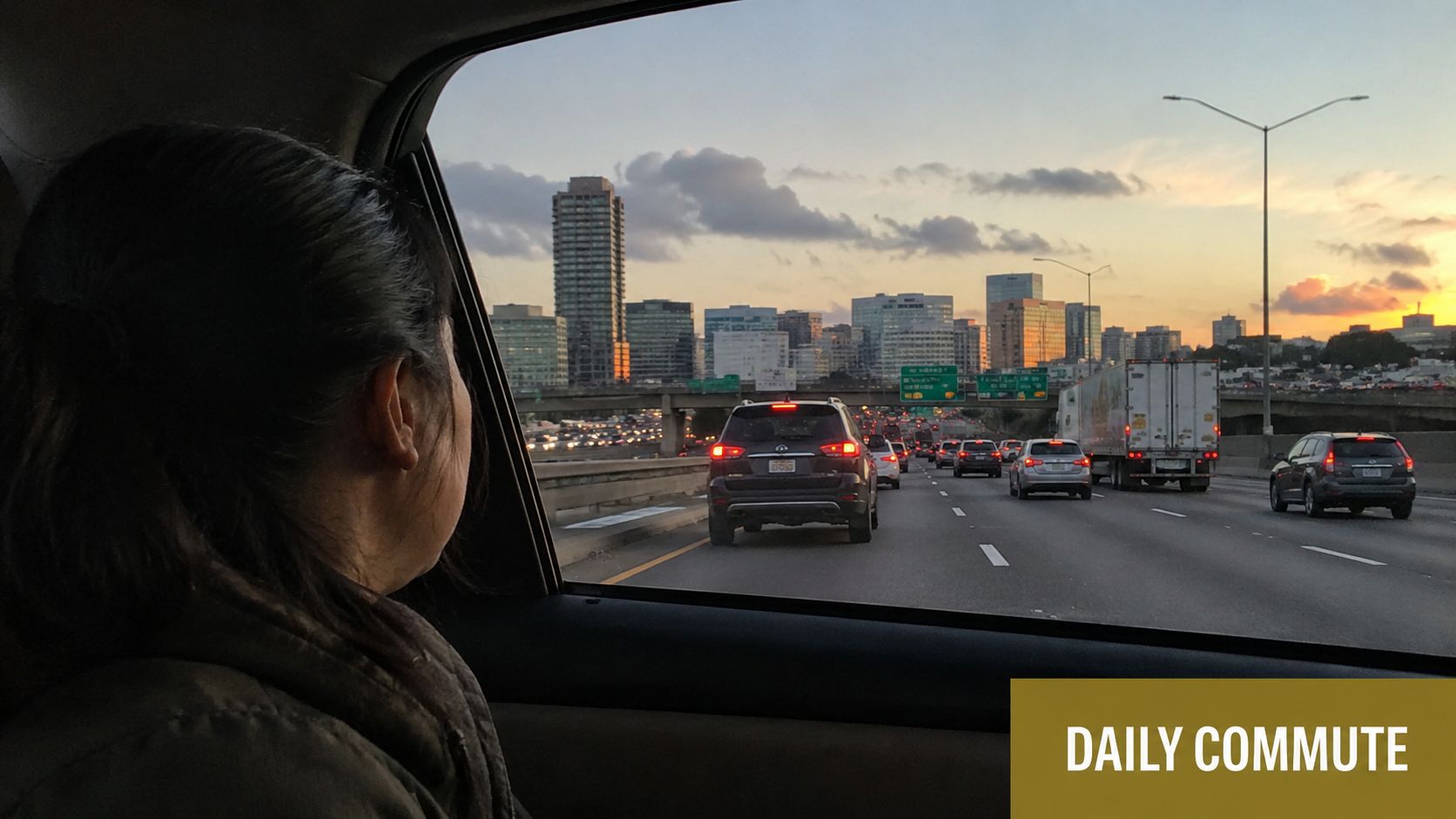
For many Maple Ridge households, the decision isn't “train or no train.” It's which connection gives the best balance of time, flexibility, and housing value. One buyer wants a detached home near Kanaka Creek and accepts that some commuting will involve a car. Another wants a townhome in Pitt Meadows because the route west feels simpler. A third is comparing Maple Ridge with other suburbs of Vancouver BC and is trying to work out where transit access is good enough without paying a full walk-to-SkyTrain premium.
What changed for local households
The SkyTrain Evergreen Extension gave the eastern side of the region a stronger rapid transit spine. That matters to Maple Ridge residents because it expanded practical commuting options beyond a single direct route.
Instead of relying only on a full car commute or a limited rail schedule through the West Coast Express, more households began thinking in combinations:
- Drive then ride: Use a short drive to access rapid transit rather than driving all the way into denser job centres.
- Bus connection plus SkyTrain: For some residents, a feeder trip into the Tri-Cities makes the overall journey more predictable.
- Lifestyle flexibility: Even people who don't commute daily still care about access to Burnaby, Coquitlam, and Vancouver for school, healthcare, events, and family visits.
The most important transit change for Maple Ridge wasn't a track being laid locally. It was the region becoming more connected in a way buyers could actually use.
That's the lens I use when talking to clients. The Evergreen Extension isn't just a transportation story. It's a buyer psychology story, a pricing story, and in some neighbourhoods, a marketing story too.
The Evergreen Extension A Quick Refresher
Before you can judge what the line means for Maple Ridge, you need the basics clear.
The Evergreen Extension opened to the public on December 2, 2016, adding 11 kilometres of rapid transit between Lougheed Town Centre in Burnaby and Lafarge Lake–Douglas in Coquitlam. It added six new SkyTrain stations, and the trip from Lafarge Lake–Douglas to Lougheed Town Centre takes about 15 minutes, according to the BC government announcement on the opening of the Evergreen Extension.
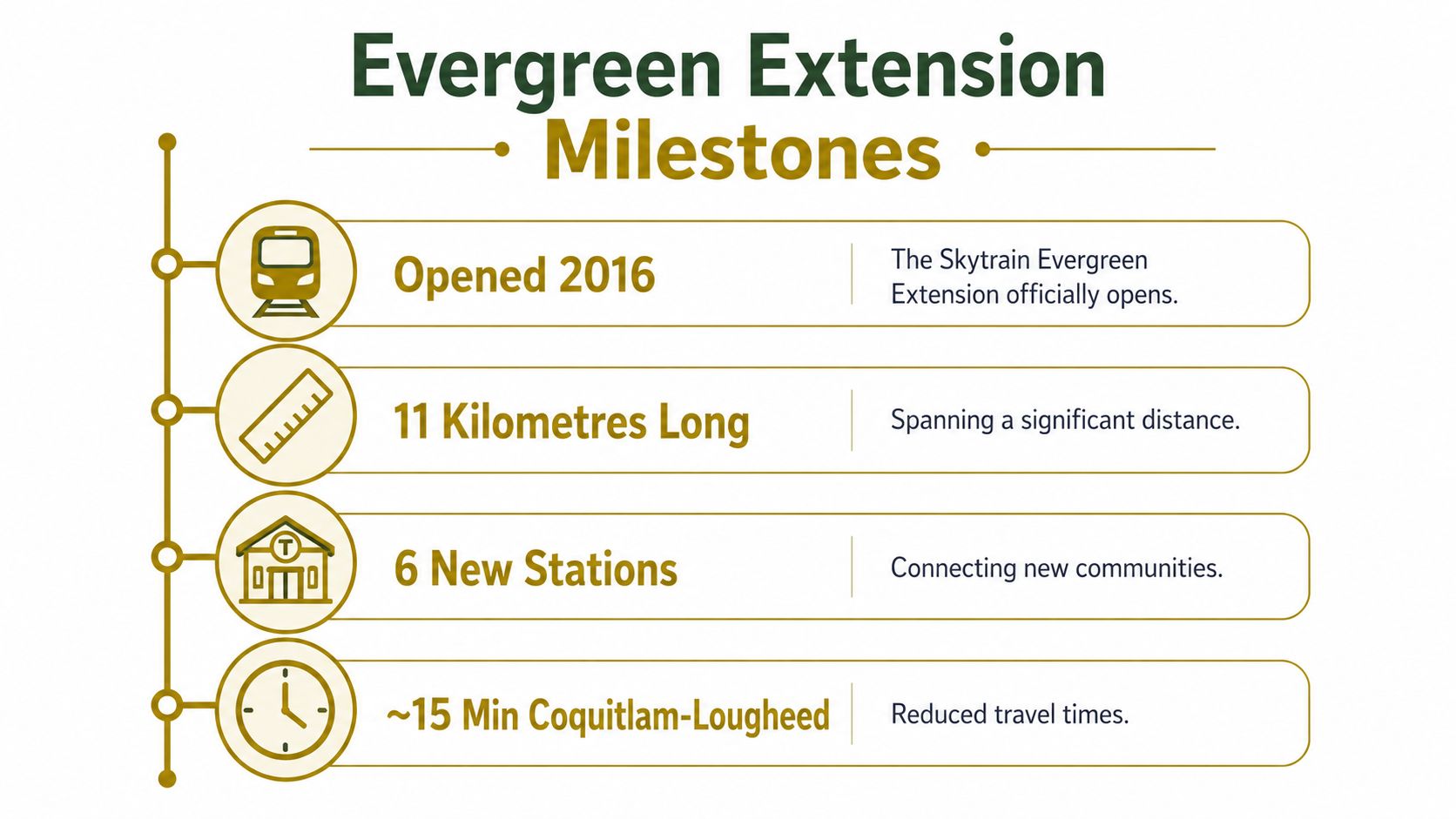
That single set of facts explains why the project changed the region so quickly. It wasn't a minor service tweak. It created a direct rapid transit connection through a part of Metro Vancouver that had long depended more heavily on feeder buses and driving.
Why the route matters
For buyers and sellers, route design matters more than the project name.
A line that ties Burnaby and Coquitlam together does a few practical things:
- It gives Tri-Cities residents a faster way into the broader SkyTrain network.
- It makes station areas more attractive for people who want to live outside Vancouver but still keep regional mobility.
- It changes how nearby communities, including Maple Ridge and Pitt Meadows, position themselves in the housing market.
That's one reason Burquitlam and surrounding station-area communities have drawn so much redevelopment attention. If you follow projects such as Burquitlam redevelopment proposals and transit-oriented growth, you can see how quickly rapid transit reshapes land use decisions.
What the Evergreen Extension is really good at
The SkyTrain Evergreen Extension works best as a high-frequency connector.
It's strong for people who need repeatable access across the region, not just an occasional trip. In practice, that means the line became useful not only to someone living beside a station, but also to people who can reach it without too much friction.
Practical rule: Rapid transit changes housing demand most where it removes uncertainty, not just distance.
That point matters later when you're comparing Maple Ridge with Coquitlam, Port Moody, and Burnaby. Direct station access commands one kind of value. Reliable connection to that station creates another.
How the Extension Reshaped the Tri-Cities
The quickest way to understand the Evergreen Extension's importance is to look at how people used it almost immediately.
In its first full month of operation, the line was already carrying about 30,000 trips on an average weekday, according to reporting on early Evergreen Extension ridership. The same coverage noted earlier projections of roughly 50,000 riders per day in the first year and as many as 70,000 passengers per day by 2021.
Those numbers matter less as a scoreboard and more as proof of behaviour. People didn't treat the line as a novelty. They folded it into daily life fast.
What transit lift looks like on the ground
When a community gets a rapid transit spine, the biggest shift isn't only transportation. It's decision-making.
Households start asking different questions:
- Can we live farther out and still keep access to work?
- Do we need two cars?
- Is a condo near a station worth choosing over a larger home elsewhere?
- Can we meet in Port Moody, shop in Coquitlam, and work in Burnaby without treating every trip like a highway project?
That's the “transit lift” I see in practice. The line reduces friction. It makes some trips easier, but it also makes some locations feel more connected, more flexible, and more defensible as long-term housing choices.
Why Maple Ridge owners should pay attention
Tri-Cities growth doesn't stay neatly inside Tri-Cities.
When a buyer gets priced out of a walkable station area, they don't disappear. They widen the search. Some move east. Some decide they'd rather have more space in Maple Ridge or Pitt Meadows and accept that they'll connect into the network rather than live on top of it. Others choose a home in Maple Ridge because they like local parks, schools, and a more family-oriented pace, while still wanting an occasional or partial transit path into the urban core.
A useful comparison comes from watching demand around products such as Coquitlam townhouses for sale. Buyers who compare those homes with Maple Ridge options are often really comparing transit convenience against space, price pressure, and neighbourhood feel.
A major rail line doesn't just serve the stations on its map. It also reshuffles demand in the communities just beyond them.
That's the key takeaway from the Tri-Cities story. The Evergreen Extension didn't isolate value around stations only. It changed the wider east-of-Vancouver housing conversation.
The Maple Ridge Connection What It Means for Your Commute
For Maple Ridge residents, the Evergreen Extension usually isn't a front-door transit story. It's a connection strategy.
That's why I describe Maple Ridge as transit-adjacent, not transit-disconnected. You may not walk out of a house in Albion and step onto SkyTrain, but you can still structure your commute around a stronger regional rail trunk than this side of the region had before.
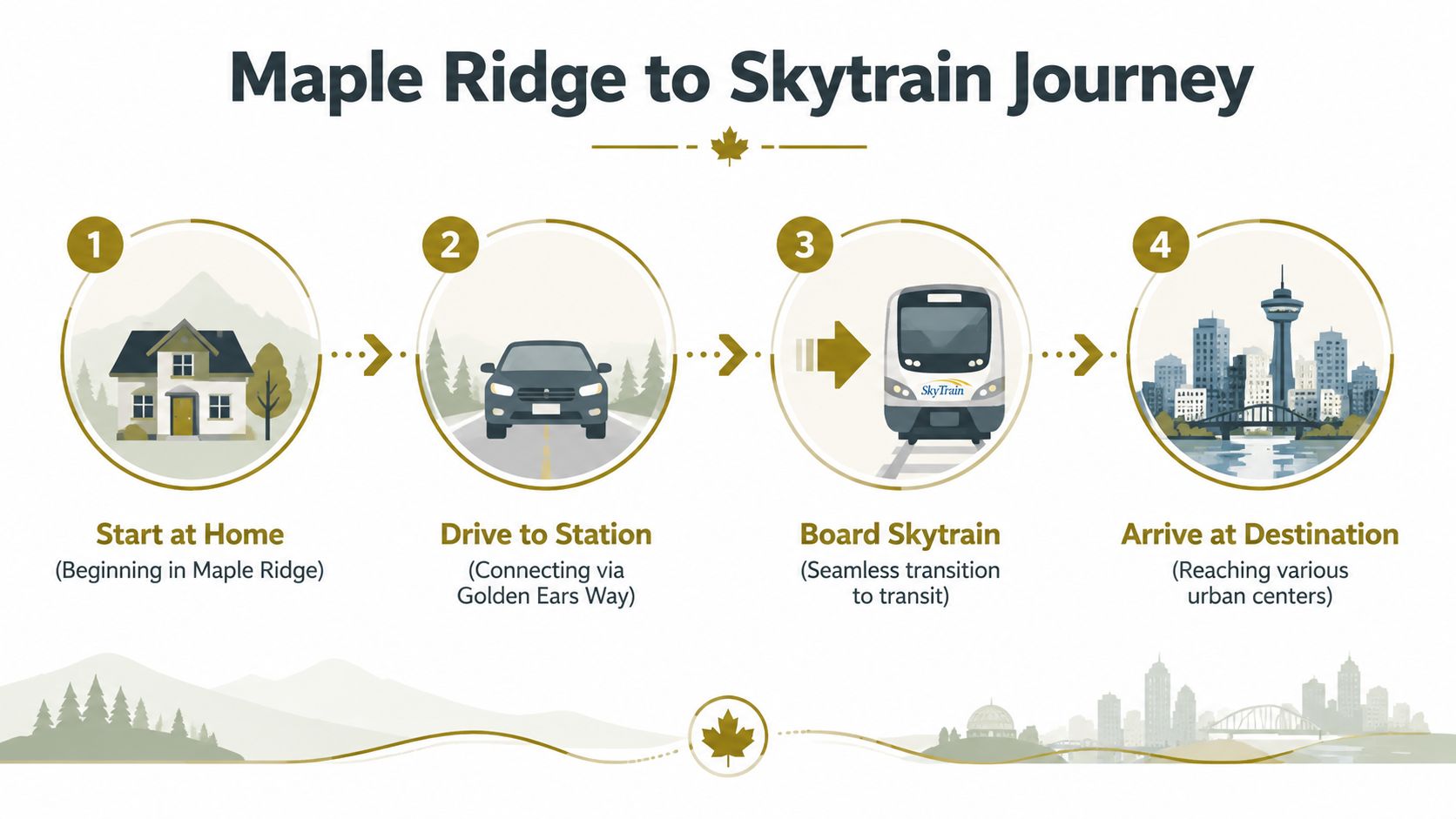
The technical reason is straightforward. The Evergreen Extension is a 10.9-kilometre expansion of the Millennium Line that functions as a high-frequency rail trunk and reduces travel friction for surrounding communities by replacing a more bus or car-dependent pattern with reliable rapid transit, as outlined in the Evergreen Extension corridor overview.
The commute options local buyers actually weigh
In real conversations with buyers, I usually see three broad commute models.
Drive all the way
This is still the default for a lot of people, especially if their workday involves multiple stops, tools, client visits, or an unpredictable schedule.
What works:
- Maximum control over departure time
- Easier for parents juggling school and childcare
- Best for jobs that aren't close to transit at the destination end
What doesn't:
- Traffic stress
- Parking cost and hassle
- Less flexibility when the region gets congested
West Coast Express first
This option works well for certain schedules and for people who want a more direct commuter rail experience into downtown.
What works:
- Strong for riders whose work aligns with the service pattern
- Comfortable for those who want to avoid the highway grind
- Especially appealing in Pitt Meadows and parts of Maple Ridge with easier station access
What doesn't:
- Less forgiving if your work hours move around
- Not ideal for every destination in the region
- Harder to use as a general-purpose all-day mobility tool
Drive or bus to the Tri-Cities, then SkyTrain
The Evergreen Extension becomes directly relevant here.
For many households, especially in West Maple Ridge and Pitt Meadows, getting to a SkyTrain connection in the Coquitlam area can make more sense than doing the entire trip by car. It turns a long, variable drive into a shorter access leg plus a more predictable rail leg.
Where the trade-offs become real
Not every Maple Ridge neighbourhood benefits equally.
A buyer in West Maple Ridge may see easier bridge-oriented access. A household in Hammond or Pitt Meadows may value regional mobility differently from someone in Silver Valley or Kanaka Creek, where the lifestyle appeal often centres more on space, trails, and a quieter setting. A family near Samuel Robertson Technical, Maple Ridge Secondary, or schools in Albion may care less about daily transit and more about keeping occasional access to Burnaby or Vancouver without giving up a detached home.
That's why moving to the Fraser Valley and comparing Maple Ridge homes isn't just a housing decision. It's a transportation design decision for your week.
The practical way to judge a home here
Don't ask only, “Is this home close to transit?”
Ask these instead:
- How easy is the first leg? A painful drive to your connection point can wipe out the value of the train.
- How many days will I really use it? A hybrid worker may benefit a lot from a partial transit option.
- Does this location keep options open? Even if you don't use the route today, a future job change might make it far more important.
- What am I gaining in exchange? Bigger lot, better school fit, quieter street, or more house for the money may justify a less direct route.
If a Maple Ridge home gives you realistic access to both driving routes and regional transit connections, it tends to age better as a lifestyle choice.
That's the actual Maple Ridge connection. The Evergreen Extension didn't eliminate commuting complexity here. It gave local households another workable tool.
Ripple Effects on Maple Ridge Real Estate
Real estate doesn't respond only to what's directly beside a property. It also responds to what a location can access without too much hassle.
That's where the Evergreen Extension has mattered for Maple Ridge and Pitt Meadows. It strengthened the case for buying farther east while staying connected to major job centres and urban amenities. Not as conveniently as living beside a station in Coquitlam, of course, but often at a very different housing value proposition.
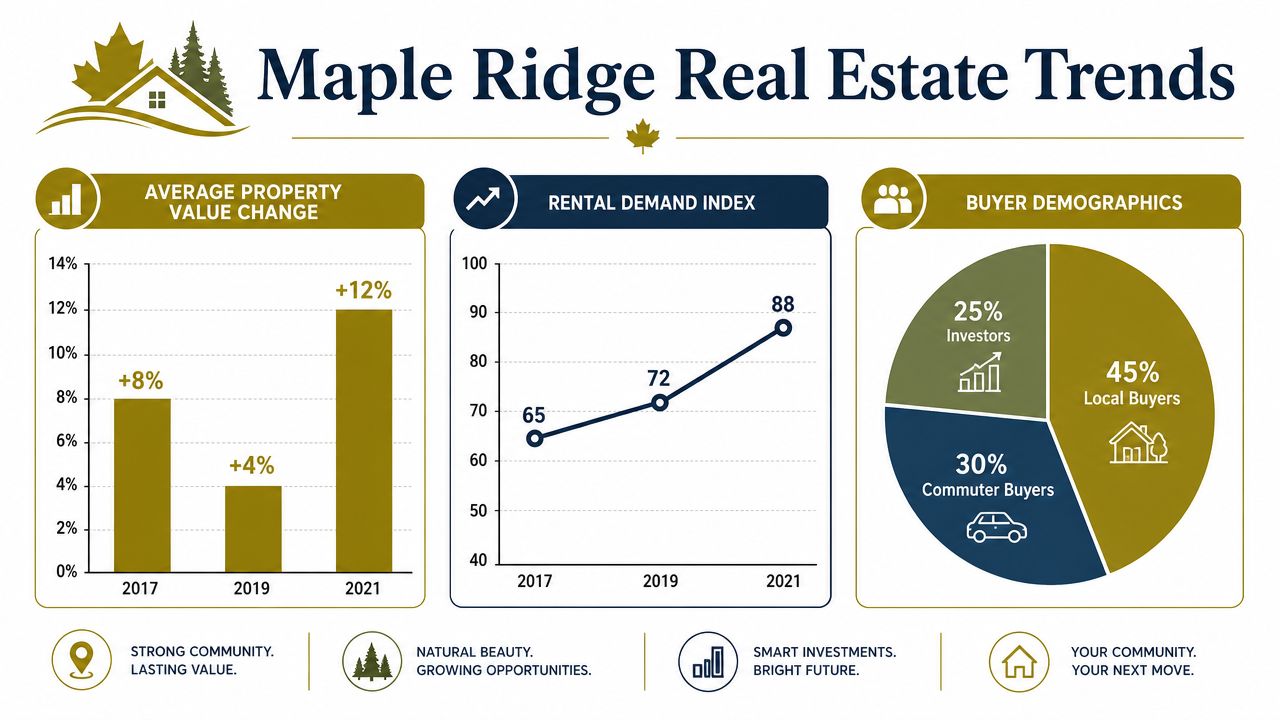
One fact that often gets overlooked is the scale of the project itself. The Evergreen Extension was a major capital build valued at $1.4 billion, with a mix of underground, at-grade, and above-ground sections, according to the project overview from BKL on the Evergreen Line SkyTrain Extension. For buyers and investors, infrastructure at that level signals permanence. It tells the market the corridor is not a temporary policy idea. It's embedded regional infrastructure.
How indirect transit access affects Maple Ridge demand
In the Tri-Cities, the strongest premium usually belongs to homes with direct walkable station access. Maple Ridge works differently.
Here, the lift is more often secondary:
| Buyer type | What they often value in Maple Ridge |
|---|---|
| Family buyer | More space, quieter streets, parks, and schools with reasonable regional access |
| Commuter buyer | A workable drive-to-transit or mixed commute option |
| Move-up buyer | Detached housing value compared with station-area pricing farther west |
| Investor or long-term owner | A community tied into a growing region rather than isolated from it |
That's why neighbourhood positioning matters so much. West Maple Ridge and parts of Pitt Meadows often appeal to buyers who care about smoother access toward Coquitlam and Burnaby. Albion, Cottonwood, and Silver Valley tend to attract people who prioritise home and lifestyle first, then assess whether regional transit access is good enough.
What sellers can realistically market
Sellers shouldn't pretend Maple Ridge is a walk-to-SkyTrain market. Savvy buyers know better.
What does work is honest positioning:
- Regional connectivity: Explain how the home fits a mixed commute pattern.
- Lifestyle trade-off: Show what the buyer gains here that they may give up in a denser station-area community.
- Future resilience: Buyers like homes that keep more than one commuting option open.
A home near bridge access, key arterial routes, or strong bus links can be more attractive than a similar property tucked into a beautiful but less connected pocket. That doesn't mean the second home won't sell. It means the story has to match the buyer.
A separate but related point is presentation. If you're improving a home before listing, practical upgrades still matter more than generic spending. Resources on strategies for increasing property value can be useful when you're deciding which improvements support resale and which ones just burn budget.
Here's a short visual overview related to the corridor and housing context:
Market reality: In Maple Ridge, transit value is usually packaged with space, schools, and liveability. It rarely sells on transit alone.
That's why the Evergreen Extension matters to local real estate. It didn't turn Maple Ridge into a station market. It made Maple Ridge easier to justify for buyers who want more home without stepping out of the regional economy.
Practical Advice for Maple Ridge Buyers and Sellers
The buyers and sellers who handle transit best are usually the ones who stay realistic. They don't oversell convenience, and they don't ignore it either.
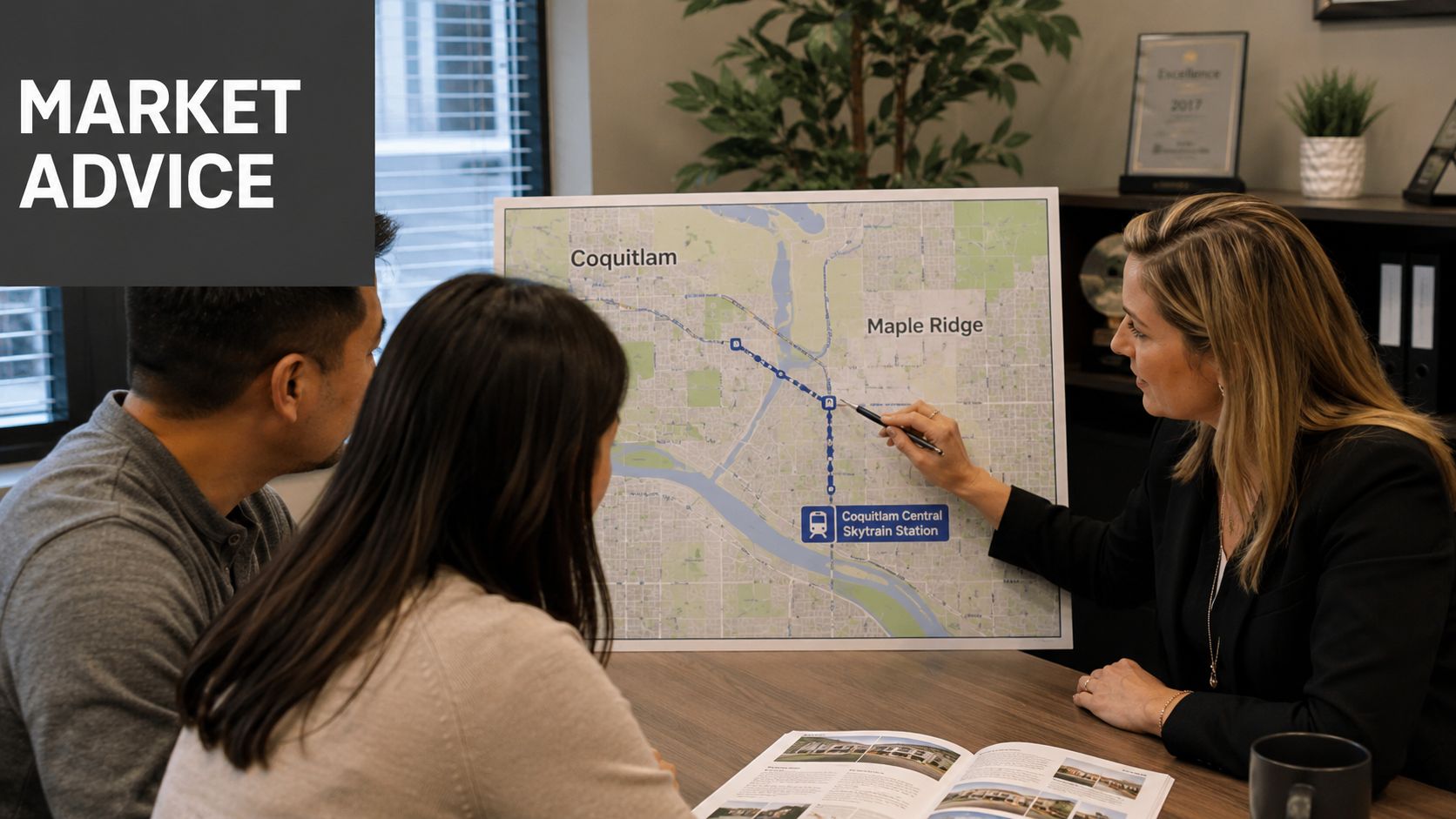
If you're buying in Maple Ridge
The first question isn't whether the SkyTrain Evergreen Extension is “close.” The better question is whether your daily life will benefit from being able to connect to it.
A buyer looking at Silver Valley may accept a longer first leg because they want trails, newer homes, and a quieter setting. A buyer comparing West Maple Ridge with Coquitlam may decide easier access west is worth sacrificing some lot size. Someone choosing Albion may care more about family layout and school fit than shaving time off a commute a few days a week.
Use a simple filter when comparing properties:
- Test the route, not the map: Drive or ride the actual connection at the time you'd use it.
- Judge flexibility: If your work changes, will this location still function?
- Look beyond one destination: Many households need access to Burnaby, Coquitlam, Vancouver, and local amenities, not just one office.
- Be honest about habits: If you know you won't regularly do a multi-step commute, don't buy as if you will.
If you're selling in Maple Ridge
Transit-aware marketing works best when it sounds like a person, not a brochure.
Good listing language focuses on practical connection points. For example, a home can be described as offering convenient access toward Coquitlam and the broader SkyTrain network, or as a strong fit for buyers seeking more space without giving up regional commuting options. That's more believable than claiming transit convenience in the same way a Burquitlam condo would.
What helps your listing stand out
- Lead with location logic: Explain access to major routes, bridge connections, and regional amenities.
- Pair transit with lifestyle: Mention parks, schools, and neighbourhood character alongside commuting benefits.
- Match the likely buyer: A family-focused home near Albion Elementary should be marketed differently from a low-maintenance townhome in West Maple Ridge.
- Avoid inflated claims: Buyers punish listings that exaggerate convenience.
Buyers don't mind a commute trade-off if the home clearly gives them something worthwhile in return.
Where people misjudge value
The biggest mistake I see is treating all Maple Ridge locations as equal once you say “easy access west.” They aren't.
Some pockets are noticeably more practical for people who expect regular trips toward Coquitlam, Burnaby, or Vancouver. Others are better for buyers who mainly want local life, occasional regional access, and a bigger home base. Neither is wrong. But if you confuse those two buyer profiles, you misread value.
That's why transit awareness belongs in both pricing and negotiation. It won't replace condition, layout, lot, or school catchment. It will, however, shape which buyer pool shows up first and how confidently they move.
The Future of Transit and Our Growing Community
The Evergreen Extension is already part of the background of regional life. The more interesting question now is what it teaches us about where Maple Ridge is heading.
A lot of older coverage still centres on the launch story. The more useful conversation for local homeowners is whether the demand it helped concentrate in the Tri-Cities has continued to affect affordability and liveability in nearby communities, a gap noted in Daily Hive's discussion of how Evergreen Extension coverage often misses current impacts. That's exactly the issue Maple Ridge buyers and sellers feel on the ground.
What local households should watch
Transit influence in Maple Ridge will keep showing up in indirect ways:
- Search behaviour: Buyers keep widening their map when closer-in options feel tighter.
- Neighbourhood positioning: Areas with better westbound access remain easier to explain and market.
- Lifestyle expectations: More households now expect some blend of driving, rail, and flexible commuting.
- Accessibility tools: Practical rider support matters too. Resources for accessible TransLink navigation are a good example of how the rider experience extends beyond tracks and stations.
There's also a wider planning conversation underway across the region about connected suburban communities, housing form, and mobility. That's why pieces on smarter and more connected suburban communities in BC are worth paying attention to. They reflect the same shift Maple Ridge is living through already.
The communities that do best over time are usually the ones that give residents more than one workable way to live.
The SkyTrain Evergreen Extension didn't solve every transportation issue east of Vancouver. It did something important, though. It changed what “connected enough” can look like for Maple Ridge and Pitt Meadows. For buyers, that can support a smarter move. For sellers, it can sharpen how a property is positioned in the market.
If you're buying, selling, or trying to understand how regional transit affects home values in Maple Ridge or Pitt Meadows, Royal LePage Brookside Realty Property Management can help you evaluate the local trade-offs clearly and make a decision that fits both your lifestyle and your long-term real estate goals.