
A landlord in Albion is trying to line up a lease renewal before spring. A tenant in Cottonwood has sent a repair request twice and still hasn't seen a response. In Maple Ridge, those situations turn into stress fast because they affect rent timing, deposit handling, privacy, and whether both sides feel the tenancy is being managed fairly.
Landlord tenant rights BC matters because the rules are not abstract. They shape what can happen before a rent increase, how much notice a landlord must give before entry, and what a tenant can do when a repair request turns into repeated delays or unwanted interference. The practical side is simple, too. If you know the timeline, document the issue, and use the right channel early, you can prevent a small misunderstanding from becoming an RTB dispute.
Introduction to Tenancy Rights in Maple Ridge
A lot of rental problems in Maple Ridge start with everyday pressure, not dramatic conflict. A landlord near Golden Ears Way wants to renew a lease cleanly. A tenant in Silver Valley is trying to budget for next year and wants to know whether a rent increase is valid. A family in Pitt Meadows is moving out and just wants the deposit returned without a back-and-forth over cleaning.
That's where BC tenancy rules matter most. They give both sides a framework for timing, notice, deposits, repairs, and dispute resolution, so decisions aren't made on the fly. In a market where people often move carefully between townhomes, condos, and family homes, that structure helps everyone plan better and avoid arguments that could have been prevented with one written notice or one proper inspection record.
For local landlords, the big question is usually how to stay compliant without overcomplicating operations. For tenants, it's how to protect privacy, challenge illegal behaviour, and know when a concern is serious enough to escalate. The useful part of this guide is that it stays practical, with Maple Ridge examples, plain-language steps, and a property-management mindset you can use right away.
Understanding the Residential Tenancies Act and RTB
The Residential Tenancies Act is the rulebook that sits underneath almost every residential tenancy in BC. It sets out the basics for leases, notice periods, rent increases, deposits, and dispute handling. The Residential Tenancy Branch, or RTB, is the provincial authority that handles residential tenancy disputes, and the province states it offers support in more than 200 languages through a dedicated phone line, which is a good reminder that the system is meant to be accessible, not informal. BC residential tenancy guidance

Think of a tenancy like a managed workflow. The lease starts the relationship, the Act defines the rules, the RTB sits in the middle as the formal dispute channel, and a hearing or mediation closes the loop if the parties cannot resolve things themselves. That structure matters in high-demand areas like Maple Ridge because pressure can push people toward shortcuts, and the law is designed to keep those shortcuts from becoming eviction or deposit disputes.
The province also keeps rent control and renewal timing tightly ordered. Core protections include one rent increase every 12 months and 3 full months' written notice before a rent increase can take effect. Those are the kinds of rules that affect when a landlord can plan an increase and when a tenant can make a budget decision. BC residential tenancy guidance
For a deeper plain-English explanation of the legal framework, this internal guide is worth keeping handy: BC Residential Tenancy Act explained.
Practical rule: if a tenancy issue affects timing, money, entry, or possession, treat it as a written-process problem first, not a conversation problem.
Landlord Rights and Responsibilities in British Columbia
Landlords in BC do have real rights. They can collect rent, request proper access when the law allows it, and raise rent within the regulatory limits. They can also hold a security deposit, but that deposit is capped at half a month's rent. The same framework gives landlords predictability, because the deposit must be returned within 15 days after tenancy end or receipt of the forwarding address, whichever comes later. BC tenant rights and deposit rules
What good landlord practice looks like in Maple Ridge
A property near Golden Ears Elementary may need tighter scheduling because school traffic, family routines, and parking constraints can make last-minute access awkward. That doesn't change the law, but it does change the quality of communication. A landlord who gives written notice early, keeps repair records in one file, and confirms appointments in writing usually has fewer misunderstandings later.
A good operational rhythm is simple:
- Keep every notice in writing. If an inspection, repair, or rent increase is involved, written records reduce argument later.
- Use the right timeline. Rent increases only happen once every 12 months, and the tenant must get three months' written notice.
- Document the deposit trail. Note when the tenancy ended, when the forwarding address arrived, and when the deadline for returning funds starts.
- Separate routine maintenance from emergencies. Slow repair handling creates disputes; fast, documented responses usually prevent them.
Landlords also have a clear duty to keep the unit in usable condition and handle repairs properly. If that sounds basic, it is, but it's where a lot of avoidable conflict starts. Delays, vague promises, and verbal only updates make tenants feel ignored even when the landlord thinks they're being reasonable.
For landlords who want a deeper look at deposit handling, this local resource is useful: damage deposit rules in BC. If you're looking at broader protection for your rental portfolio, PropLab's investor protection guide is a helpful complement because it frames legal compliance as part of asset protection, not just administration.
Tenant Rights and Responsibilities in British Columbia
Tenants in BC have a right to quiet enjoyment, which includes reasonable privacy and freedom from unreasonable disturbance. That matters a lot more than many renters realise, because the issue isn't only an eviction notice. Repeated interference, harassment, or illegal entry can also create a dispute. BC rules require at least 24 hours' written notice before a landlord enters a rental unit, and the notice must state the date, time, and purpose of entry. BC landlord entry and quiet enjoyment guidance

In practice, a tenant in Silver Valley who needs a repair should keep the request short, dated, and specific. State the problem, attach a photo if useful, and ask for a written response. If the issue continues, the paper trail matters more than a long chain of phone calls, because the RTB looks far more favourably on clear evidence than on vague memory.
What tenants should protect and what they should do
- Pay rent on time. That's the most basic tenant duty, and it keeps the rest of the tenancy from sliding into avoidable conflict.
- Keep the unit reasonably clean and safe. Normal wear is one thing. Damage and neglect are another.
- Use written communication. It protects both sides when the issue is repairs, access, or rent changes.
- Escalate when behaviour crosses the line. Harassment, intimidation, or repeated illegal entry can justify dispute resolution.
A useful comparison point for move-out expectations comes from outside BC as well, because the basic lesson is the same. Fair Trading bond cleaning rules shows how some jurisdictions frame end-of-tenancy cleanliness in practical, checklist form, which is a smart way to think about handover even if BC's rules are different. The value is in the discipline, not the jurisdiction.
If a tenant is uncertain whether a problem is serious enough to escalate, the first question should be whether the issue is isolated or repeated. One missed message can be a mistake. Repeated access without proper notice, or a pattern of interference, is a different matter and should be documented carefully.
Common Rental Scenarios and Local Tips from Maple Ridge and Pitt Meadows
A no-fault eviction for owner move-in is where many tenants first realise how tight BC's process can be. An analysis from the University of British Columbia reported that BC still leads Canada in eviction rates, and that 85% of evictions in the province were no-fault, many tied to sale, demolition, conversion, or major repairs. That doesn't mean an owner can act casually. It means tenants need to read the notice carefully and landlords need to follow the legal steps exactly. UBC on BC eviction rates
A good example is a townhouse near West Maple Ridge where a repair request keeps getting pushed back. The landlord may assume the delay is minor, but the tenant experiences it as a liveability issue. If the repair affects habitability or peace of living, the problem isn't just maintenance, it can become a tenancy-rights issue.
Three situations that come up often
Owner move-in or sale-related change.
The tenant should check whether the notice is valid and whether the process is being followed properly. For local context on ownership change, this internal guide helps: tenant rights when a landlord sells property.Delayed repair requests in family homes and townhomes.
In neighbourhoods like Cottonwood and Silver Valley, repairs tend to become more noticeable because households are busy and can't keep chasing updates. Clear written requests, repair photos, and one follow-up schedule usually work better than repeated informal reminders.Rent discussions near Cottonwood Park or in Pitt Meadows.
A written increase notice is what matters, not a casual conversation about market rent. If the document isn't valid or the timing is off, tenants should ask for clarification before agreeing to anything.
A tenancy dispute usually gets worse when people rely on memory instead of documents.
The practical Maple Ridge approach is to treat move-in and move-out like a handoff, not a handshake. Good property managers use condition checklists, photo records, and a final written summary so the parties can agree on facts before emotions take over. That same habit prevents deposit mistakes, especially when one side assumes the other already has the forwarding address or already understood the final state of the unit.
Resolving Disputes with the Residential Tenancy Branch
When a rental problem cannot be fixed informally, the RTB is the formal path. The process usually starts with an application, then notice is served on the other party, then there's mediation or a hearing, and then enforcement if an order needs to be carried out. If you want a practical overview of that path, this local resource is helpful: RTB dispute resolution guide

How to prepare for the process
Start with documents, not emotion. Keep the lease, all notices, photos, repair requests, text messages, and any written replies in one folder. If the issue is illegal entry or harassment, BC guidance is clear that tenants have a statutory right to quiet enjoyment, including reasonable privacy and freedom from unreasonable disturbances, so the evidence should show pattern, timing, and impact. BC communication and quiet enjoyment guidance
The process works best when the issue is framed narrowly. A hearing is easier to manage when the parties can answer simple questions such as what happened, when it happened, what notice was given, and what remedy is being asked for. That can mean compensation for an improper entry, or it can mean a maintenance remedy if the unit hasn't been properly cared for.
What tends to go wrong
- Late service. If the other party wasn't served correctly, the file can stall.
- Thin evidence. A claim without dates, photos, or written notice is much harder to prove.
- Overreaching requests. Ask for the remedy that matches the problem, not every possible remedy.
- Poor settlement posture. Mediation works better when both sides bring a realistic outcome in mind.
If an RTB order has to be enforced, the legal path can move further through the BC Supreme Court. That's not the first step, and it shouldn't be treated lightly, but it matters because BC does not allow informal self-help removals. The whole system is built to keep possession disputes inside a formal process rather than a confrontation at the door.
Practical Checklists and Templates for Local Landlords and Tenants
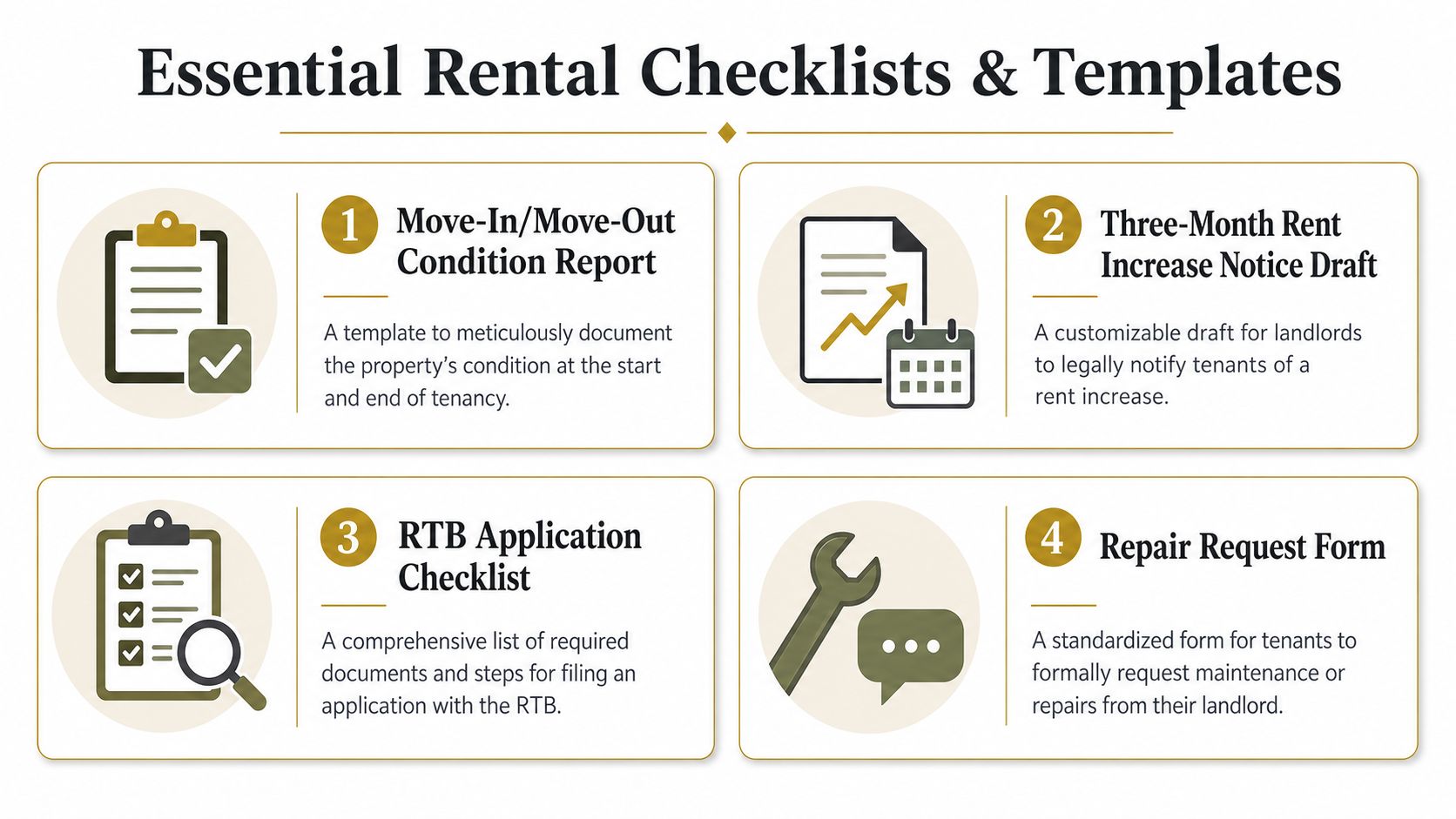
A good checklist saves more disputes than a long explanation ever will. For Maple Ridge and Pitt Meadows properties, the highest-value tools are simple: a move-in and move-out condition report, a three-month rent increase notice draft, an RTB application checklist, and a repair request form. The goal is not paperwork for its own sake, it's proof that the right thing happened at the right time. Lease agreement template guidance
A simple folder structure that works
- Move-in report: note every room, appliance, stain, scratch, and missing fixture.
- Move-out report: compare the end condition to the original record.
- Rent notice draft: confirm the date, the new amount, and the effective timing.
- Repair form: describe the issue clearly and keep copies of the request and reply.
If the property is in Pitt Meadows, add a line for the tenant's forwarding address on the move-out form so the deposit timeline is clear. If the unit is in Maple Ridge, add neighbourhood-specific notes where useful, such as parking access, shared entry, or known maintenance issues in older strata buildings. Those details don't replace the law, but they make the record easier to trust later.
For landlords, a good template also lowers the chance of accidental non-compliance. For tenants, it helps prove that the issue was raised properly and early. A well-kept folder often does more in a dispute than a heated explanation ever could.
Conclusion and Local Real Estate Next Steps
BC tenancy law is easier to manage when you focus on four habits. Know the timeline, document everything, use written notice, and treat entry, rent changes, deposits, and repairs as formal processes, not casual arrangements. That approach protects landlords from avoidable disputes and gives tenants a clear path to challenge bad behaviour.
For Maple Ridge and Pitt Meadows homeowners, investors, and renters, the same principle applies across the board. Good records and steady communication create smoother outcomes, whether you're renewing a tenancy, preparing a home for sale, or trying to keep a property running cleanly through a move. If you want support that connects real estate knowledge with day-to-day property management, local guidance can make the difference between a messy disagreement and a clean resolution.
A CTA for Royal LePage Brookside Realty Property Management.