
You've approved the tenants, the lease is ready, and the keys are almost changing hands. For a lot of Maple Ridge landlords, that's the point where the easy part ends and the anxiety starts. The home might be a family place in Albion, a townhouse near Kanaka Creek Park, or a newer unit in Silver Valley that you bought as a long-term investment. Either way, the damage deposit is usually the first legal step that feels heavier than it should.
Most deposit problems don't start because a landlord is trying to do something wrong. They start because the process is loose. A number gets guessed. A pet deposit gets handled casually. The move-in inspection is rushed because everyone's busy. Months later, a small disagreement turns into a full dispute because nobody created a clean paper trail at the beginning.
That's why I treat damage deposit rules in BC as a process issue, not just a legal issue. If the paperwork is tight and the expectations are clear from day one, most tenancies run much more smoothly. If you want more practical landlord guidance, Brookside's landlord resources are a useful starting point.
Setting the Stage for a Successful Tenancy
A new landlord in Maple Ridge often focuses on the big decisions first. Which tenants look reliable. Whether the rent feels right for the neighbourhood. How quickly the property can be occupied without sitting vacant. Those are important calls, but the deposit process is where professionalism shows up right away.

In places like Cottonwood, West Maple Ridge, and Pitt Meadows, many rentals are family-oriented homes. That matters because families tend to stay longer, bring more personal belongings, and use the property differently than a short-term tenant in a small condo. Over a longer tenancy, tiny memory gaps become real problems. Was that scratch on the laminate already there. Did the patio screen have a tear at move-in. Was the wall behind the dining table freshly painted or already marked.
A deposit helps protect the property, but only if you handle it properly. If you treat it like a casual handshake item, it becomes a source of friction. If you treat it like part of a well-run tenancy file, it becomes routine.
Practical rule: The best time to prevent a deposit dispute is before the tenant moves in, not after they move out.
That's especially true in Maple Ridge, where many landlords are renting out homes they once lived in themselves. Emotional attachment changes how owners see wear. A tenant may look at scuffed stairs and think “normal living.” The owner may see damage to a home near Samuel Robertson Technical Secondary or a place they renovated before listing it for rent. Good process keeps those personal reactions from driving the outcome.
Understanding BCs Legal Deposit Limits
A lot of deposit problems start with a simple mistake at signing. A landlord in Maple Ridge agrees on $2,400 monthly rent, asks for first month's rent plus a $1,500 deposit, and assumes that is close enough. It is not. If the tenant challenges it later, “close enough” does not help.
In British Columbia, the damage deposit cap is 50% of one month's rent, based on the rent when the tenancy starts. The province sets that rule clearly in its deposits and fees guidance.
For a $2,400 per month rental, the maximum damage deposit is $1,200. If you allow pets, you can charge a separate pet damage deposit of up to another $1,200. That brings the total possible deposits to $2,400, but only if a pet deposit applies.
| Deposit type | Legal limit in BC |
|---|---|
| Damage or security deposit | 50% of one month's rent |
| Pet damage deposit | Up to another 50% of one month's rent |
| Combined maximum if both apply | One full month's rent |
Tenants are expected to pay the deposit at the start of the tenancy. If the tenancy agreement requires a deposit and the tenant does not pay it, the law gives a limited timeline to deal with that. This is one reason I tell new landlords to keep the paperwork clean from day one. Write the exact deposit amount into the tenancy agreement, label each deposit correctly, and save proof of payment in the tenancy file.
That last point gets missed all the time.
In Maple Ridge and Pitt Meadows, owners sometimes want a larger deposit because the home is newer, the finishes are better, or replacement costs feel high. I understand the instinct, especially in areas with newer detached rentals near Albion or along the Pitt Meadows commuter routes. The law does not make exceptions for upgraded counters, premium flooring, or a hot rental market. The cap stays the same.
The same rule applies later if rent increases. You do not get to top up the damage deposit because the monthly rent went up. The deposit stays tied to the original rent, not the current rent.
Another practical point many landlords overlook is deposit interest. In BC, security and pet deposits may require interest based on the rate set for the relevant year. Even when the rate is low, I still recommend recording it in your file and checking the current requirement before the tenancy ends. It takes a minute, and it removes one more argument from the move-out conversation.
Good deposit handling is mostly admin work. Collect the lawful amount. Issue a receipt. Record whether any portion is a pet deposit. Keep the payment date. Track interest. If you ever need to justify your file to the Residential Tenancy Branch, those details matter more than your memory.
I've seen small process errors create avoidable disputes, especially with first-time landlords renting out a former family home. A deposit is not extra negotiating room. It is a regulated amount that only works if the numbers, dates, and documents are right.
If you want a broader local reference point, the Brookside property management blog for BC landlords covers rental process issues that come up often in this market. For a cross-border comparison, Understanding Texas deposit laws shows how different the rules can be once you leave BC.
Mastering the Condition Inspection Report
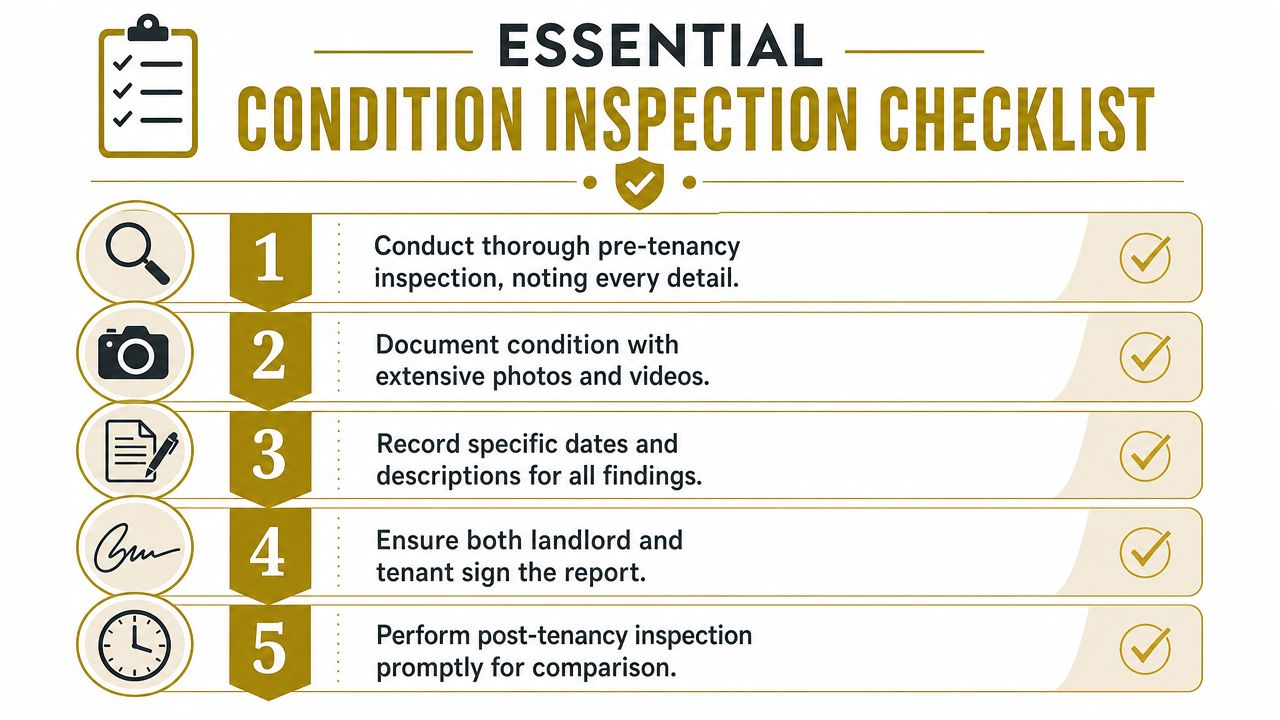
If you remember one part of this guide, make it this one. The Condition Inspection Report is the document that usually decides whether a deduction looks reasonable or weak.
A landlord can feel certain that a tenant caused damage. That feeling doesn't carry much weight on its own. What matters is whether the property's condition was recorded clearly at move-in, checked again at move-out, and supported by specific notes and photos.
How to do the move-in inspection properly
Walk the property with the tenant before they fully settle in. Don't rely on memory, and don't use vague words like “good” or “fine” if a better description is available. “Small chip on left edge of vanity drawer” is far more useful than “bathroom in good condition.”
Focus on surfaces and fixtures that commonly become dispute points:
- Walls and paint: Note scuffs, nail holes, patched areas, and touch-up paint that doesn't match.
- Flooring: Record scratches, stains, lifting edges, cracked tile, or worn sections near entrances.
- Appliances: Test that they work, and note cosmetic issues separately from operational ones.
- Windows and screens: Check locks, cracked panes, torn screens, and sticking tracks.
- Outdoor areas: Patios, decks, fencing, and drainage should be described in plain language.
In Maple Ridge, this matters even more with detached homes. Mudrooms, backyard gates, sheds, and deck stairs often see heavy use, especially in rainy months. A suite in a newer townhouse complex may have fewer variables. A family home in Albion or Silver Valley usually has more.
Use photos as support, not a substitute
Photos are essential, but they don't replace written observations. A phone gallery full of unlabeled images won't help much later if nobody can tell when the pictures were taken or what they were meant to show.
Use a simple habit:
- Take wide shots of each room.
- Take closer shots of any defect or wear.
- Save them in a folder labelled with the property address and move-in date.
- Match the image set to the written report.
A strong inspection file lets someone who has never seen the property understand its condition without guessing.
If you want a practical checklist format to supplement your process, Northpoint Construction's rental property maintenance tips offer useful reminders for documenting trouble spots that tend to get missed.
The move-out inspection is the comparison point
The move-out inspection should never feel like a surprise audit. It's a comparison exercise. You're asking one basic question. What changed between the start and the end of the tenancy, and which changes fall outside normal use?
That means your move-out notes should mirror the move-in categories as closely as possible. If you recorded the deck railing, appliance condition, and bedroom walls at the start, revisit those same items at the end.
A practical move-out checklist usually includes:
- Cleanliness issues: grease buildup, garbage left behind, heavy residue
- Damage to fixtures: broken blinds, cracked shelves, missing hardware
- Outdoor neglect: abandoned items, damaged fencing, tenant-caused yard issues
- Alterations: paint changes, mounted TVs, shelving installations, unapproved modifications
What makes a report credible
The best reports are boring. They're complete, dated, signed, and specific. They don't exaggerate. They don't try to turn ordinary wear into tenant damage. They create a reliable before-and-after record.
That's the standard worth aiming for. If you need templates and practical tools to keep that process organised, Brookside's landlord tools and resources are worth keeping bookmarked.
Making Lawful Deductions from a Security Deposit
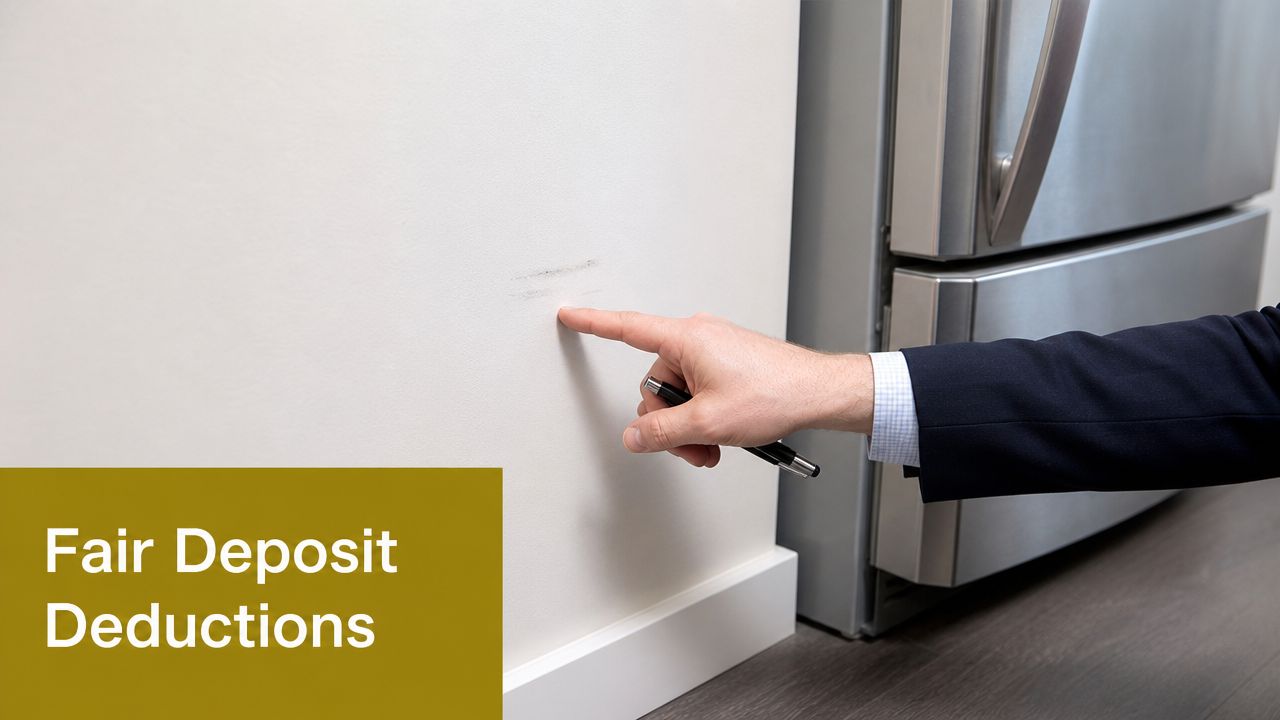
Often, many landlords get themselves into trouble. Not because they shouldn't make deductions, but because they don't separate actual damage from normal wear and tear.
Those are not the same thing. A rental property in Maple Ridge will age through ordinary use. Floors dull. Paint gets minor marks. Entry areas wear faster in wet weather. A landlord can't treat every sign of use as a billable event.
Damage versus normal wear
Here's the practical distinction I use when reviewing a property file. Ask whether the issue came from ordinary living, or from neglect, misuse, or an avoidable act.
| Likely normal wear | More likely tenant-caused damage |
|---|---|
| Light wall scuffs in hallways | Large holes, deep gouges, or broken drywall |
| Fading paint over time | Unapproved paint colours or poor patch jobs |
| Worn carpet in a busy path | Burns, heavy staining, or torn carpet |
| Weathering on an exposed deck | Damage from neglected planters or misuse |
| Minor appliance wear from age | Broken shelves or cracked parts from impact |
A Silver Valley deck is a good local example. Rain exposure and ordinary weathering are part of owning property here. That alone doesn't make a deduction reasonable. But if a tenant leaves heavy planters in one spot for an extended period, traps moisture, and the deck surface deteriorates in a concentrated area, that starts to look different. The condition report and photos should tell that story.
Grey areas that cause arguments
Painting and carpet cleaning come up constantly. Some landlords assume they can automatically charge for both between tenants. That assumption usually creates problems.
Fresh paint isn't a default charge just because you prefer the place to look new again. If the walls show ordinary lived-in wear, that's usually part of operating a rental. If there are unusual stains, crayon marks, large anchor damage, or unauthorised painting, that's a different conversation.
Carpet works the same way. Routine turnover cleaning may be a normal cost of business. Severe staining, pet odours beyond ordinary use, or damage tied to a specific event can support a claim if your documentation is solid.
Common mistake: Charging for “refreshing” the property instead of charging for a specific, documented loss caused during the tenancy.
What supports a deduction
When a deduction is justified, the file should show a straight line from evidence to cost. That usually means:
- A clear move-in record: The original condition has to be documented.
- A matching move-out record: The change has to be visible and described.
- Photos that support the report: Not random pictures with no context.
- Receipts or repair records: If you claim a cost, keep the paper trail.
- Specific language: “Bedroom wall required repair due to anchor damage” is stronger than “wall bad.”
This short walkthrough is a useful reminder of how visible damage can become a deposit issue when it's not documented carefully:
Fairness protects the landlord too
Some owners think being strict is the safest approach. In practice, being accurate is safer. Overreaching on deductions can weaken your whole position if the matter goes further.
That's one reason some owners hand this process off to a manager. Services like Brookside's property management support can handle inspections, tenant records, and end-of-tenancy administration using a standard process instead of an emotional one. That doesn't replace your judgment as an owner, but it does reduce the chance of an avoidable paperwork mistake.
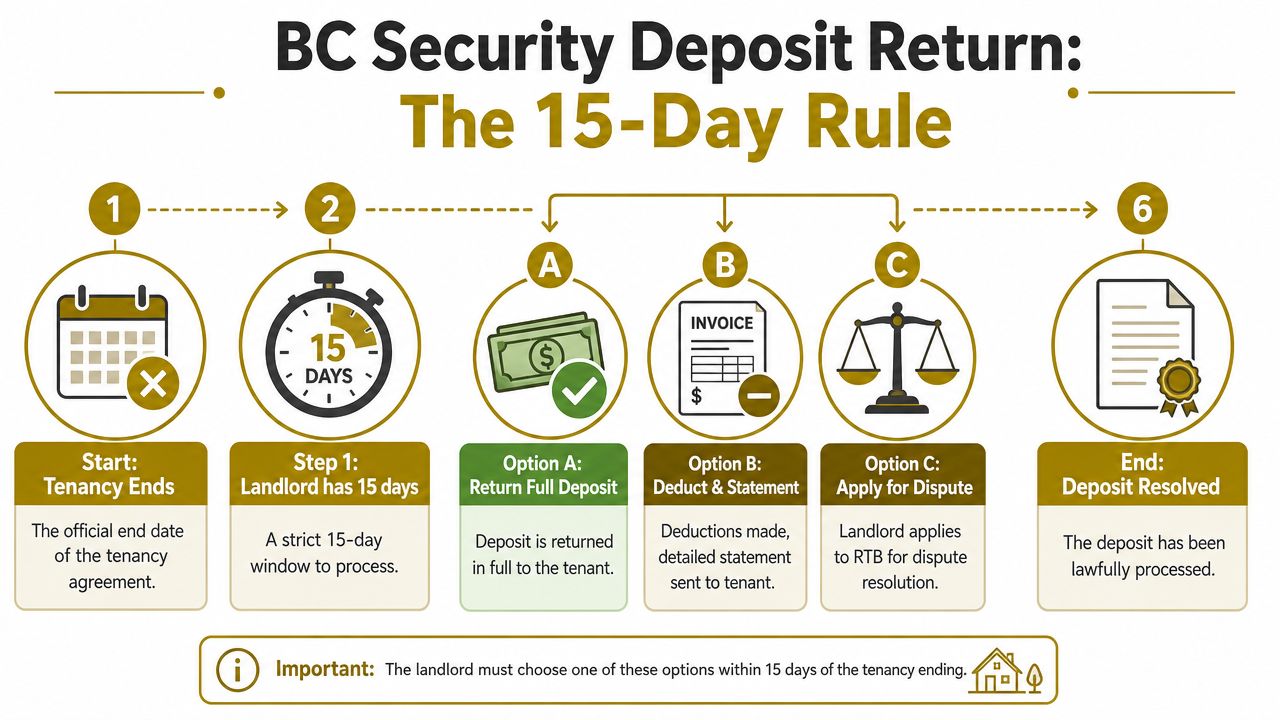
The 15-Day Rule for Returning Deposits Correctly
At the end of a tenancy, timing matters just as much as documentation. If you're dealing with damage deposit rules in BC, this is one of the most important deadlines to keep under control.
The province's deposit cap rules tell you what you can collect at the start. The end of the tenancy is about what you do next, and how quickly you do it. In practice, this means being organised before the tenant has even handed over the last key.
Start with the forwarding address
The first thing I tell landlords is simple. Get the tenant's forwarding address in writing. Verbal details are not enough for something this important. If the tenancy ends and that address isn't clearly documented, the whole process gets messier than it needs to be.
Keep the address with the move-out file, inspection notes, key return record, and any agreed cleaning or repair documentation. Don't leave it sitting in a text thread that nobody can find later.
Don't ignore deposit interest
Deposit interest is one of the most missed details in BC. TRAC states that landlords must pay interest on security and pet damage deposits under the Residential Tenancy Act, with the rate set at 4.5% below the Province's principal banker prime rate and compounded annually, and TRAC also states the 2026 rate is 0% in its BC deposits guidance. The same TRAC guidance notes the rate was 1.95% in 2023 and 2.7% in 2024, which is exactly why landlords shouldn't assume the answer stays the same from year to year.
Deposit interest sounds minor until someone asks for a proper calculation and the landlord realises it was never tracked.
This is especially important in longer tenancies. A rental home near Hammond Stadium or a townhouse in Pitt Meadows may be occupied for years. During that time, rent may change, but as noted earlier, the original deposit amount stays tied to the rent at the start of the tenancy. That means the calculation basis doesn't float upward with later rent changes.
The compliant paths at move-out
At the end of the tenancy, there are only a few defensible ways to handle the deposit. Keep the process clean and choose one of them.
Return the full amount
If there's no issue worth pursuing, return what's owed, including any applicable interest.Get written agreement on deductions
If both sides agree on a specific amount for a documented issue, keep that written consent with the file.Apply through the proper dispute process
If the tenant doesn't agree and you believe the deduction is justified, the matter needs to be pursued formally.
A good end-of-tenancy file usually contains:
- The signed inspection materials
- Photos from move-in and move-out
- Repair invoices or estimates
- The forwarding address in writing
- Copies of all correspondence about deductions or refund
Landlords who get into trouble here usually aren't missing just one thing. They're missing several small things that add up. The date isn't clear. The address wasn't recorded properly. The interest question wasn't considered. The deduction wasn't agreed to in writing. None of that feels serious in the moment, but it can matter a lot later.
Navigating RTB Disputes and Protecting Your Investment
If a deposit dispute reaches the Residential Tenancy Branch, treat it as an evidence process. It isn't about who sounds more frustrated or who has the stronger opinion. It comes down to documents, dates, inspections, photos, and written communication.
That's why the earlier paperwork matters so much. A complete Condition Inspection Report, consistent photos, written tenant communication, and a clean deduction record give a landlord something solid to rely on. A vague memory about the unit's condition doesn't.
What helps when a dispute starts
The landlords who present well in a dispute usually do a few simple things consistently:
- They stay chronological: move-in record, tenancy communications, move-out record, then repair proof.
- They stay specific: one issue at a time, one supporting document at a time.
- They stay reasonable: claims focused on actual loss are easier to defend than inflated turnover costs.
If your paperwork is clear, the dispute becomes manageable. If your paperwork is thin, even a legitimate concern becomes harder to prove.
Owning a rental in Maple Ridge or Pitt Meadows can be rewarding, but it isn't passive. A house in Albion, a suite in West Maple Ridge, or a townhome near Osprey Village all come with the same reality. The administrative side matters. If you want to keep up with local real estate and property updates, Brookside's local news and market updates are a useful resource.
If sorting through inspections, deposit paperwork, and tenancy procedures feels like more than you want to manage on your own, Royal LePage Brookside Realty Property Management can help with the day-to-day side of rental ownership in Maple Ridge and Pitt Meadows. And if your plans include buying an investment property or selling a home locally, it's worth having a team that understands both the real estate side and the practicalities of managing the tenancy that follows.