
You're dealing with a familiar Maple Ridge problem. A tenant texts about a leak near dusk, another asks about lease renewal timing, and you're trying to remember whether the next notice deadline lines up with BC tenancy rules or the date the old fridge finally gave out. If you own a condo in Cottonwood, a townhome near Kanaka Creek, or a basement suite in Albion, should I hire a property manager stops being a theoretical question pretty quickly.
The key consideration isn't whether you can handle one task at a time. It's whether you want to keep carrying the full load of screening, maintenance, rent collection, and compliance while still living your own life. In Maple Ridge and Pitt Meadows, that choice often comes down to risk, time, and how close the property is to where you live.
Considering a Property Manager in Maple Ridge
A Maple Ridge landlord can feel fine on Monday morning and overloaded by Monday night. A tenant calls about a plumbing issue in Albion, a showing needs to be scheduled in Silver Valley, and you still have to keep track of notice timing, rent changes, and documentation. That's where the question of whether to hire a property manager becomes practical, not abstract.
A local owner often starts with the idea that self-management saves money. That can be true on paper, but the day-to-day reality is different. One missed form, one late notice, or one poorly documented repair can snowball into a headache that eats time and creates risk. For owners with one or a few units, the pressure is often highest because there's no office team or backup system to catch mistakes.
Why this feels different in BC
BC rental rules are not light-touch. The Tenant Protection Act of 2019, AB 1482, effective January 1, 2020, generally limits annual rent increases to 5% plus local inflation, with a statewide cap of 10% over any 12-month period for many covered units, and the California Department of Justice emphasizes broad renter protections and strict notice rules, including rent increases, just-cause evictions, and screening practices as outlined in this California landlord-tenant overview. That specific legal framework is from California, but the broader point still matters here, because in every regulated rental market, compliance errors can create avoidable exposure.
In Maple Ridge, that means the work isn't only about collecting rent. It's about reading the fine print, keeping up with local rules, and responding in a way that doesn't create future problems. If you've ever tried to manage a property while also handling work, family, and the commute across the Golden Ears Bridge, you already know why owners start looking for help.
Practical rule: If the rental keeps interrupting your evenings, the property is already acting like a second job.
For a broader look at why landlords make this switch, see this local explanation on why use a property manager.
Understanding Property Manager Services
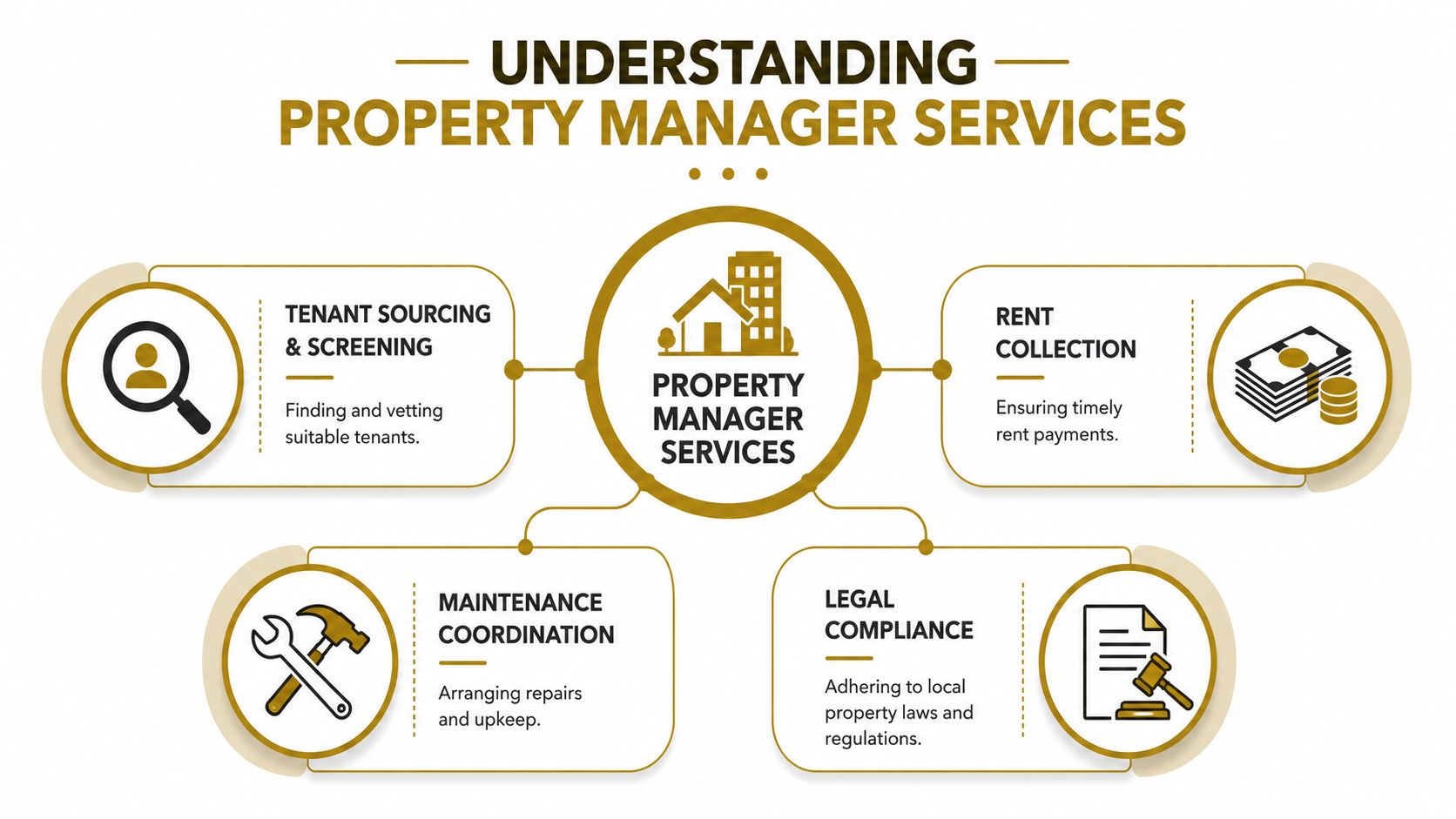
A property manager is basically the coordinator between the owner, the tenant, and the trades. This role operates much like a relay team. The owner sets the finish line, but the manager handles the handoffs so the whole thing doesn't slow down every time a tenant has a question or a repair pops up.
The four jobs that usually matter most
Tenant sourcing and screening is the first big piece. That means marketing the unit, arranging showings, and checking applications so the right person ends up in the home. In Maple Ridge, that could mean highlighting a unit near École Riverside Secondary because it fits a family looking for school access.
Rent collection comes next. A manager sets up the process, follows up when payments are late, and keeps records in order. That's less glamorous than showings, but it's what keeps the investment stable month to month.
Maintenance coordination is where local knowledge matters a lot. If a repair comes up in a home near Hammond Park, speed matters. A manager who already knows reliable plumbers, handypeople, and appliance technicians can often shorten the gap between problem and fix.
Legal compliance is the quiet part that saves owners from expensive mistakes. Notices, documentation, screening, and eviction procedures need to be handled carefully. For a deeper breakdown of the role itself, this guide on what does a property manager do is a useful companion.
If you're comparing service depth, it also helps to think about the property itself. A condo near parks and schools may need different tenant messaging than a townhome that attracts longer-term renters. For maintenance-related questions, a practical outside resource like understanding mold remediation costs can also help owners think through the hidden side of repairs, even though the market context is different.
Pros and Cons of Hiring a Property Manager
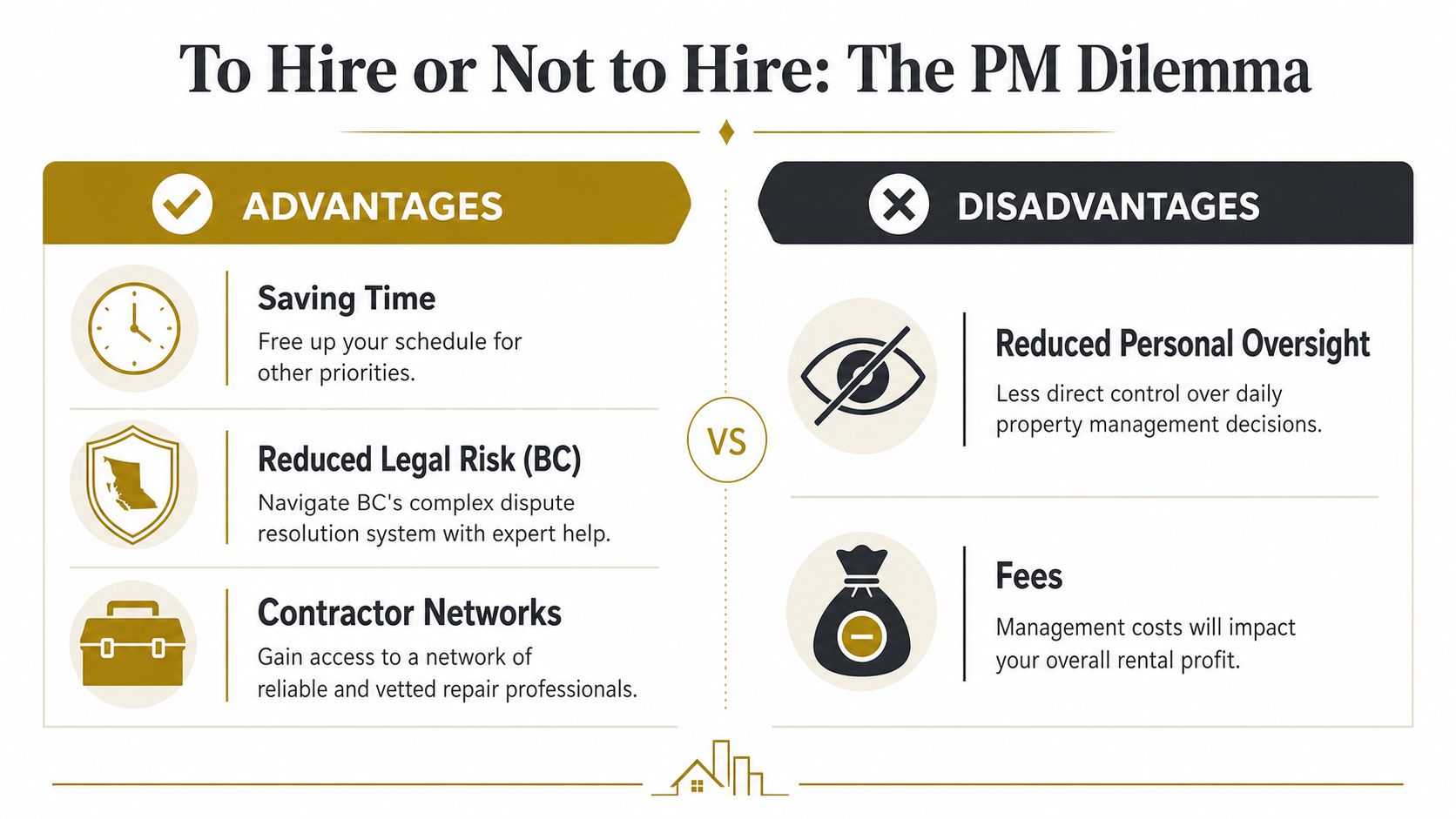
Hiring a manager usually makes sense when the owner's time has more value elsewhere. That might sound blunt, but it's often the most honest way to look at it. If every tenant call pulls you out of work or family time, the management fee starts to look less like a cost and more like an operating expense for peace of mind.
The strongest upside is risk control
The biggest benefit is not convenience, it's structure. A manager brings systems for screening, notice delivery, maintenance tracking, and recordkeeping. In a market where one paperwork mistake can create a messy dispute, that structure matters.
A Silver Valley owner who had help with documentation may avoid the kind of dispute that can drag on because the paperwork was incomplete. An Albion landlord who self-manages might save on fees, but still end up spending weekends coordinating repairs, replying to messages, and trying to remember what was promised in a text thread. The time difference adds up fast.
The trade-off is control
The downside is simple. You won't be the first person to hear every concern, and you won't personally decide every small detail. Some owners like direct control because they want to know exactly who is entering the home, which contractor is used, and how quickly a repair gets approved.
There's also a communication issue that people don't always mention. Some landlords miss the direct feedback they used to get from tenants, especially when the manager filters out the day-to-day noise. That can be a good thing if the noise is constant, but it can also make an owner feel slightly out of touch.
A good manager doesn't remove the owner from the business, they remove the owner from the chaos.
For a local perspective on how these trade-offs work in practice, see self-managing vs hiring property management in Maple Ridge.
Typical Fees and ROI in Maple Ridge
The fee conversation usually starts too small. People ask, “What does a manager charge?” The better question is, “What does the manager cost me compared with the money, time, and mistakes I might save?”
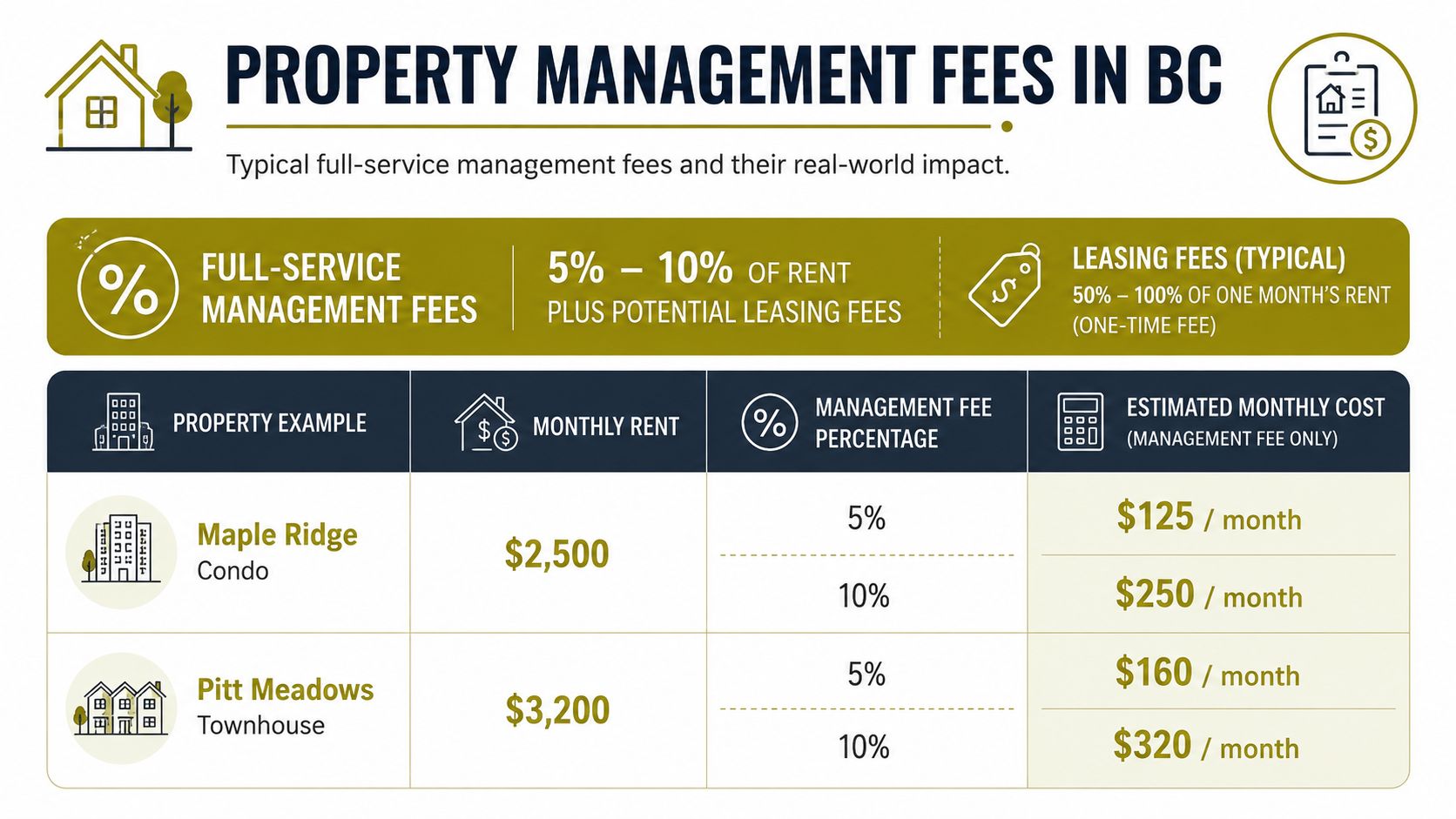
For a typical Canadian rental property, full-service management usually costs about 5% to 10% of collected rent plus leasing fees according to this industry guide. For owners in Maple Ridge and Pitt Meadows, that range needs to be tested against local rent, local vacancy risk, and how much hands-on work the home needs.
What the fee looks like in real life
A $2,500 Maple Ridge condo at the low end of that range would cost $125 per month, while the high end would be $250 per month. A $3,200 Pitt Meadows townhouse would work out to $160 per month at 5%, or $320 per month at 10%. Leasing fees and extras can sit on top of that, so the total annual outlay is usually higher than the headline percentage.
That's why the ROI test matters. If a manager helps reduce vacancy, keeps a tenant longer, avoids a legal mistake, and gets repairs handled faster, the fee can be easier to justify. If the property is simple, nearby, and the owner has time to manage it properly, self-management may still win on pure cash flow.
A useful break-even mindset
Ask yourself three questions. How much time are you spending each month? How often does the property need coordination that you'd rather not handle? And how likely is a mistake if you keep doing everything yourself?
The answer changes by property type. A quiet condo near trails and schools is often easier to self-manage than a townhome with more turnover or more moving parts. A local management service, including options like property management fees in Maple Ridge landlords should expect, can help you compare real numbers before you commit.
Signs You Need a Property Manager
Some landlords wait until they're already frustrated. By then, the signs were obvious for months. If you're getting repeated late-night repair calls, you're missing deadlines, or you're spending too much time on the rental, the property is already telling you something.
The clearest warning signs
If you're managing more than one unit, the administrative load grows quickly. That doesn't mean you must hire help immediately, but it does mean the margin for error gets thinner. A single missed response can turn into a bigger problem when you're juggling multiple homes.
If vacancy is staying higher than you're comfortable with, that's another signal. A listing that sits too long often points to weak marketing, slow follow-up, or poor showing coordination. In a place like Albion, where families may tour homes around school decisions, delays can matter.
If you keep losing track of rent timing, document storage, or repair notes, the system is too loose. Self-management needs discipline, and discipline gets harder when the property is far away or your schedule is already full.
What usually tips the balance
A lot of owners say the same thing after the fact. The management fee wasn't the primary issue. The fundamental issue was the time drain, the stress, and the feeling that they were always half a step behind.
If that sounds familiar, the decision is probably clearer than it feels. A manager is worth considering when the rental starts affecting your workday, sleep, or family time. For some owners, that happens with one unit. For others, it doesn't happen until the portfolio grows.
Alternatives to Full Service Management
Full-service management isn't the only option, and it's not always the right one. Some Maple Ridge and Pitt Meadows owners want more control, lower monthly cost, or a middle path that keeps them involved without making them do everything.
Three common approaches
Fully self-managing works best when the owner is organised, local, and comfortable handling tenant communication. You'll need spreadsheets, saved contractor numbers, and enough spare time to answer messages promptly. The cost is low, but the labour is all yours.
Software-assisted DIY adds structure. Online tools can help with rent tracking, reminders, and document storage, which makes the job less chaotic. This is a decent fit for owners who want to stay hands-on but don't want to run everything from a notebook and email chain.
Hybrid models, such as leasing-only services, give you partial help. You might keep the tenancy day to day but pay someone to place the tenant. That can work well if you're confident with maintenance and communication, but want help on the most stressful part of the process.
Good fit test: If you like control but hate admin, a hybrid model is often the first step before full management.
Local contractors in Pitt Meadows can also support a DIY setup if you already know who to call for plumbing, electrical, and general maintenance. For a practical breakdown of the options, see property management alternatives in Maple Ridge.

If you want an even more local look at service levels, this overview of a property management company in Maple Ridge is a useful reference point.
Interview Questions Decision Checklist
A good manager should be able to answer straightforward questions without getting defensive. If they can't explain their process clearly, that's a warning sign. You're trusting them with rent, records, and tenant communication, so clarity matters.
Questions to ask before you sign
- Local Maple Ridge experience: Ask how often they handle homes in Maple Ridge or Pitt Meadows, and whether they understand neighbourhood-specific tenant expectations.
- Contractor networks: Ask who they call for plumbing, electrical, and general repairs, and how they decide which trades to use.
- Fee guarantees: Ask what's included, what costs extra, and how they handle renewals, leasing, and maintenance charges.
- Communication protocols: Ask how often you'll hear from them, and whether updates come by phone, email, or owner portal.
A simple way to compare candidates
Start by writing down your property details. Is it a condo, townhome, basement suite, or small multi-unit building? Is it near schools, parks, or commuter routes that affect tenant demand? Once you know what you own, it's much easier to judge whether a candidate understands the asset.
Then compare proposals side by side. Don't just look at fees. Score each one on response time, transparency, and local market knowledge. A cheaper manager who communicates poorly can cost more than a slightly pricier one who catches problems early.
Decision rule: Choose the manager who explains the process clearly and knows your neighbourhood, not the one who sounds impressive for five minutes.
If you're still weighing the choice, it may help to talk through your goals with a local team that handles both real estate and rentals. For more on that approach, see property management in Maple Ridge.
If you're trying to decide whether your rental in Maple Ridge or Pitt Meadows is still manageable on your own, reach out to Royal LePage Brookside Realty Property Management for a local conversation about your property, your goals, and the level of help that makes sense before you make your next move.