
You've got a rental property in Maple Ridge, or you're about to have one. Maybe it's a condo near the West Coast Express that you bought as an investment. Maybe it's the family home in Albion you're keeping after a move. Maybe it's a basement suite in Cottonwood that started as a short-term plan and has turned into a long-term holding.
That's usually when the key question shows up. Should you manage it yourself, or hire a property manager?
Most articles make this sound too simple. They frame it as time versus money. In Maple Ridge, and especially under BC tenancy rules, that's not enough. The better question is about net cost, legal exposure, vacancy risk, and how much operational load you can realistically carry without mistakes.
Owning a Rental in Maple Ridge The Big Decision
A Maple Ridge landlord often starts with confidence. The property is familiar. The neighbourhood is familiar. You know Albion's family appeal, Silver Valley's newer housing stock, and why renters want quick access to commuter routes and local parks. On paper, self-management can look straightforward.
Then the practical realities start stacking up. A tenant needs a repair visit booked. A showing has to be coordinated around work hours. A rent review raises questions. An inspection needs proper notice. A move-out turns into a dispute over condition. None of that is unusual. It's ordinary property management in British Columbia.
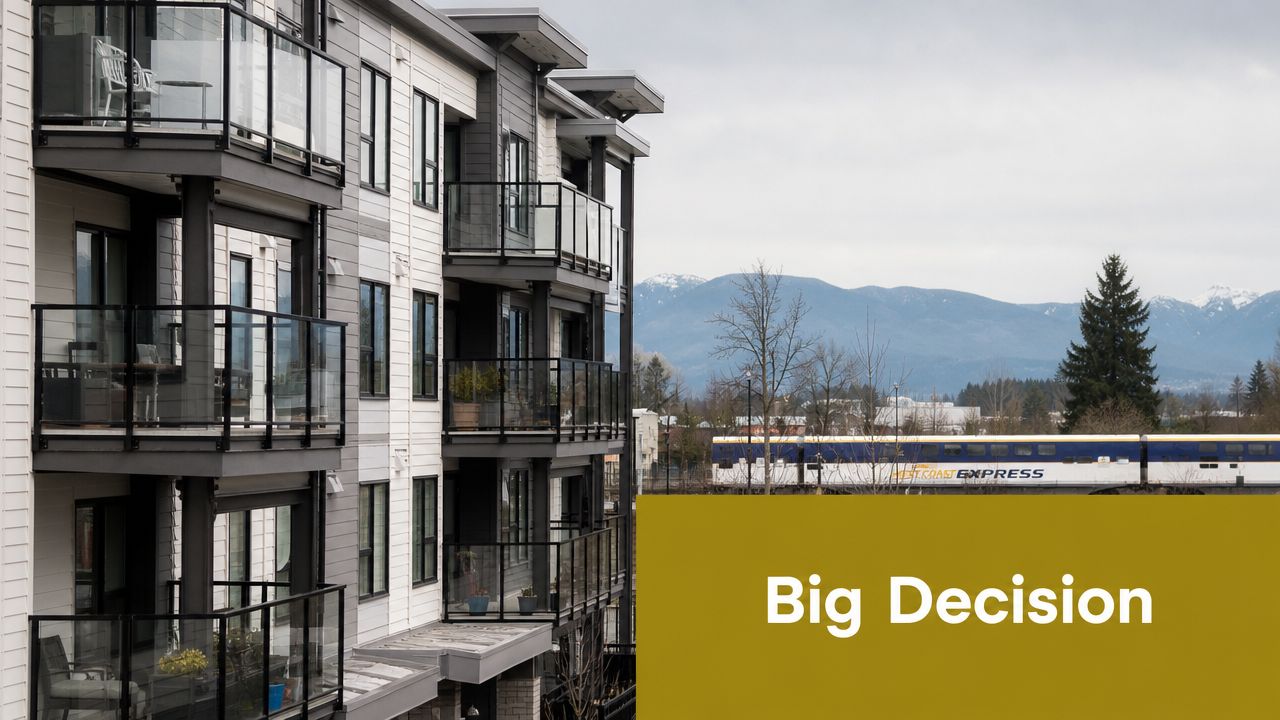
What makes Maple Ridge different from generic landlord advice is the local context. Owners here aren't managing in a low-stakes market. They're holding valuable real estate in a fast-moving part of the Fraser Valley and Metro Vancouver orbit. If your property sits near Meadowridge School, Golden Ears access, or a commuter-friendly corridor, every vacancy day and every tenant mismatch matters.
Here's the side-by-side view most landlords need early on:
| Decision factor | Self-managing | Hiring property management |
|---|---|---|
| Day-to-day workload | You handle all tasks directly | Tasks are delegated and systemized |
| Legal compliance | You track BC rules yourself | A manager handles operational compliance processes |
| Tenant communication | You're the first call every time | Communication is filtered through one point of contact |
| Maintenance coordination | You source and schedule trades | A manager coordinates vendors and access |
| Vacancy response | Depends on your availability | Depends on the company's process and leasing systems |
| Stress level | Higher if you're busy or remote | Lower if you want passive oversight |
The right choice isn't the one with the lowest visible fee. It's the one that protects your income, your time, and your ability to hold the property without unnecessary friction.
This is the key perspective for self-managing vs hiring property management in Maple Ridge. If you enjoy operations, know the rules, live close by, and have time, self-management can work. If your bandwidth is limited or your risk tolerance is low, the fee is only one part of the picture.
The Responsibilities of a DIY Landlord in Maple Ridge
A Maple Ridge landlord gets the call at 9:40 p.m. The tenant says the heat is acting up. Rent review is coming up. A lease renewal needs attention. An applicant from last week is still waiting for an answer. That is the true shape of self-management. It is a chain of decisions that affect income, compliance, and risk.
In this market, the job is not just about saving a management fee. The bigger question is whether you can protect the property's net return while handling BC tenancy rules properly. One preventable mistake with notice, documentation, or rent increases can wipe out months of perceived savings.
The job is operational, but the exposure is legal and financial
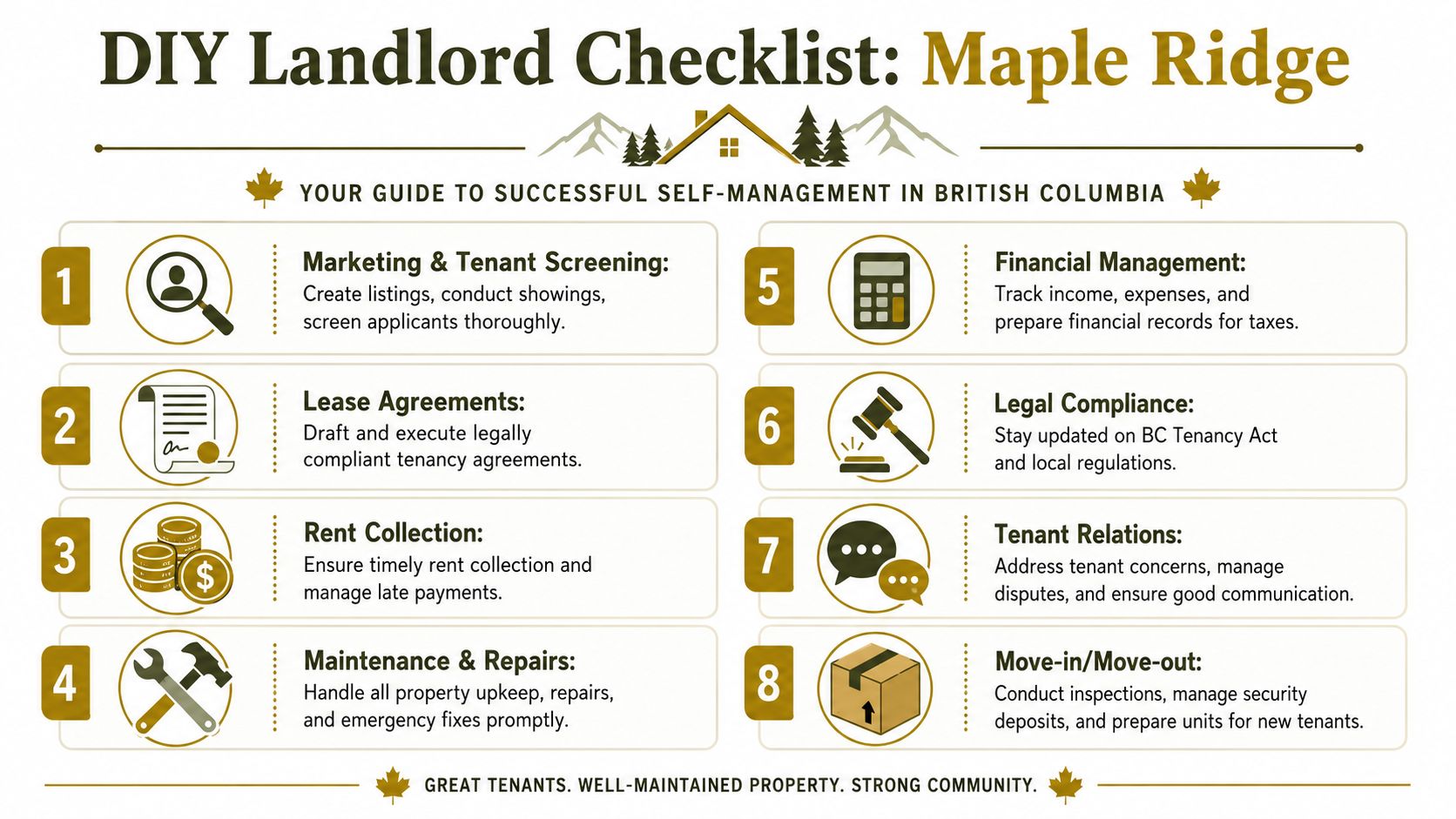
Self-managing means you handle the full cycle yourself. Advertising, inquiries, showings, screening, move-in paperwork, rent collection, inspections, repair coordination, notices, and move-out documentation all land on your desk.
A practical industry overview from this self-managing versus hiring guide points out that owners usually compare self-management time against percentage-based management fees. That is part of the decision, but in Maple Ridge I tell landlords to look harder at hidden cost. Vacancy days, weak screening, poor records, and avoidable Residential Tenancy Branch disputes often cost more than the fee they were trying to avoid.
For owners who want a clearer view of the day-to-day workload, Brookside's landlord resources are a useful reference.
Small errors get expensive under BC tenancy rules
In British Columbia, routine landlord tasks carry compliance consequences. Serving the wrong notice, missing a timeline, using unclear wording, or failing to document a conversation properly can weaken your position fast.
Rent increases are a good example. BC sets an annual allowable increase, and the province publishes those limits directly through the Residential Tenancy Branch. The official BC government pages confirm the maximum increase was 3.5% for 2025 and 3.0% for 2026 in the annual rent increase information from the Province of British Columbia. If you self-manage, tracking changes like this is part of the work.
My rule for DIY landlords is simple. Treat every tenancy step as if you may need to defend it later in writing.
That applies to:
- Screening decisions: Keep a consistent process and written criteria.
- Rent issues: Document payment history, follow-up, and any agreements.
- Repairs: Record when the issue was reported, what was done, and by whom.
- Inspections and move-out: Complete the paperwork carefully and keep photos organized.
- Notices and communication: Use clear written records, not memory or casual verbal side deals.
The pressure points show up fast in Maple Ridge
Maple Ridge rentals do not all behave the same way. A basement suite in Hammond, a townhouse in Albion, and a detached rental in Silver Valley each create different tenant expectations, maintenance demands, and turnover patterns.
The DIY landlords who usually do well have three things in place. They live close enough to respond, they have the temperament to be consistent, and they keep records like a business owner, not a casual investor.
The ones who struggle usually run into familiar problems:
- They answer tenant issues after work, not when the issue happens. Delayed response can make a minor repair more expensive and can strain the tenancy.
- They rush placement to stop vacancy. A weak screening decision can cost far more than a couple of extra vacant weeks.
- They rely on informal communication. Text chains and verbal promises are hard to prove later.
- They get emotionally involved. That happens often with former family homes or inherited properties.
If you are comparing your options, Property Scout 360's property manager guide can help clarify what systems and questions matter before you decide to keep the work in-house or hand it off.
DIY can work in Maple Ridge. It works best for landlords who are available, organized, local, and comfortable handling both the human side of tenancy and the procedural side of BC law. If any one of those pieces is weak, the actual cost of self-management rises quickly.
What a Maple Ridge Property Manager Handles for You
A professional property manager takes the same list of responsibilities and turns it into a repeatable system. That's the biggest difference. You stop being the person doing every task and become the owner overseeing the result.
The shift from active landlord to managed asset owner
A good manager handles the operational chain from first inquiry to move-out. That usually includes marketing the property, fielding inquiries, arranging showings, screening applicants, preparing tenancy paperwork, collecting rent, coordinating maintenance, and dealing with routine tenant communication.
That matters in Maple Ridge because the work isn't evenly distributed. Some months feel quiet. Then one turnover, one repair issue, or one strained tenant relationship can consume a lot of time very quickly.
A manager also creates separation. That's useful when the property is a former family home in West Maple Ridge or a newer townhouse in Albion and the owner is too emotionally close to the asset. Tenancies often run better when communication is professional, consistent, and less personal.
Where the value shows up in daily operations
The practical benefit isn't just convenience. It's process control.
- Leasing systems: Showings, application handling, and follow-up happen on a schedule rather than when the owner gets free time.
- Communication discipline: Tenants have one channel for maintenance, questions, and notices.
- Vendor coordination: Repairs don't depend on the owner scrambling to find a plumber after hours.
- Documentation: Files, notices, inspection records, and tenancy communications stay organized.
If you're comparing companies, Property Scout 360's property manager guide is a useful checklist because it pushes owners to look past the fee and ask how the company operates.
For owners who want a local service overview, Brookside's property management page outlines what full-service management typically covers in this market. Royal LePage Brookside Realty Property Management is one local option for landlords who want the rental side handled under the same roof as broader real estate services.
A property manager doesn't remove ownership responsibility. They remove the need for you to personally execute every recurring task.
That's why professional management tends to appeal to busy professionals, out-of-town owners, and landlords who want their Maple Ridge rental to function more like an investment and less like a second job.
Self-Managing vs Professional Hire A Direct Comparison
The cleanest way to evaluate this decision is to compare the two models across the points where landlords feel the difference.
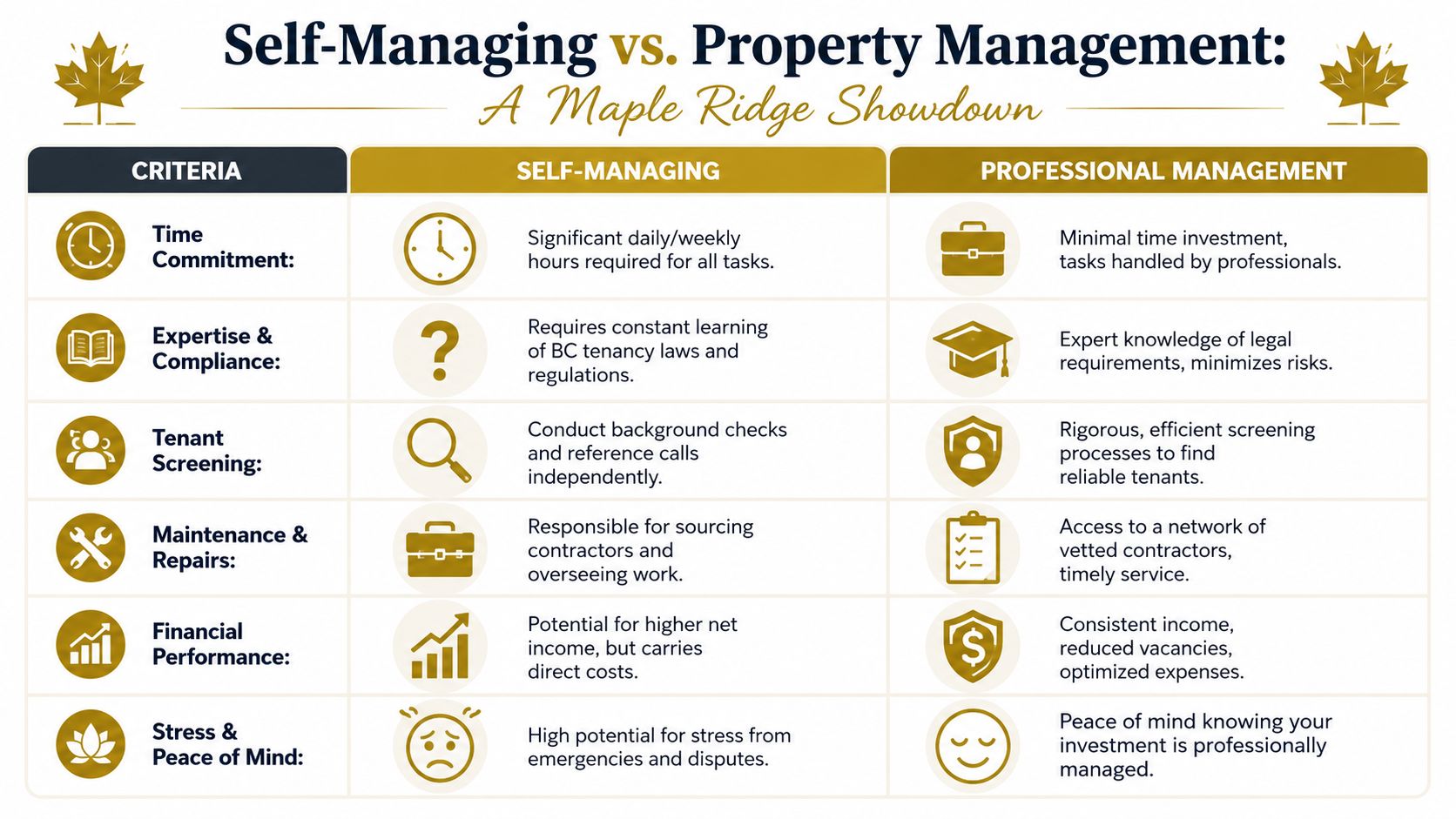
Direct comparison by operating category
| Category | Self-managing | Professional management |
|---|---|---|
| Tenant placement | You run marketing, showings, and screening | The company runs a leasing process |
| Rent collection | You collect, track, and follow up | The company administers collection and reporting |
| Maintenance | You receive calls and coordinate repairs | The company triages and dispatches vendors |
| Compliance | You stay current on BC rules and notices | The company applies established notice and process systems |
| Tenant relations | You handle every issue directly | The company acts as the main communication layer |
| Owner time | Hands-on | Oversight-focused |
A video overview can help if you want to see the broader landlord-management relationship in practical terms.
The biggest operational difference is coordination
In British Columbia, a landlord must give at least 24 hours' written notice before entering a rental unit, and that notice must state a permitted reason and a narrow time window, according to this property management comparison article. For a Maple Ridge owner, that means inspections, repair visits, and showings all require proper scheduling and documentation.
That sounds minor until real life gets involved. A contractor can only attend on a certain afternoon. The tenant asks for a different time. The owner is working. The repair becomes urgent. Suddenly a routine access issue becomes a compliance issue.
Where DIY performs well
Self-management tends to perform best in a few specific situations:
- You live nearby: If you're in Hammond, Cottonwood, or central Maple Ridge and can get to the property quickly, you have a built-in advantage.
- You're organised: Owners with solid systems for files, notices, and maintenance records often do fine.
- You like direct control: Some landlords want to approve every repair and speak to every applicant.
Where professional management usually pulls ahead
Professional management becomes more compelling when the property isn't close, the owner is busy, or the tenancy is more demanding than expected.
A manager centralizes notices, access scheduling, and tenant communication under one process. That doesn't just save time. It reduces the odds of a preventable error caused by rushed coordination.
If you have to squeeze landlording between meetings, family commitments, and commuting, the issue isn't whether you can do it once. It's whether you can do it consistently.
The phrase self-managing vs hiring property management in Maple Ridge often gets treated like a lifestyle choice. In practice, it's an operations question. Which model is more likely to produce consistent screening, consistent response time, and consistent compliance over the full life of the tenancy?
The Financial Breakdown Cost vs Value
A Maple Ridge landlord can save the monthly management fee and still come out behind.
I see that in real numbers, not theory. One extra vacant week between tenants, an avoidable hearing over notice or deposit handling, or a repair that gets worse because no one coordinated access quickly can wipe out months of fee savings. Under BC's Residential Tenancy Act, the expensive part is often the mistake, not the routine work.
Fee comparison is the easy math
The management fee is visible, so it gets all the attention. The harder calculation is net return after vacancy, repairs, compliance errors, leasing quality, and owner time.
That matters more in Maple Ridge than many owners expect. Rents are meaningful, property values are high enough that a poorly managed tenancy has real financial consequences, and tenants have clear rights around notice, deposits, condition inspections, entry, and dispute processes. If the file is not handled properly, the owner carries the risk.
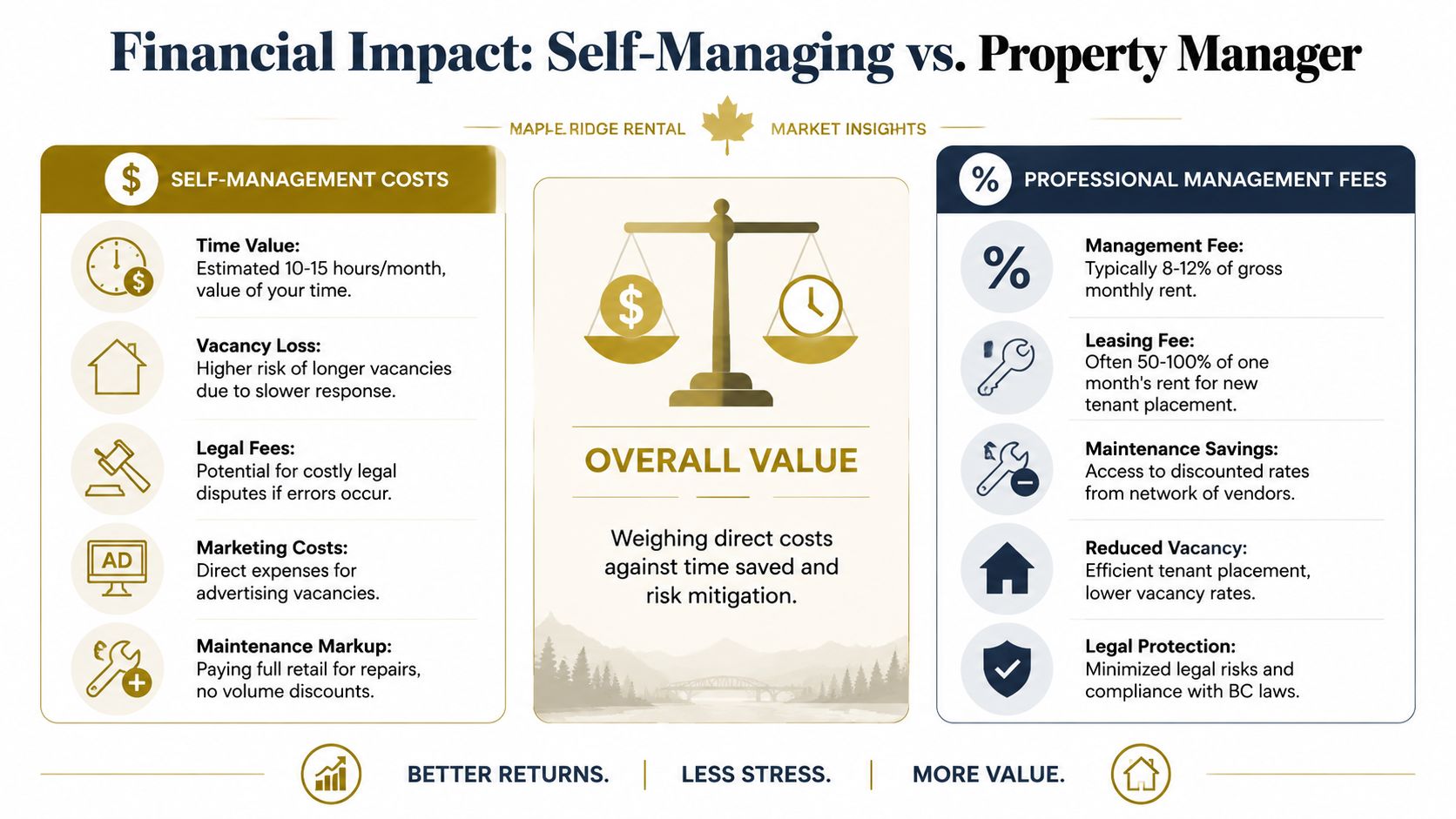
The true cost usually shows up in four places
First, there is vacancy loss. A property that sits in Albion, Silver Valley, or West Central because showings are delayed or follow-up is inconsistent is losing income every day.
Second, there is leasing quality. Weak screening can cost far more than a management fee if it leads to arrears, property damage, or a tenancy that ends in dispute.
Third, there is RTA exposure. In BC, process matters. Deposit handling, move-in condition reports, service of notices, and entry rules are not paperwork details. They affect whether an owner can defend a decision if the tenancy goes sideways.
Fourth, there is owner time with a real dollar value. If you are leaving work to meet trades, answer tenant calls, post notices properly, or coordinate turnover, that time has a cost even if it never appears on a statement.
If you want to test whether the rental still works after mortgage, strata, taxes, insurance, and management, use this Maple Ridge rental carrying cost mortgage payment calculator.
Value changes depending on the tenancy, not just the owner
A quiet long-term tenant can make self-management look very efficient. A turnover, water leak, noise complaint, or payment issue changes the math fast.
That is why I tell owners to stop asking whether management is cheaper than doing it yourself. The better question is whether your current system protects net income and reduces avoidable risk. In this market, a good manager is often paid for by fewer leasing gaps, better documentation, firmer vendor control, and fewer preventable errors.
For owners who like process, the property management items for 2025 list is a useful reminder of how many moving parts sit behind one tenancy.
DIY can still be the right call. If you live close, know the BC rules well, keep excellent records, and can respond consistently, keeping management in-house can work. If any of those pieces are weak, the cheaper option on paper can become the more expensive option over a full tenancy cycle.
A Decision Checklist for Your Maple Ridge Property
By this point, most owners already know which way they're leaning. What helps is pressure-testing that instinct against real-world conditions.
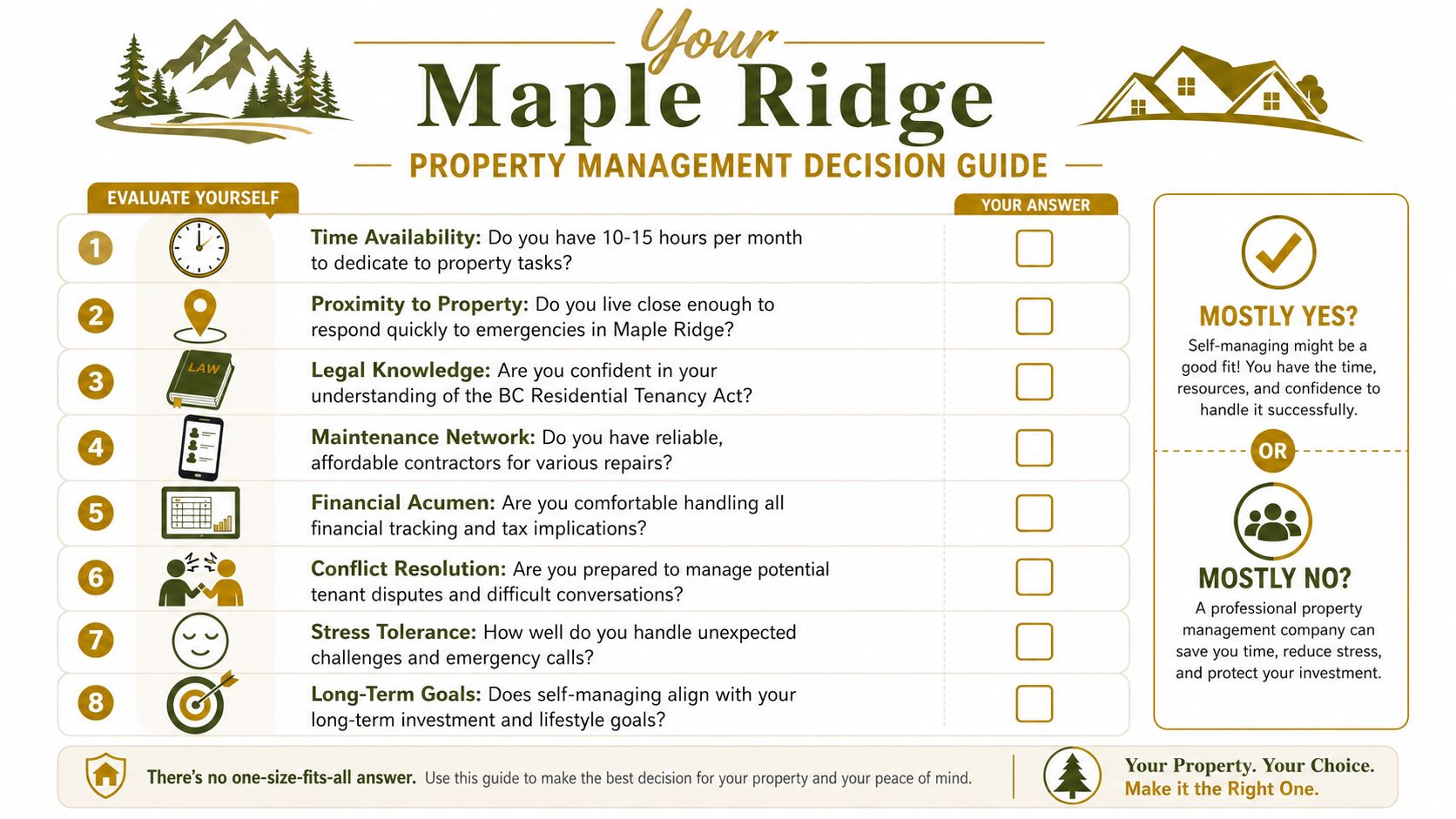
Questions worth answering honestly
Run through these without trying to “win” the checklist.
- Time availability: Do you have reliable time every month for leasing, paperwork, maintenance coordination, and tenant communication?
- Distance: If something goes wrong in Albion, Silver Valley, or near Kanaka Creek, can you respond quickly?
- Conflict tolerance: Are you comfortable having firm, documented conversations when a tenancy becomes difficult?
- Admin discipline: Will you keep inspection records, notices, invoices, and communications organised?
- Trade network: Do you already know dependable local plumbers, electricians, cleaners, and handymen?
The answers matter more than your intentions
A lot of landlords intend to be attentive and organised. The issue is whether your current life supports that. A demanding job, young family, travel schedule, or another property can change the answer.
If you like practical checklists, Superdocu's property management items for 2025 is a useful outside prompt for thinking through recurring tasks and oversight points.
You can also turn this into a simple decision rule:
- If the property is close, your schedule is flexible, and you know the process, DIY may fit.
- If your availability is inconsistent, your legal confidence is limited, or you want the rental to be more passive, professional management usually fits better.
- If you're still unsure, talk the scenario through before the tenancy starts, not after a problem appears. A local conversation through Brookside's contact page is one way to sanity-check the decision.
Recommended Scenarios for Hiring a Professional
A Maple Ridge rental can look manageable until the first real problem lands at the wrong time. A tenant stops paying, a repair request comes in over a long weekend, or a notice is served incorrectly and the file drags on longer than expected under BC rules. That is usually the point where owners stop asking, "Can I do this myself?" and start asking, "What does a mistake cost me here?"
In this market, the decision is rarely about saving a few hours. It is about controlling net cost and limiting exposure under BC's Residential Tenancy Act. One preventable vacancy stretch, one poorly documented inspection, or one notice that does not hold up can cost more than the management fee you were trying to avoid. If you want a neutral framework for weighing management fees against vacancy, compliance, maintenance coordination, and owner time, the BC Financial Services Authority landlord resources are a better fit for this conversation than generic out-of-province advice.
The owners who benefit most from professional management usually have one thing in common. Their risk is higher than they first assumed.
Situations where hiring a professional usually makes sense
You do not live close enough to act quickly
If your property is in Hammond, Albion, Silver Valley, or East Maple Ridge and you are not nearby, routine issues become slower and more expensive. Showings, inspections, leak response, contractor access, and tenant conversations all suffer when every step depends on travel or a gap in your schedule.Your income depends on your attention elsewhere
I see this often with business owners, shift workers, and professionals in Vancouver or the Tri-Cities. The cost is not just time spent answering messages. It is the interruption, the missed follow-up, and the fact that tenancy issues rarely arrive at convenient hours.You own multiple units, or plan to
One rental can be handled with discipline. Two or three rentals expose weak systems quickly. Lease dates, condition reports, maintenance records, annual rent increase timing, and contractor coordination all need structure if you want to avoid preventable losses.You are not confident with BC tenancy procedure
A lot of owners are comfortable with the property itself and less comfortable with the paperwork that protects them. That is where mistakes happen. In BC, process matters. Service rules, timelines, documentation, and wording matter. If you do not want to stay current on that, hiring a manager is a practical risk decision.The property has emotional history
Former family homes are the classic example. Owners in that position often struggle to stay objective on rent, repairs, and enforcement. Professional distance usually leads to better decisions and cleaner communication.The property needs tighter maintenance control
Older Maple Ridge homes, basement suites, and properties with drainage, roof, or moisture history need consistent oversight. Delayed repairs cost more here because small issues turn into tenant complaints, habitability disputes, and larger repair invoices.
The best fit for professional management is usually an owner who wants steady execution, clean records, and fewer expensive surprises.
If you want to see how that plays out in day-to-day service, Brookside's client testimonials from local rental owners give useful context.
If you are weighing the decision for your own property, Royal LePage Brookside Realty Property Management works with Maple Ridge owners who want a practical, grounded assessment of cost, risk, and fit for their rental.