If you're looking at Albion right now, you're probably trying to solve a real-life problem, not just browse listings. You may need another bedroom, a safer street for kids to ride bikes, a shorter school run, or a home that suits the way your family lives. That's usually where Albion enters the conversation.
A lot of buyers come into Albion Maple Ridge with an older picture in mind. They remember when people talked about it as the practical move-up area, the place where you could still get space without stretching too far. In 2026, that old story doesn't help much. Albion is still one of the strongest family neighbourhoods in Maple Ridge, but it isn't the bargain version of Maple Ridge anymore.
Is Albion the Right Maple Ridge Neighbourhood for You
Families often narrow their Maple Ridge search the same way. They start in one area for budget, drift into another for schools, then realise what they really want is a neighbourhood that feels organised around daily family life. Albion keeps showing up in that search because it delivers that sense of community better than many nearby pockets.
Maple Ridge has grown quickly. In the 2021 Census, the city's population reached 90,990, which was 10.6% higher than in 2016, reflecting strong residential development across the community and helping explain why Albion became such a key destination for family housing in the city's expansion (Maple Ridge census overview).
What buyers are usually trying to find
In practice, buyers who choose Albion are usually looking for a mix of four things:
- More usable space: Not just square footage, but layouts that work for kids, guests, home offices, and often extended family.
- A neighbourhood feel: Streets where people know each other, parks get used, and weekends don't require driving across town for everything.
- School and recreation access: Families want routines that are manageable on busy weekdays.
- Longer-term fit: Buyers aren't usually shopping for a two-year stop. They want a home they can grow into.
That's where Albion earns its reputation. It has a family-centred rhythm that many buyers feel right away. It also competes closely with other east Maple Ridge areas, especially if you're weighing lot style, road access, and school catchments. If you're deciding between nearby options, this comparison of Silver Valley vs Albion for growing families in 2026 is a useful next read.
Albion works best for buyers who want a community-first neighbourhood and understand they're shopping in a premium family market, not a hidden bargain pocket.
Who tends to thrive here
Albion is a strong fit for move-up buyers, young families, and buyers who want detached-home living with a more established neighbourhood identity than some newer subdivisions can offer. It can also suit multigenerational households when the home layout supports that setup.
Where it doesn't fit is just as important. If you want a more urban feel, easier transit-led commuting, or a lower-maintenance lifestyle with fewer family-oriented surroundings, another part of Maple Ridge may suit you better.
The Albion Lifestyle Character and Community
Albion doesn't feel family-oriented by accident. The numbers line up with what you see on the ground. Albion has a population of 12,424, a population density of 692 people per square kilometre, and a median age of 37.1, which is younger than Maple Ridge overall and younger than the broader provincial average. 58% of households include families with children at home, which helps explain why the neighbourhood feels so centred on schools, parks, sports, and weekend routines (Albion demographic profile).
What those demographics feel like in real life
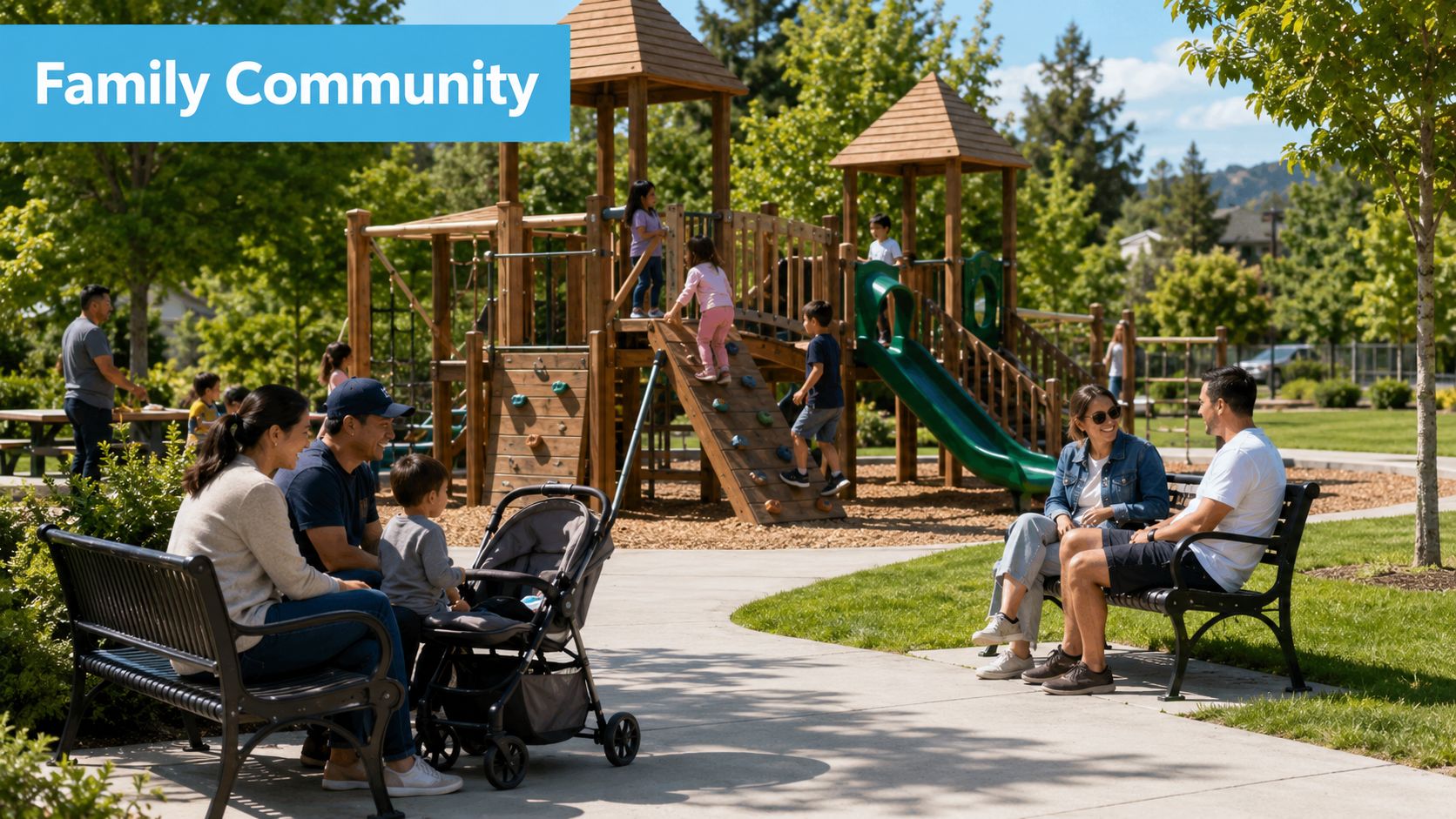
A younger neighbourhood changes the day-to-day atmosphere. You notice more strollers, school drop-off traffic, playground conversations, and family calendars built around hockey, soccer, dance, and after-school pickups.
That also creates a certain pace. Albion is active, especially in the mornings, after school, and on weekends. Buyers who want quiet streets with very little neighbourhood activity sometimes find it busier than expected. Families usually see that as a positive because it signals a lived-in, connected community.
Three things define the character here:
- The parks get used: Green space isn't just decorative. Families spend time there.
- Schools shape the social fabric: Parents meet through classrooms, sports, and school events.
- Neighbours tend to stay put: That creates a more settled atmosphere than areas with heavier turnover.
Why Albion feels different from other parts of Maple Ridge
Some Maple Ridge neighbourhoods offer more rural breathing room. Others offer stronger access to shopping corridors or commuter routes. Albion's identity is different. It's more intentionally residential and family-led.
That's part of why transportation conversations matter here too. Buyers who commute toward the region often ask how future transit planning may influence east-of-core neighbourhood decisions. For that broader context, it helps to review what the SkyTrain Evergreen extension discussion could mean for Maple Ridge commuters.
A quick neighbourhood look helps if you haven't spent much time in the area yet:
Social life in a family-heavy area
Albion's social side tends to be practical rather than flashy. People connect through school communities, youth sports, dog walks, and nearby parks. That matters more than many buyers expect. A neighbourhood can look good on paper and still feel anonymous. Albion usually doesn't.
Local read: If you want a neighbourhood where kids are visible, parents are involved, and recreation is part of the weekly routine, Albion delivers that better than many buyers expect.
For buyers without children, that same identity can feel less suited to their lifestyle. That doesn't make Albion a bad choice. It just means the neighbourhood is strongest when your priorities line up with what it already does well.
Navigating the Albion Real Estate Market in 2026
The biggest mistake buyers make in Albion Maple Ridge is using outdated price expectations. They read older neighbourhood summaries, hear someone describe Albion as affordable, then start their search assuming they're entering a softer entry-level market. That's not the current reality.
In June 2026, the average house sold price in Albion was $1,255,000, with sold prices ranging from $1,100,000 to $1,515,000 (Albion June 2026 house market report). That positions Albion as a premium family neighbourhood, not a low-cost fallback option.
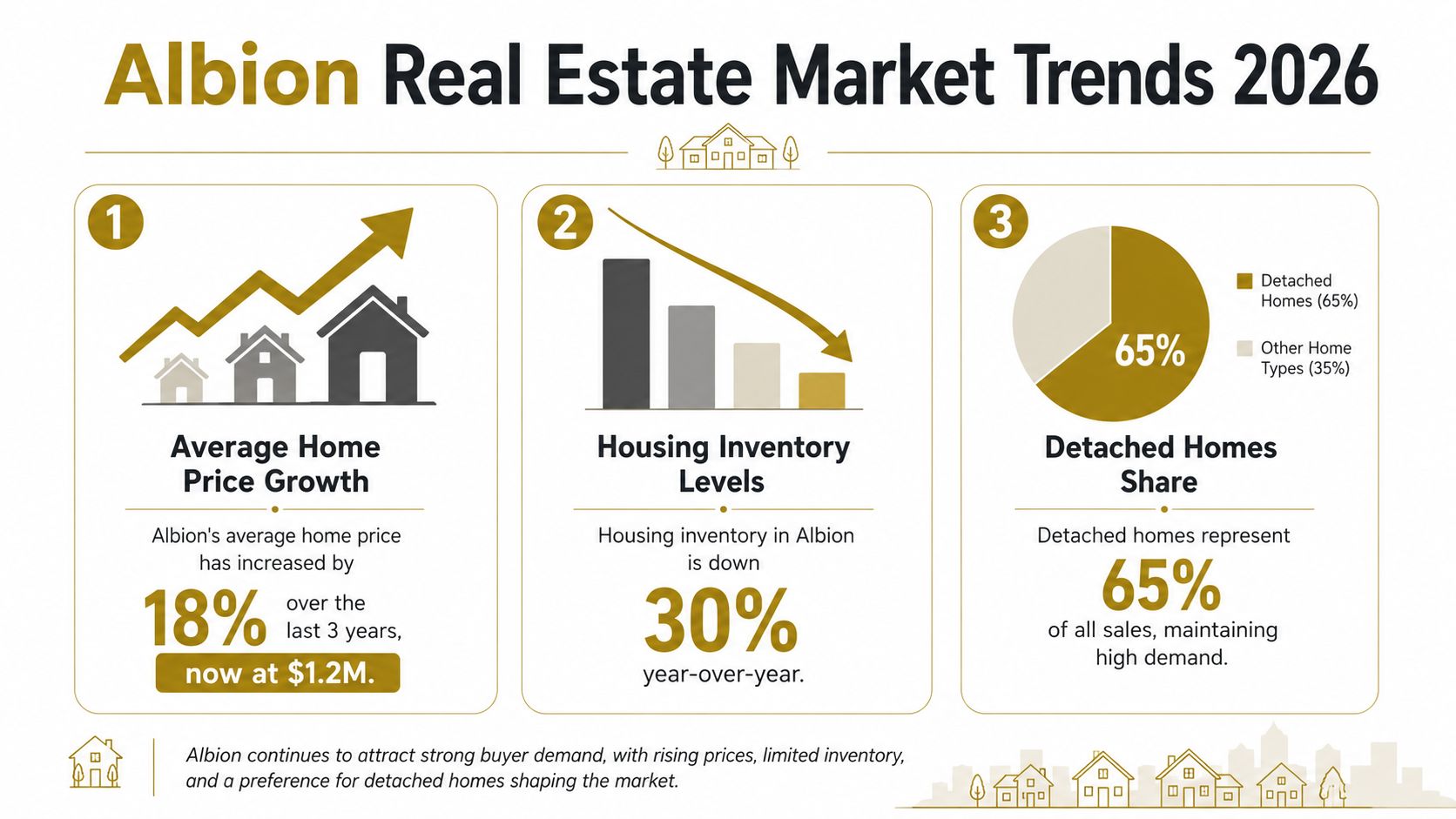
The old affordability narrative lingers long after the market has moved on. In 2026, detached buyers need to underwrite Albion as a premium neighbourhood.
Why the affordability myth keeps hanging around
Part of the confusion comes from how people talk about Maple Ridge generally. Buyers compare Albion to more expensive parts of the wider region and conclude it must still be a value play. Relative value and true affordability are not the same thing.
Albion can still offer better space value than some neighbouring markets outside Maple Ridge. But if you're shopping for a detached house in Albion, you're shopping in a price band that requires serious financial planning, realistic expectations, and clean decision-making.
That's especially important for buyers moving up from a condo or townhouse. The jump can be larger than expected, not just on price, but also on carrying costs, maintenance, and insurance.
The broader Maple Ridge context matters
Albion doesn't trade in a vacuum. Broader Maple Ridge conditions shape buyer psychology and seller strategy. In Maple Ridge, detached home sales reached 578 in April 2025, down from 814 in April 2024, which reflected a notable slowdown in detached activity during that period (Maple Ridge detached sales trend).
There are also signs of stabilisation in benchmark pricing. Maple Ridge's benchmark home price was $666,400 in April 2026, up 0.3% month over month from March 2026, suggesting some price steadiness even while the market remained selective (Maple Ridge benchmark price update).
What that means in practice:
- Sellers can't rely on old momentum alone: Pricing still needs to match current buyer behaviour.
- Buyers have more room for analysis than in frenzy conditions: But strong homes in strong pockets still move with confidence.
- Neighbourhood quality matters more in a balanced market: Albion benefits because buyers already understand its appeal.
If you want a wider read on local conditions before zooming back into Albion, this breakdown of Maple Ridge real estate trends adds useful market context.
What works and what doesn't in this market
Some sellers still list based on peak-era expectations or on what a neighbour hoped to get months ago. That usually leads to stale time on market and price corrections. Buyers notice quickly when a listing is chasing the market instead of reading it.
On the buy side, low offers without a clear rationale rarely get traction on well-positioned Albion homes. Buyers do better when they understand the specific value drivers of the property in front of them. Lot utility, suite potential, school proximity, and finish quality all matter. So does the difference between a home that looks updated online and one that has been maintained well.
Finding Your Fit in Albions Housing Market
Albion's housing stock makes more sense when you stop thinking in broad labels and start matching home type to lifestyle. Buyers often say they want “a house in Albion,” but what they really want could be very different. Some need a detached home with a suite setup. Others want a modern townhouse with less exterior maintenance and better budget control.
The main choices buyers compare
Detached homes dominate the conversation because they match Albion's family image. They often appeal to buyers who want more bedrooms, private outdoor space, room for a home office, or flexibility for relatives.
Townhomes attract a different buyer. They work well for first-time buyers moving into the neighbourhood, younger families who want school and park access without taking on full detached-home upkeep, and downsizers who still want a residential setting rather than a condo environment.
Here's a practical side-by-side view.
| Home Type | Typical Price Range | Key Features | Best For |
|---|---|---|---|
| Detached family home | In the upper end of Albion's local market | Larger layouts, private yards, more storage, often better flexibility for home offices or extended family use | Move-up buyers, larger families, multigenerational households |
| Detached home with secondary suite potential | Varies by layout, condition, and suite usability | Similar family-home benefits with added flexibility for mortgage support or family occupancy | Buyers thinking long-term, investors, families wanting income support |
| Modern townhouse | Generally below detached-home pricing | Compact efficient layouts, lower exterior maintenance, community setting, practical for busy households | First-time buyers, smaller families, downsizers |
| Older attached or attached-style options | Depends heavily on condition and updates | Entry point into Albion lifestyle, but quality and monthly ownership costs need close review | Buyers prioritising neighbourhood access over lot size |
What to check before you fall in love with a floor plan
Layout matters more than brochure language. An open-concept main floor can feel great until you realise there's nowhere for kids' gear, no proper mudroom, and no separation for working from home.
Outdoor usability matters too. A large yard sounds ideal, but some buyers end up preferring a smaller, easier-to-maintain space they'll use well. If outdoor design is a big part of your purchase decision, tools like ai for landscape design can help buyers visualise how a backyard could function before taking on a major outdoor project.
A broader guide to types of homes Maple Ridge buyers should compare is helpful if you're still sorting out whether detached, townhome, or mixed-use family layouts make the most sense.
Practical rule: Don't buy the biggest home you can stretch into if the layout solves the wrong problem. Buy the home type that fits your next five years.
What tends to work best
In Albion, the best fit usually comes down to routine. If you want privacy, storage, and flexibility, detached living is often worth the premium. If you want neighbourhood access with a more controlled ownership experience, townhomes can be the smarter move.
What doesn't work is buying solely for the label. “Detached” isn't automatically better if the lot is awkward, the interior flow is poor, or the maintenance burden overwhelms your monthly budget.
Schools Parks and Amenities
A good neighbourhood has to work on a Tuesday, not just during an open house on Saturday. Albion does well here because daily family logistics are built into how the area functions.
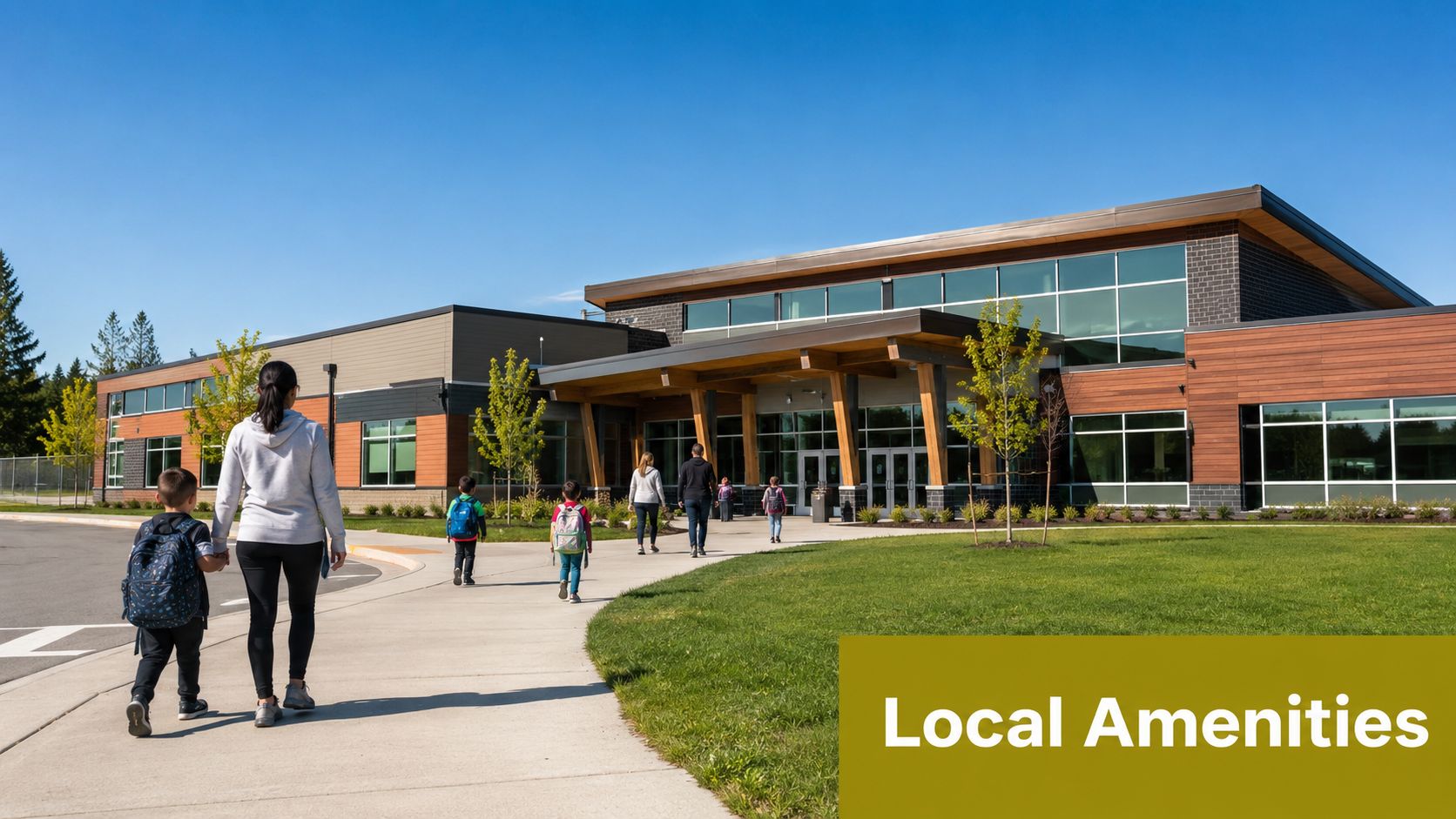
Parents often choose Albion because school access and recreation are woven into ordinary routines. c̓əsqənelə Elementary matters to younger families who want a strong local school presence close to home. Samuel Robertson Technical Secondary is another major draw, especially for households planning beyond the early elementary years.
What daily life tends to look like
A typical weekday in Albion is structured around movement between home, school, and recreation. Kids head to class. Parents juggle work and pickups. After school, families spread out to parks, sports facilities, and nearby errands rather than driving long distances for every activity.
The Albion Sports Complex is one of those amenities that changes how a neighbourhood feels. It gives the area a real community hub, not just a list of facilities on a map. For active families, that convenience matters more than flashy features.
Other practical advantages include:
- Parks and trails close to home: Useful for everyday walks, not just occasional weekend outings.
- Neighbourhood-serving shopping nearby: Enough convenience for regular errands without making the area feel overly commercial.
- Recreation woven into family schedules: Sports, playground time, and outdoor activity are part of the neighbourhood identity.
The trade-offs buyers should know
No neighbourhood amenity mix is perfect. A family-heavy area brings school traffic, busy parks, and activity around drop-off and pickup times. Some buyers see that as energy and community. Others find it busier than they expected.
That's why I tell buyers to test Albion during normal hours. Visit before school, after school, and on a weekend afternoon. The right neighbourhood should still feel right when daily life is happening.
Why amenities support value here
In Albion, amenities support the kind of lifestyle buyers are specifically seeking. Families aren't only purchasing a house. They're purchasing convenience, routine, and a neighbourhood that supports raising children without constant compromise.
That's one reason homes here stay attractive to the same buyer profile year after year. The schools, parks, and recreation aren't side benefits. They're part of the value proposition.
Winning Strategies for the Albion Market
A common 2026 mistake looks like this. A buyer comes into Albion expecting yesterday's prices, hesitates because the number feels high, and loses the home to someone who already accepted what this neighbourhood costs now. With average values around the mid-$1.2M range across the area, old “Albion is the affordable Maple Ridge option” thinking leads to bad decisions on both sides of the deal.
Success here comes from reading the market as it exists, not as people remember it. Sellers who price off 2021 stories usually sit. Buyers who wait for a major discount on the strongest family homes usually keep waiting.
Historical Fraser Valley data shows a seasonal pattern in which spring demand pushes prices higher before a gentler decline into autumn. For Albion specifically, that means sellers often benefit from listing in late spring, while buyers may find more negotiating power in late summer (Fraser Valley seasonal pricing pattern for Albion sellers and buyers). Buyers and investors comparing Albion with the wider city should also review why Maple Ridge continues to attract long-term real estate interest.
For sellers
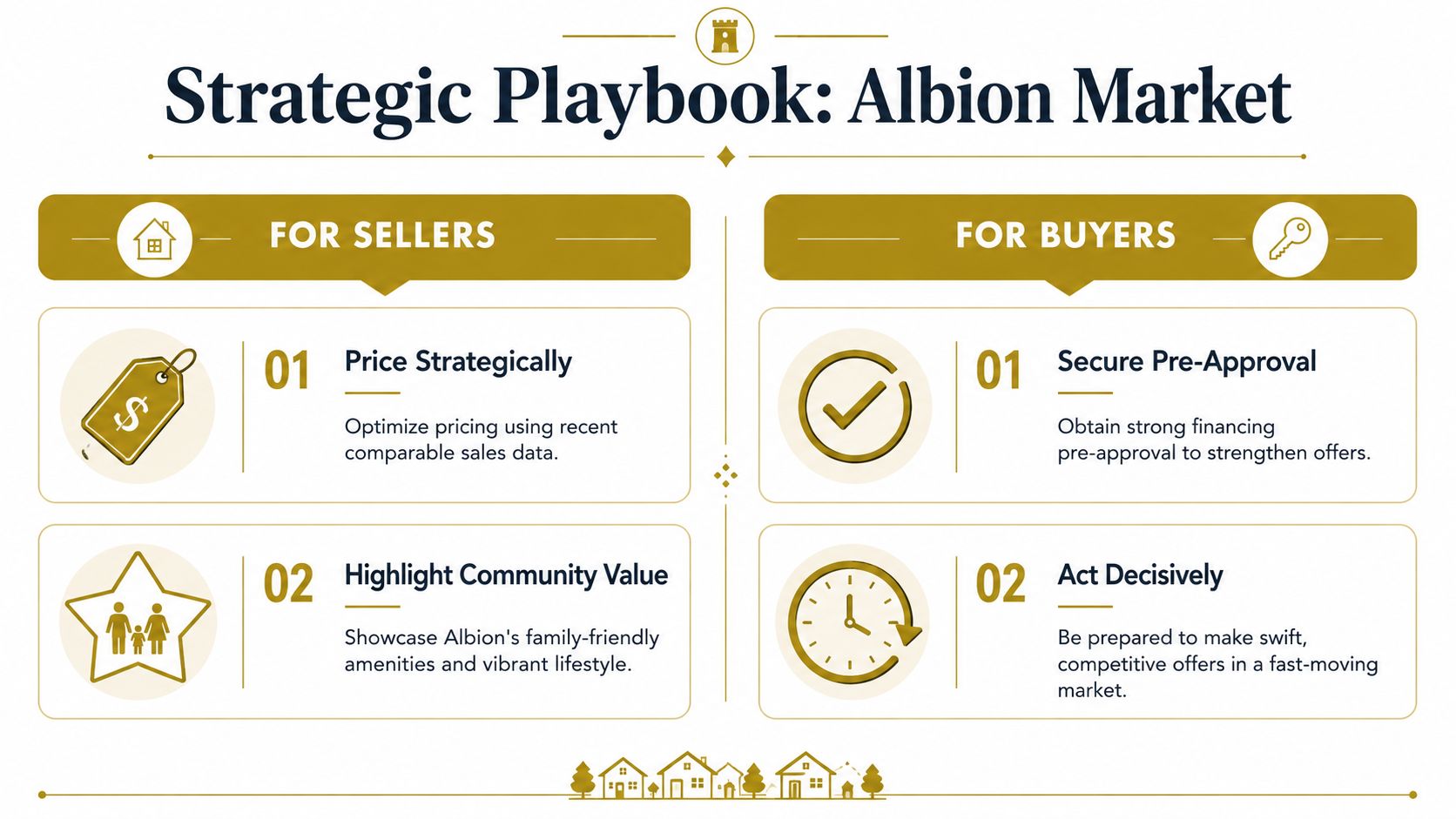
Albion sellers get the best result when price, condition, and buyer expectations line up from day one. Family buyers are practical. They will pay for a home that feels cared for and easy to live in, but they are quick to discount a property that needs work, feels cramped, or looks overpriced against nearby comparables.
A few approaches consistently work better:
- Price from current comparable sales: A neighbour's asking price is not the benchmark. Recent sold data is.
- Show function, not just finish: A nice kitchen helps, but so do storage, mudroom flow, usable bedrooms, and a yard that makes sense for kids or pets.
- Prepare for family buyers: Clear the entry, reduce visual clutter, and make it easy to understand how the home works on a school-day morning.
Overpricing is expensive here. The first two weeks matter because serious Albion buyers watch new listings closely and know the local inventory.
For buyers
Prepared buyers usually beat optimistic buyers. That sounds simple, but in Albion it matters because the best listings attract attention fast, especially homes with updated interiors, suite potential, or a layout that works for a growing family.
What tends to work:
- Get financing in place early. Pre-approval is table stakes if you want to act quickly.
- Rank your priorities before you shop. Commute, school catchment, suite option, lot use, and bedroom count do not carry equal weight.
- Know where to be firm and where to bend. Buyers often overfocus on cosmetic details and miss bigger value in lot quality, floor plan, or resale appeal.
- Write a clean offer when the house is right. Every deal does not require aggressive terms, but delay rarely helps on a strong listing.
I often tell buyers to separate expensive problems from fixable annoyances. Paint, lighting, and flooring are usually manageable. A poor layout, backing issue, or price that strains the monthly budget is harder to solve.
Marketing matters, but only when the story matches the price
Good marketing still matters in Albion because buyers shop online first and eliminate homes quickly. The listing needs strong photos, a sensible floor plan, accurate remarks, and neighbourhood context that speaks to the actual buyer pool.
For a broader look at what is shaping how homes are being presented online, real estate marketing trends for 2026 is useful reading. The practical takeaway is straightforward. Strong marketing gets the right buyers through the door faster. It does not rescue a listing that missed the market on price.
Is Albion Your Next Home The Investment Outlook
Albion stands out when you judge it by the right standard. It's not the budget play many older neighbourhood guides still imply. It's a family-driven, high-demand part of Maple Ridge where community value and property appeal are closely linked.
That makes the investment outlook more interesting than it first appears. Albion's 90% homeowner rate points to a stable ownership base, and that kind of stability matters in neighbourhoods where buyers care about consistency, upkeep, and long-term livability. It also means rental inventory is tighter, which can make homes with secondary suites especially interesting for investors and owner-occupiers thinking ahead.
A stable area with selective opportunity
The strongest Albion purchases tend to be the ones that match the neighbourhood. Functional family homes, properties near key amenities, and houses with flexible layouts usually hold attention better than homes that only look good in listing photos.
For buyers comparing long-term use, rental flexibility, and market positioning, outside perspectives can help too. Resources like ScanStay's market insights can be useful for thinking about property performance models, even though Albion buyers still need local, neighbourhood-specific advice before making a decision.
If you're evaluating Albion as part of a wider strategy, this guide on why investors look at Maple Ridge is a solid companion read.
Albion is a smart choice for buyers who want a neighbourhood that supports family life today and remains desirable over time. If that sounds like the kind of move you're considering, local guidance makes the search much easier.
If you're buying or selling in Albion or anywhere in Maple Ridge, Royal LePage Brookside Realty Property Management can help you sort through pricing, neighbourhood fit, and next-step strategy with practical local advice.