


If you're thinking about selling in 2026, you're probably hearing the same advice everywhere. List in spring. Aim for April. Wait for the perfect week.
That advice is too broad for Maple Ridge.
A homeowner in Silver Valley isn't selling into the same conditions as a condo owner near Town Centre or a family in Albion trying to move before the next school year. In this market, timing isn't just seasonal. It's local, property-specific, and tied to how much competing inventory your buyer will see the moment your home goes live.
Is 2026 the Right Year to Sell Your Maple Ridge Home
A lot of Maple Ridge owners are starting 2026 with the same conversation at the kitchen table. Sell now and get ahead of more listings, or wait for spring and hope the usual advice still holds.
For this market, the national "best week to sell" stories are a distraction. What matters here is whether your home is entering the market during a stretch where buyer demand in your price band and neighbourhood can absorb the homes already for sale.

That is the real 2026 question. Not "Is April the right month?" but "Will my listing face five comparable options or fifteen?"
In a buyer-friendly market, timing gets more precise. A detached seller in Silver Valley, an older rancher owner in West Maple Ridge, and a condo owner near Town Centre are not selling into the same pool of competing inventory. The owners who do well in 2026 will be the ones who watch local supply, recent price reductions, and how quickly similar homes are going pending. Our Maple Ridge real estate market news updates are useful for tracking those shifts at the local level instead of relying on broad national headlines.
Why generic spring advice falls short here
Spring still brings more attention, but it also brings more choice for buyers. That trade-off matters more in Maple Ridge than the calendar headline does.
If your segment gets crowded in March and April, waiting for the traditional rush can put your home beside a long row of similar listings. Buyers become more selective. They compare condition more closely, push harder on price, and skip homes that feel dated or overpriced.
A better rule is simple. List when your demand-to-competition ratio is strongest.
That can mean selling before the busiest stretch if your home shows well and competing inventory is still thin. It can also mean waiting a few weeks if your neighbourhood is temporarily flooded with similar listings and buyers have too many easy substitutes.
Preparation carries more weight in that kind of market. Clean paint lines, updated lighting, repaired flooring, and better photos often do more for your result than chasing a popular listing week. If you're sorting out practical pre-sale upgrades, this Buff & Coat guide for Richmond homeowners is a useful reference because the same resale logic applies here. Prioritize the improvements buyers notice immediately.
What works in 2026
A solid sale plan for Maple Ridge in 2026 usually comes down to three things:
- Price to current competition: Buyers judge your home against what else they can tour this week, not what a neighbour got in a different market.
- Watch your micro-market: The right launch window depends on your property type, school catchment, commute appeal, and how many similar homes are active nearby.
- Create early momentum: The first week matters most when serious buyers and local agents are checking every new listing closely.
Sellers who treat timing as a local supply-and-demand decision usually make better choices than sellers who wait for a magic week on a national chart. If 2026 is your year to move, the right answer depends less on the month and more on how your home fits the Maple Ridge inventory picture at the moment you list.
The Seasonal Pulse of the Fraser Valley Market
A lot of Maple Ridge sellers hear the same advice every year: list in spring and you'll be fine. That is too broad for 2026.
Seasonality still affects buyer behaviour across the Fraser Valley. Better weather brings more showings. Families start planning around the school year. Homes with yards, patios, and mountain views usually present better once winter lets up. Those patterns are real. The mistake is treating them like a fixed rule instead of a starting point.

The spring window isn't identical for every home
Spring is usually the busiest selling season in the Fraser Valley, but busy does not automatically mean better for every seller. In Maple Ridge, the right launch week depends on how many similar homes are already competing for the same buyer.
That matters more in 2026 than generic national advice about a single "best week" in April.
A townhouse in Albion can attract a different buyer timeline than a condo near the town core or a detached home in Silver Valley. Family buyers often start searching early because they are trying to line up schools, childcare, and a summer move. Condo buyers can stay active later into late spring and early summer, especially if they are balancing affordability and commuting costs. Detached buyers usually compare more neighbourhoods and more lot options before they act.
The calendar gives you a rough window. Your local competition determines whether that window works in your favour.
How buyers usually behave through the seasons
Here is the pattern Maple Ridge sellers tend to see year after year:
| Season | What sellers usually see | What it means |
|---|---|---|
| Winter | Fewer listings and more committed buyers | Lower showing volume, but less direct competition |
| Spring | Strong showing activity and more new listings | More buyer attention, but also more nearby substitutes |
| Summer | Vacations, travel, and uneven schedules | Good listings still sell, though momentum can be patchy |
| Fall | Serious buyers trying to close before year-end | A solid second window for prepared homes with clear pricing |
If you want a current read on local conditions instead of relying on old seasonal rules, the Brookside market news page for Maple Ridge and Pitt Meadows updates is a useful place to monitor shifts in listing activity and buyer tone.
One practical warning. Spring traffic does not protect an overpriced listing. It exposes it faster.
Matching timing to property type
Different home categories draw different buyer groups, and each group moves on a slightly different schedule.
- Townhomes: Family buyers often begin early because school planning and move timing matter. If similar units start stacking up in your complex or nearby projects, your pricing room usually tightens fast.
- Detached homes: Buyers compare Maple Ridge with Pitt Meadows, Mission, and other Fraser Valley options. Curb appeal, lot usability, and renovation condition carry more weight once several comparable homes are available.
- Condos: First-time buyers, downsizers, and commuters often stay active deeper into the season. This segment can hold up later, but only if monthly carrying costs and presentation make sense against competing listings.
Seasonal timing still matters. In 2026, inventory pressure matters more. Sellers who watch both usually make better decisions than sellers who wait for a headline about the perfect month to list.
Looking Beyond the Calendar for 2026
A lot of Maple Ridge owners will hear the same advice in 2026. List in spring. Hit the market in April. Catch the buyers while they are out.
That advice is too broad to be useful if inventory stays high and local absorption stays uneven.
In a market like this, timing is less about the month on the calendar and more about how much competition your home will face when it launches. A seller in Maple Ridge needs to know whether supply is building faster than demand, how long comparable homes are sitting, and whether buyers in that price band are still writing offers with urgency.
In March 2026, Maple Ridge recorded 88 homes sold, 105 new listings, and 402 active listings, with homes taking an average of 114 days on market and a median sale price of $884,450 according to this Maple Ridge market snapshot. For a homeowner, that is the true context for deciding when to list.
The three signals that matter most
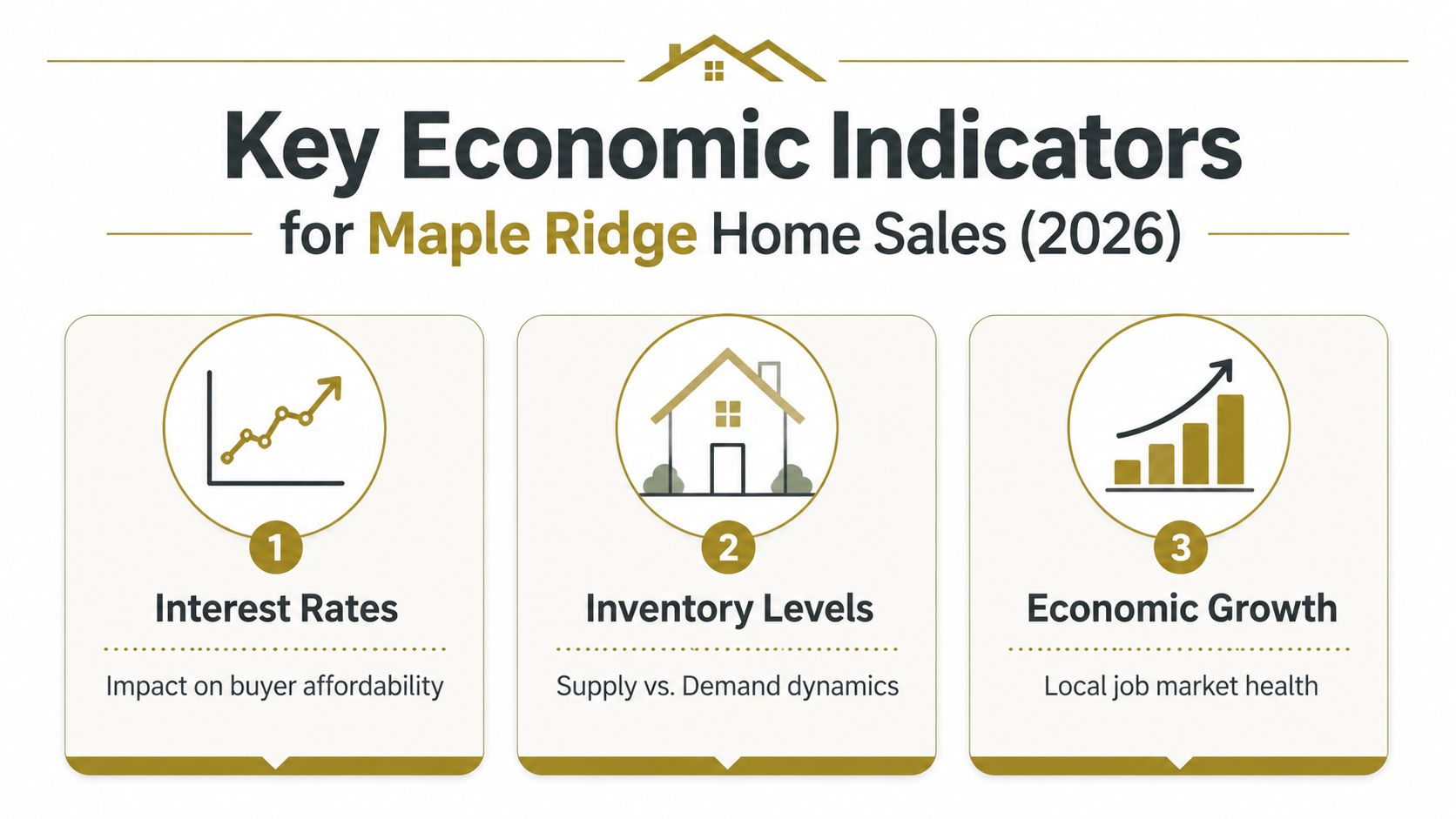
I focus on three indicators before I recommend a launch date.
Active listings
This shows how crowded your category is. If detached inventory rises in your price range, buyers get pickier fast. They compare lot quality, updates, layout, street appeal, and possession flexibility. In that setting, sellers have less room to test an aggressive price and wait.
Days on market
Longer selling times change the plan for everyone involved. If comparable homes are sitting, sellers need to account for extra mortgage payments, property taxes, utilities, insurance, and the risk of having to reduce the price after the first few weeks. A long market time also affects families trying to line up a purchase, school move, or job change.
New listings versus sold homes
This is one of the clearest pressure gauges. When more homes are coming on than going off the market, supply builds. That usually gives buyers more confidence to wait, negotiate, and skip listings that feel overpriced or underprepared.
How to use these numbers as a homeowner
The practical question is simple. Are you entering a market that will absorb your home cleanly, or one that will make you compete harder than expected?
If active listings are climbing, the answer is not to wait for a better weekend on the calendar. The answer is to launch in stronger condition than the homes around you. That means tighter pricing, sharper photos, cleaner prep, and a listing strategy that is ready on day one.
If market time stays long, build more cushion into your plans. Do not assume your sale and next purchase will line up neatly. Owners who need the equity from a sale before buying again should run the numbers early. A tool like this mortgage payment calculator for your next Maple Ridge move can help you test whether your monthly payment still works if your timeline stretches.
If new listings keep outpacing sales, avoid the common mistake I see every year. Sellers come out a little high, planning to adjust later if needed. In a slower market, that first pricing decision often determines whether you get early attention or spend weeks chasing the market down.
Pricing belongs at the front of the plan, not the end.
The Maple Ridge sellers who do well in 2026 will not be the ones following a national headline about the best month to list. They will be the ones reading local inventory, watching absorption in their segment, and choosing a launch window based on actual competition.
Timing Your Sale by Maple Ridge Neighbourhood
A seller in Silver Valley and a seller in Albion can list in the same week and get very different results.
That is the part national advice misses. "List in April" is too broad to help a Maple Ridge homeowner in 2026. What matters is how much direct competition is sitting in your neighbourhood, what buyers in that pocket are prioritizing, and how fast similar homes are moving.

Silver Valley and Albion do not reward the same strategy
Neighbourhood pace changes the playbook.
In practice, Silver Valley often attracts buyers focused on newer construction, trail access, and a more tucked-away setting. Albion draws a broad family market, but it also tends to have more lookalike inventory at the same time. That changes how a listing competes. A polished home in Silver Valley can benefit from strong early interest if the current supply is reasonable. In Albion, sellers usually need tighter pricing and cleaner presentation because buyers often have several comparable options within a small radius.
The takeaway is simple. Check your immediate competition before you choose your launch date. If three similar homes are expected to hit your area in the next two weeks, waiting for a "better month" on the calendar may hurt more than it helps.
What buyers are really shopping for by area
Neighbourhood timing is tied to buyer motive, not just geography.
| Neighbourhood | Typical buyer focus | Timing implication |
|---|---|---|
| Silver Valley | Newer feel, nature access, hillside setting | Early presentation matters because buyers compare finish level and setting closely |
| Albion | Family orientation, schools, parks, townhome supply | More competing inventory can mean less room for aspirational pricing |
| West Maple Ridge | Commute convenience, established streets, access routes | Practical features and access often drive showing activity |
| Cottonwood | Family living, local amenities, newer homes | Buyers often compare several similar homes before writing |
| Kanaka Creek | Outdoor lifestyle, trails, family appeal | Lifestyle marketing needs to match the season and the home's condition |
West-side sellers should also pay attention to commuter demand and street-by-street appeal. Buyers in that part of town are often balancing home condition against drive time, lot feel, and proximity to daily services. The West Maple Ridge neighbourhood page gives useful context for how that area is typically positioned.
A short local video can help you think about neighbourhood positioning before you list:
The mistake sellers make with micro-markets
They rely on city-wide averages and assume their home will follow the same pattern.
It rarely works that way. A house on a quiet street near a preferred school route can move differently than a similar house closer to a busier road. A townhome backing onto green space can outperform another unit in the same complex. A west-side rancher can attract a different buyer than a newer two-storey in an east-side family pocket.
Sell the neighbourhood benefits your buyer is trying to solve for, along with the house itself.
For 2026, the right question is not "What month should I sell?" Ask how quickly homes like yours are being absorbed in your part of Maple Ridge, how many direct substitutes buyers can tour this weekend, and whether your home will show as the best option in that group. That is how sellers get the timing right in a market that may give buyers more choice.
Creating Your Personal Selling Timeline
A lot of Maple Ridge sellers start with the wrong deadline. They pick a month first, then try to force their family, budget, and home prep to fit it.
That approach causes problems in 2026. If your plan depends on a broad headline like "spring is best," you can end up listing later into heavier competition, carrying the home longer than expected, or rushing the prep work that buyers notice right away.

Start with your move date, then work backward
The best selling timeline usually starts with one practical question. When do you need to be out, settled, or holding firm financing for the next move?
A family trying to move before the school year has a different timeline than an owner selling a rental, a couple downsizing from a long-time house, or an estate executor clearing a property. The right launch date comes from those real constraints, plus what homes like yours are facing in your part of Maple Ridge right now.
That is why generic national advice falls short here. A detached home in Albion with strong family appeal may need a different launch strategy than a West Maple Ridge rancher or a condo competing with several similar units. The calendar matters less than your local competition, your preparation level, and how much flexibility your household has.
Build a real 30 60 90 day plan
Most sellers need more lead time than they think. Thirty days disappears fast once trades, cleaning, storage, paperwork, and showing prep are all in play.
First 30 days
Declutter aggressively. Deal with deferred maintenance. Decide what is being moved, donated, stored, or discarded. If the home needs paint, flooring, lighting updates, or yard cleanup, book those jobs early.Next 30 days
Finish cosmetic work and deep cleaning. Start packing what you do not need day to day. If you are buying and selling at the same time, tighten your financing plan and decide how much overlap you can afford.Final 30 days
Confirm price positioning, listing photos, floor plan, showing strategy, and possession terms. This is also the stage where sellers second-guess earlier decisions, which is why the prep and pricing work should already be settled.
Presentation matters more when buyers have options. Good photos are expected. Clear floor plans help. Virtual walkthroughs can also reduce wasted showings, especially for buyers filtering several similar listings, and many agents now compare top virtual tour platforms for agents before choosing what fits a specific property.
Put a dollar figure on waiting
Waiting has a cost, even if you never see it on one invoice.
Mortgage payments continue. So do property taxes, insurance, utilities, and routine maintenance. If the house sits through another season, there is also the risk of more competing listings entering your segment before you do. In some cases, waiting improves your position. In others, it only gives buyers more choice.
I tell sellers to run two timelines side by side. One is the ideal timeline. The other assumes the home takes longer to sell, needs a price adjustment, or overlaps with the next purchase. That second version usually leads to better decisions because it reflects how real transactions work.
Separate your family timeline from market noise
Some sellers can wait. Some should not.
If a delayed sale would strain your cash flow, affect a school move, complicate a separation, or leave you carrying two properties, that needs to drive the plan. If your next move is flexible and your home will stand out well against current competition, you have more room to choose your window carefully.
These questions usually clarify the decision fast:
- If your home sold in 45 to 60 days instead of quickly, would your finances still work?
- If the right buyer showed up next week, could you be ready for showings and a clean move-out plan?
- If three direct competing listings came on in your area, would your home still present as the strongest option?
A free home evaluation for Maple Ridge sellers helps anchor that timeline to your actual property, likely buyer pool, and current competition instead of a city-wide average.
Waiting only makes sense when the likely upside is greater than the carrying costs, effort, and risk you take on by holding off.
Your 2026 Seller Checklist and Next Steps
Good timing isn't one decision. It's a stack of small correct decisions made in the right order.
By the time you list, you should already know what kind of market you're entering, what buyer your home is likely to attract, how your area is behaving, and what delay would cost your household. That's how you remove guesswork from when to sell your maple ridge home in 2026.
A practical pre-listing checklist
Use this as a working checklist before you commit to a launch date:
- Identify your real segment: Are you selling a detached family home, a townhome, or a condo? Your timing should match your likely buyer pool.
- Study your immediate competition: Look at listings in your neighbourhood first. Silver Valley, Albion, Cottonwood, Kanaka Creek, and West Maple Ridge each pull buyers for different reasons.
- Prepare the home for scrutiny: In a buyer-friendly market, unfinished repairs and dated presentation become negotiation points fast.
- Calculate your cost of waiting: Include mortgage, tax, insurance, utilities, and maintenance in the conversation.
- Decide what matters most: Highest price, fastest sale, flexible dates, or a low-stress move. Most sellers can't maximize all four at once.
- Review your marketing quality: Photos, floor plan, video, and showing strategy all matter more when buyers have choice.
Marketing matters more in a supply-heavy market
Many sellers still underinvest in this area.
If buyers are seeing a lot of inventory, your listing package has to do more than document the property. It has to create urgency and clarity. That often means better visuals, a cleaner story about the home's lifestyle fit, and stronger digital presentation. If you're curious how agents compare interactive marketing options, this guide to top virtual tour platforms for agents is a useful overview of the tools that can support listing visibility.
For homeowners who want to understand the broader process from pricing through closing, the Brookside guide to selling your home is a helpful next step.
The final call is personal, not theoretical
Some 2026 sellers should list early. Some should aim for spring. Some should wait until their home is fully ready because a rushed launch would hurt more than a delayed one.
The common thread is this. The right time to sell is when your home is prepared, your pricing is grounded, and your specific neighbourhood gives you a fair chance to compete well.
If you're weighing a sale in Maple Ridge and want a strategy built around your home type, location, and timing goals, Royal LePage Brookside Realty Property Management can help you review current market conditions, pricing options, and the practical trade-offs before you decide when to list.