You're scrolling Maple Ridge listings late at night, and two homes keep pulling you back in. One is a newer condo close to the West Coast Express. The other is a townhome tucked into a quieter pocket near Kanaka Creek. The photos look great. The prices feel more reachable than detached homes. Then the listing says one word that makes a lot of first-time buyers pause: strata.
That pause is understandable. Buyers usually aren't asking for a legal definition. They're asking what strata means for real life. Will your monthly costs be predictable? Can you bring your dog? Can you renovate the kitchen later? If the roof leaks or the balcony needs work, who pays?
In Maple Ridge, those questions matter because strata homes are a practical entry point into ownership. In British Columbia, a strata property is a titled ownership model created under the provincial Strata Property Act, and it can include more than apartments, including residential, commercial, parking, and storage lots. That local relevance is sharper in a tight regional housing market, with the Vancouver census metropolitan area recording a 1.3% vacancy rate in 2024 according to CMHC's rental market reporting. In Maple Ridge, that helps explain why condos and townhomes remain such an important option for buyers who want ownership without taking on a detached-home budget.
A lot of buyers looking in areas such as West Maple Ridge homes and neighbourhood options are really choosing between maintenance styles as much as property styles. Strata ownership can be an excellent fit. It can also be the wrong fit if you want total control over every exterior decision. The key is understanding what you're buying before you fall in love with the floor plan.
An Introduction to Strata Living in Maple Ridge
A strata property isn't just a condo building with a buzzer panel in the lobby. In Maple Ridge, it can mean a family townhome in Albion, a low-rise apartment in the Town Centre, or a community where your parking stall or storage locker is part of the legal setup too.
That's why the question “what is a strata property” needs a practical answer, not just a legal one. You're not only buying walls and square footage. You're buying into a shared structure where ownership, maintenance, rules, and costs are divided between you and the larger community.
Strata living works best for buyers who want a home they control on the inside, with shared responsibility on the outside.
For many first-time buyers, that trade-off is what makes ownership possible. You might not need to mow a boulevard, coordinate roof work, or budget alone for exterior repairs. In return, you follow community bylaws and contribute monthly fees to the property's operating and repair needs.
Why buyers in Maple Ridge keep running into strata
Maple Ridge has plenty of buyers who want a shorter commute, a lower-maintenance home, or a price point that's more manageable than detached housing. That naturally brings condos and townhomes into the conversation.
A buyer looking near downtown may care about walkability, transit, and newer finishes. A buyer in Silver Valley may care more about space, trails, and a family-friendly layout. Both may be looking at strata properties, but the day-to-day ownership experience can feel very different.
The question behind the question
When buyers ask me about strata, they're usually asking four things:
- What do I own
- What do the monthly fees cover
- What rules will affect my daily life
- How do I avoid expensive surprises later
Those are the right questions. The legal definition matters, but the practical details are what shape whether a strata home feels easy and secure or frustrating and costly.
The Core Concept of Strata Ownership
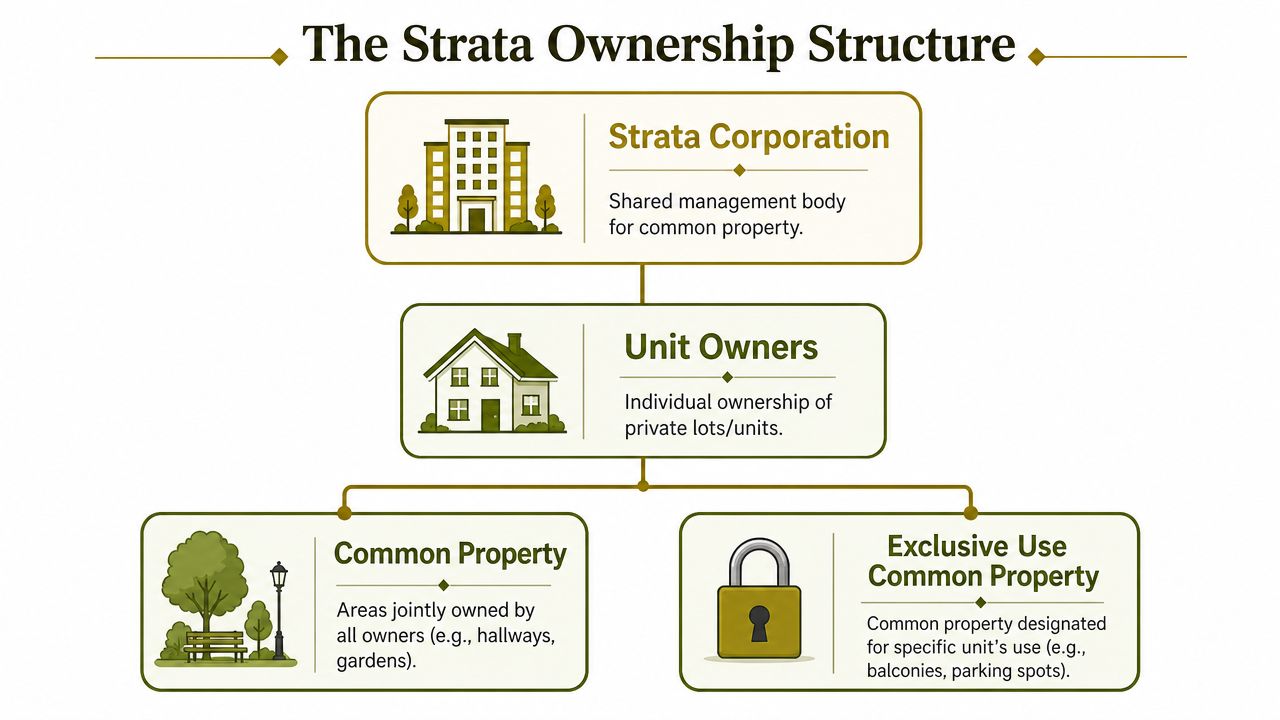
Strata ownership can be characterized as shared ownership of a broader property system. You own your own home, but you also share ownership and responsibility for parts of the property that everyone relies on.
In British Columbia, a strata property is defined by the legal title structure created when a developer files a strata plan at the Land Title Office. That filing divides the development into individually owned strata lots and collectively owned common property, and every owner becomes part of the strata corporation that manages fees, repairs, bylaws, and insurance obligations, as explained in this B.C. strata ownership overview from FirstService Residential.
What belongs to you
Your strata lot is the part you own individually. In practical terms, that usually means the interior living space defined by the strata plan.
That sounds simple until you get into details. Buyers often assume a balcony, patio, window, garage apron, or parking stall is fully theirs because they use it every day. Sometimes that's true in part, but often those areas fall into a different category legally.
What you share with everyone else
Common property is the part jointly owned by all owners through the strata corporation. Depending on the development, that may include hallways, roofs, exterior walls, landscaping, stairs, visitor parking, clubhouses, elevators, and utility areas.
There's also limited common property, which is common property set aside for the exclusive use of one or more owners. A balcony or parking stall may fall into this category. You use it, but that doesn't automatically mean you alone control repair decisions or costs.
Practical rule: If you want to know who fixes, insures, or replaces something, don't guess from how it looks. Check the strata plan and the corporation's documents.
Why the corporation matters
When you buy into a strata, you also join the corporation that governs the shared property. That corporation approves budgets, hires trades, enforces bylaws, and makes decisions on maintenance timing and reserve planning.
That shared structure is why document review matters so much. A well-run community can feel organised and predictable. A poorly run one can create conflict, deferred maintenance, and uncertainty around future costs. Buyers who want a better sense of how management systems support communication and operations sometimes find value in a broader guide to property management software with WiFi from Clouddle Inc., especially when comparing how different properties handle records, resident communication, and service coordination.
If you want to understand how local managers and councils typically divide responsibilities, Maple Ridge buyers can also review property management services in the local market to get a clearer picture of how the operational side of strata living works.
How Strata Fees and Bylaws Shape Your Lifestyle
Ask buyers what worries them most about strata living, and two things usually come up first. Monthly fees and community rules.
Both matter. Neither should be judged in isolation.
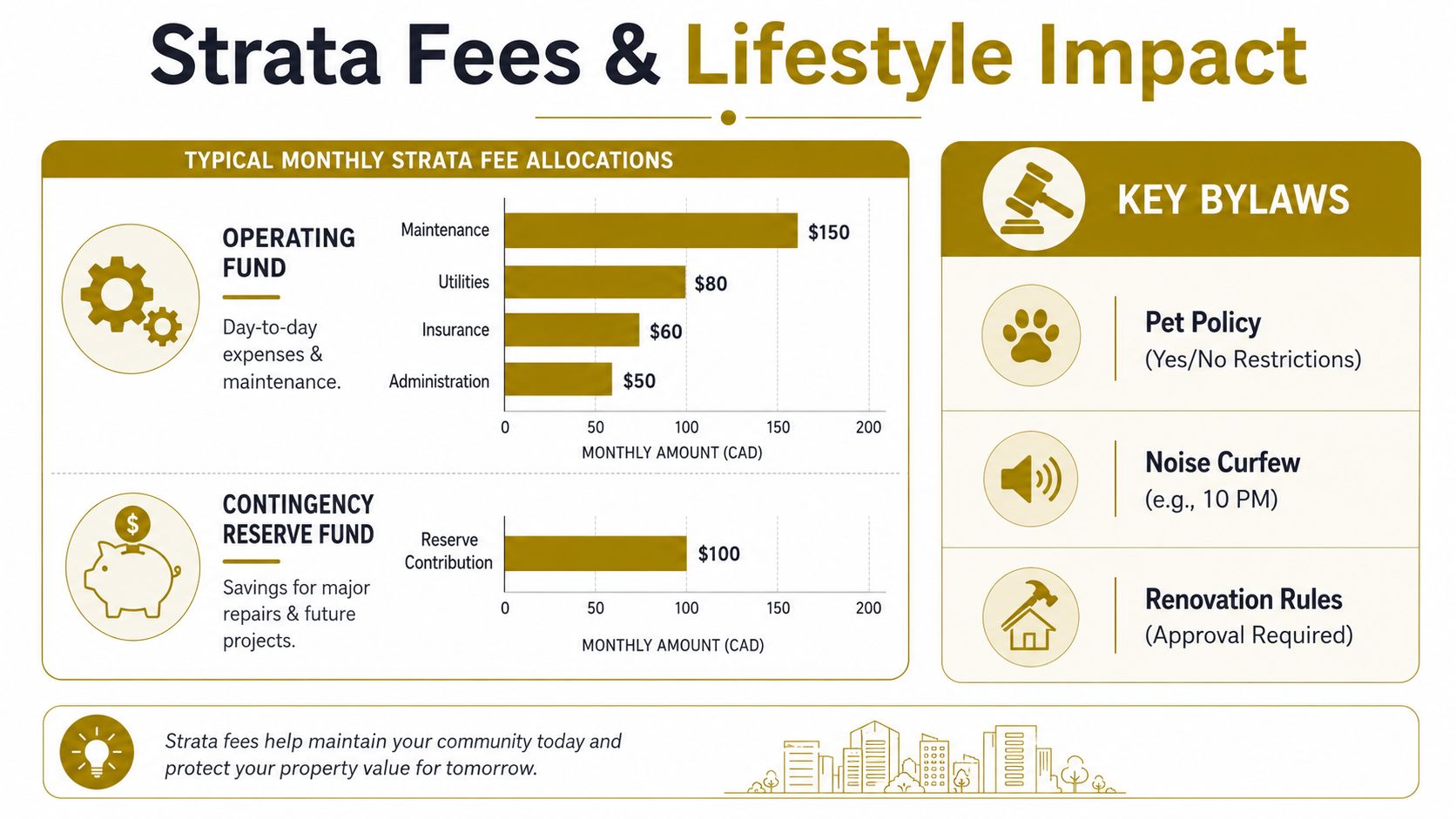
A low strata fee can look attractive on a listing sheet, but if the property is underfunding maintenance, that number may not be the bargain it appears to be. On the other hand, a well-run strata with higher fees may be covering more services, planning repairs properly, and protecting the building better.
What fees usually support
In everyday Maple Ridge terms, strata fees often help pay for things such as:
- Routine maintenance like landscaping, hallway cleaning, gutter work, and general upkeep
- Building systems such as elevator servicing, lighting in common areas, security entry systems, or shared mechanical equipment
- Insurance and administration including corporation-level coverage, bookkeeping, document handling, and management support
- Reserve contributions set aside for larger repair and replacement needs over time
A townhome complex in Cottonwood may direct attention toward landscaping, fencing, roads, and exterior upkeep. A condo near the Town Centre may spend more on common hallways, elevators, amenity rooms, and controlled access systems. Same legal model. Different spending priorities.
Why bylaws aren't just fine print
Bylaws are the community's operating rules. They shape how quiet the building stays, whether certain pets are allowed, how move-ins are handled, what kind of renovations need approval, and sometimes how parking is used.
That has direct consequences for your daily life. If you have a large dog and love walks near Kanaka Creek Park, pet restrictions aren't a side issue. If you work from home, rules around business use, visitor parking, and noise may matter more than the kitchen backsplash. If you're planning to install charging equipment for an electric vehicle, you need to know the approval process before assuming your parking stall can accommodate it.
Some buyers read bylaws after they've emotionally committed to a unit. That's backwards. The bylaws should be part of deciding whether the home fits in the first place.
What works and what doesn't
What works is a strata where the fees match the property's actual needs and the bylaws are clear enough to enforce consistently. Owners don't have to love every rule, but they should be able to understand them.
What doesn't work is buying based on the sticker price alone. Problems usually start when buyers ignore the corporation's habits. Deferred maintenance, vague renovation practices, repeated disputes, and unclear responsibility around plumbing or exterior components often show up in records long before they become expensive headaches. For buyers who want a plain-language example of how shared building systems can create responsibility questions, this comprehensive guide for strata managers from Voyager Plumbing is useful background reading.
For landlords comparing strata purchases with other investment options, local landlord resources can also help frame how rules, approvals, and operating obligations affect rental planning.
Exploring Strata Living in Maple Ridge Neighbourhoods
Strata living in Maple Ridge doesn't come in one standard version. The experience changes a lot depending on where you buy and what type of property you choose.

Albion and family-oriented townhouse living
In Albion, many buyers are looking for function first. They want multiple bedrooms, practical outdoor space, room for strollers or bikes, and a layout that works for school mornings and busy evenings.
A strata townhome here often feels closer to detached-house living than buyers expect. You may have a front entry, a small yard, and a garage, but the shared structure still matters. Exterior standards are usually more controlled. Fencing, roofing, visitor parking, and common landscaping often sit under the strata's oversight. That can be a relief for busy families, but it also means changes to the exterior usually aren't yours to make casually.
Buyers drawn to schools, parks, and neighbourhood routines often like this balance. You get a community feel and shared upkeep, without carrying every exterior responsibility on your own.
Town Centre and commuter-friendly condos
Closer to the Town Centre, strata living often appeals to a different buyer. That might be a first-time owner who wants to be near shops and services, or a downsizer who's done with yard work and wants a more lock-and-leave lifestyle.
Here, the value is often convenience. You may be closer to transit, coffee shops, recreation, and local cultural spots such as the ACT Arts Centre. The trade-off is usually less private outdoor space and a tighter set of rules around noise, move-ins, storage, and shared amenities.
That style of strata can be a strong fit for buyers who care more about ease than elbow room.
A quick neighbourhood video can help you picture how that urban-to-suburban mix feels on the ground.
Silver Valley, Kanaka Creek, and West Maple Ridge
Silver Valley often attracts buyers who want a newer feel, access to trails, and a setting that feels a bit more tucked away. Strata homes there can suit people who want townhouse practicality with easier access to nature.
Kanaka Creek offers a similar appeal for buyers who want family-oriented surroundings and a little breathing room, while still staying connected to schools and daily essentials. In both areas, buyers should pay close attention to parking, guest access, and how outdoor areas are classified and maintained.
West Maple Ridge tends to offer a different mix again. Some buyers prefer it for established streets, easier access to amenities, and a more settled feel. In that part of town, strata options can vary in age and management style more noticeably, which makes due diligence especially important.
The Buyer's Due diligence Checklist for Strata Homes
A good strata purchase usually comes down to document review. Not glamorous. Very important.
In B.C., strata owners own their individual strata lot and, together with other owners, own the common property and assets through the strata corporation. Buyers often need clarity on boundaries, exclusive-use areas, and who pays for repairs on balconies, windows, or parking stalls, because those boundary definitions come from the filed strata plan and can affect maintenance costs and resale value, as outlined by the Province of British Columbia's strata guidance.
The documents worth slowing down for
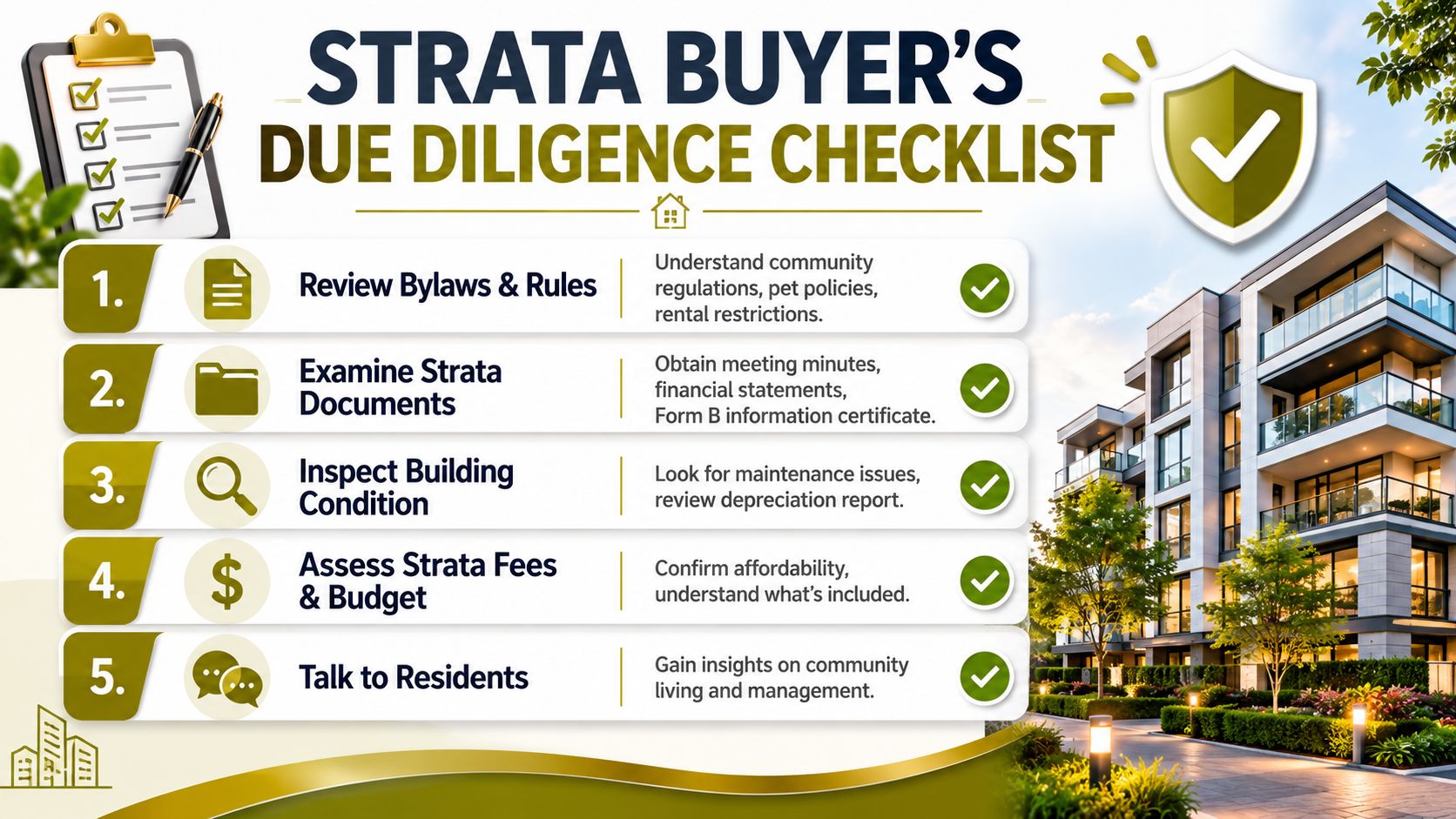
When I review a strata property with a buyer, these are the items that deserve real attention:
- Current bylaws and rules so you know the pet restrictions, rental rules, renovation approvals, parking expectations, and use restrictions before writing the offer
- Form B information certificate because it helps confirm key facts about the strata lot and the corporation at the time of review
- Recent council and annual meeting minutes to spot recurring maintenance issues, owner disputes, pending projects, and the general tone of the community
- Financial statements and budget to see whether the corporation appears organised, realistic, and disciplined with operating costs and reserve planning
- The strata plan so you can confirm what is part of the lot, what is common property, and what may be limited common property
What red flags tend to look like
They're not always dramatic. Often they're patterns.
| Area to review | What to watch for |
|---|---|
| Minutes | Repeated leaks, unresolved complaints, ongoing conflict, delayed repairs |
| Bylaws | Rules that don't fit your lifestyle, unclear renovation process, pet limits that affect your plans |
| Financials | Signs the corporation may be stretched or reacting instead of planning |
| Strata plan | Boundary assumptions that don't match how the home is marketed or used |
Don't read strata documents only for disasters. Read them for habits. The habits usually tell you what ownership will feel like.
A practical buyer step many people skip
If possible, talk to residents and walk the property slowly. Look at how entrances are maintained, how parking is used, whether balconies look consistent, and whether common areas feel cared for.
That won't replace legal or financial review, but it adds context. A home can show beautifully online and still sit in a community that doesn't match your expectations.
If you're preparing to make an offer, it helps to pair listing analysis with a broader Maple Ridge home buying guide so the strata review fits into the rest of your due diligence, financing, and condition planning.
Is a Maple Ridge Strata the Right Choice for You?
A Maple Ridge strata can be a smart choice if you want lower-maintenance ownership, a more accessible price point, and shared responsibility for the parts of a property that are expensive or time-consuming to manage alone.
It may be the wrong fit if you want full control over exterior changes, dislike community rules, or feel frustrated by shared decision-making. That isn't a flaw in the model. It's just a different style of ownership.
The best buyers for strata homes usually know what trade-off they're making. They're comfortable paying monthly fees in exchange for shared maintenance. They understand that bylaws protect the community but also limit personal flexibility. They review documents carefully instead of treating them like paperwork to rush through.
If you're weighing a condo in the Town Centre against a townhome in Albion or Silver Valley, run the numbers and think about your daily routine, not just the purchase price. A quick mortgage payment calculator for Maple Ridge buyers can help you compare affordability, but the better question is whether the ownership model fits how you want to live.
If you're comparing strata homes in Maple Ridge or Pitt Meadows and want help reading documents, weighing neighbourhood trade-offs, or narrowing down the right fit, Royal LePage Brookside Realty Property Management can guide you through the process with local, practical guidance.