
You've probably seen this happen already. A landlord hands over a set of papers in a kitchen in Albion, a renter skims the pages after a long workday, and both people assume the lease is mostly routine. Then the first dispute shows up, maybe over utilities, parking, or when the tenancy ends, and the paperwork suddenly matters a lot more than anyone expected.
A lease agreement is the document that turns a rental arrangement into a clear set of rights and duties. In Maple Ridge, that matters whether you're moving into a basement suite off Dewdney Trunk Road, renting a townhome near Kanaka Creek, or trying to sell a home that still has tenants inside.
If you want a local starting point on rentals in the area, this overview from our site is a useful companion read: rentals in Maple Ridge BC.
Why a Lease Matters More Than You Think in Maple Ridge
A lease looks simple from the outside. You pay rent, you get the right to live in the home for a set period, and the landlord keeps ownership. In real life, though, the lease is the rulebook that decides who pays what, who handles repairs, how notice works, and what happens when the fixed term ends.
That's why first-time renters get caught out in the little details. A family moving into a home near Alexander Robinson Elementary may care most about the school year and the move-in date, while a homeowner in West Maple Ridge may be thinking about whether they can deliver the property vacant when they sell. Those are different problems, but the lease controls both.
In the U.S. rental market data summarised by the Bureau of Labor Statistics for January 2022 through June 2022, 59.6% of leases were 12-month terms, 31.8% were month-to-month, and 8.6% were other lengths. Among those “other” leases, 29.9% were 24-month leases, 14.8% were 13-month leases, and 12.4% were 6-month leases. The point isn't that Maple Ridge should copy those numbers, it's that lease length varies a lot, and the exact term changes how the tenancy behaves. The BLS also noted that California had the highest share of month-to-month leases among states with more than 100 survey responses, at 62.7%. That's another reminder that local practice matters, not just the form on the table. BLS housing leases data
Practical rule: if the lease doesn't answer a question in writing, don't assume the answer is obvious.
In British Columbia, a lease is more than a rent receipt. It sets the tenant's right to occupy and use the property for a defined term, while the landlord keeps ownership and the agreement works alongside the law. For Maple Ridge and Pitt Meadows properties, that means the document should spell out possession, rent, maintenance, and termination with real precision, not vague promises.
The Core Anatomy of a Lease Agreement
A Maple Ridge renter signs the lease before the moving truck arrives, then starts noticing how much one page controls everyday life. A lease agreement is a time-bound contract. The landlord gives the tenant the right to occupy a property for a set period, and the tenant pays rent in return. That sounds simple, yet the written lease is what fixes the start date, end date, rent amount, and the rules that shape the tenancy.
A private club membership in Maple Ridge works in a similar way. You do not own the building, but you do have the keys for a defined period, along with specific rights to use the space. The landlord still owns the property, and the lease sets how that use works from day to day.
The legal tests used in lease standards can sound technical, but the plain-English version is manageable. An identified asset means the property or space is clearly defined. The right to obtain substantially all economic benefits means the tenant gets the useful value from that space during the term. The right to direct use means the tenant controls how the space is used, within the lease rules. If those pieces are present, the arrangement behaves like a lease, not just a service contract. Lease accounting and control test overview
For a tenant in a basement suite in Hammond, that difference matters because the lease is not just permission to stay. It is the contract that sets who may live there, what use is allowed, and what happens if either side needs to end the tenancy early. For an owner renting a detached home in Silver Valley, it also helps show how much risk stays with the landlord and how much is assigned to the tenant.
A useful lease also spells out the parts that people often skim past. Who can occupy the home, what counts as normal wear, who handles repairs, whether subletting is allowed, and how notice must be given all belong in the written terms. A solid tenant lease agreement template can help a first-time renter see where those clauses usually sit, even though the actual wording should match the property and the tenancy.
Some renters focus on the deposit first, because that is often the first real money tied up in the move. The deposit rules need to be written clearly, and the lease should line up with local law. For a plain-language comparison, the partner guide on security deposit rules for Maryland shows how much those terms can vary from place to place, which is a good reminder to read the deposit clause line by line.
A lease is the written deal that gives someone the right to live in a property for a set time, under set rules, while ownership stays with the landlord.
Fixed-Term vs Periodic Tenancies Explained
A fixed-term lease starts on a set day and ends on a set day. A periodic tenancy, often month-to-month, keeps going in repeating periods until proper notice ends it. In Maple Ridge, both setups can work well, but they fit different households and different levels of certainty.
A family renting near Hammond for the school year may want the predictability of a fixed term. A snowbird in a Silver Valley townhome may prefer month-to-month once the first commitment is over. The choice affects notice, rent changes, and how much planning each side needs to do before the tenancy ends or continues.
| Feature | Fixed-Term Lease | Periodic / Month-to-Month |
|---|---|---|
| Notice | Ends on the set date unless the agreement or law says otherwise | Requires notice under the tenancy rules |
| Rent changes | Usually set for the term, unless the agreement allows a lawful change later | Can change when permitted under the tenancy rules |
| End-of-term behaviour | Stops at the end date unless renewed or allowed to continue | Continues until proper notice ends it |
BC renters also need to think about what happens at the end of the fixed term. Many people focus on the start date and rent amount, then skim past the renewal language, only to find out later that the tenancy does not automatically work the way they expected. The local rules matter here, especially for notice and continuation, and this BC Residential Tenancy Act explanation gives a plain-language overview of that framework.
A fixed term works a bit like booking a room for a defined stay, the end point is already built in. A periodic tenancy works more like an arrangement that keeps rolling until one side gives the required notice. For a landlord in Maple Ridge, that difference can affect planning for re-renting, repairs, and turnover. For a tenant, it can affect how quickly a move needs to happen if work, family, or school plans change.
A fixed term gives certainty. A periodic tenancy gives flexibility. In both cases, the notice rules matter as much as the rent.
Essential Clauses Every Maple Ridge Lease Should Include
A strong lease doesn't hide the hard parts. It puts the everyday stuff in writing so nobody has to guess later. The best agreements answer the practical questions that come up in real homes, not just the legal ones.
The clauses that deserve a close read
- Rent and due date: The agreement should say exactly how much rent is owed and when it's due. That matters just as much in a basement suite near the Maple Ridge town centre as it does in a larger family home in West Maple Ridge.
- Security and pet damage deposits: The lease should identify what's collected, when it's due, and what it can be used for.
- Utilities: The BC government's standard form tenancy agreement requires the landlord to specify whether utilities are included or excluded, who pays for them, and whether the tenant must obtain insurance. That detail is not optional paperwork, it changes real carrying costs.
- Maintenance responsibilities: Snow clearing on a Kanaka Creek driveway, lawn care at an Albion basement suite, and filter changes in a detached home all need clear wording.
- Insurance expectations: If the landlord wants tenant insurance, say so plainly.
- Pets, parking, guests, and alterations: These are common sources of friction, especially in shared houses and townhomes.
A lease that spells out those points saves both sides from a lot of awkward phone calls. It also helps when the unit has add-on costs that don't show up in the headline rent, like parking, utilities, pets, or repair responsibility. That broader cost picture is exactly why renters should read beyond the monthly figure. Lease cost checklist for renters
For disputes about wording, renewal language, or what the agreement means, our local resource on RTB dispute resolution is worth keeping handy.
Local habit that pays off: if a clause affects money, use plain words and put it in the signed lease, not in a hallway conversation.
BC Rules on Deposits, Notice, and End-of-Term Obligations
British Columbia draws clear lines on deposits. Under the Residential Tenancy Regulation, the maximum security deposit is one-half of one month's rent, and the maximum pet damage deposit is also one-half of one month's rent. That cap matters to Maple Ridge renters moving into pet-friendly homes in family areas like Hammond or Kanaka Creek, because the upfront cash needed is limited by rule, not by a landlord's preference. BC deposit cap context
Notice is the other place where people get surprised. In BC, a landlord must give at least two months' notice to end a tenancy for landlord's use, and the tenant is entitled to one month's free rent as compensation in that scenario. If you're selling an occupied home in Cottonwood or West Maple Ridge, that timing can affect possession, completion dates, and whether the property can be delivered vacant on schedule. Landlord use notice overview
What that means after the fixed term
A fixed term doesn't erase the lease at the end date. The agreement still controls how the tenancy rolls forward, whether it becomes month-to-month, and what notice is needed next. That is why landlords and tenants both need to pay attention to the final pages, not just the opening terms.
If the tenancy continues periodically, the rules around notice and rent changes can shift with it. That's where a lot of confusion starts, especially when somebody assumes the lease “ended” just because the original date passed. It didn't end itself, it moved into whatever status the agreement and the law allow.
For owners, that means planning ahead before listing a tenant-occupied property. For renters, it means reading the end-of-term language before you sign, not after you start packing. Our local guide on damage deposit rules BC fits well here if you want to check how deposits are handled in practice.
If the move-out date, notice period, or deposit return plan isn't clear in the lease, assume you need to ask before signing.
How to Review and Negotiate a Lease Before You Sign
Start with the pages that affect your wallet and your schedule. Read the rent, term, renewal language, deposits, utilities, maintenance, pets, subletting, parking, and termination clauses line by line. That's the part people usually rush, and it's also where the expensive surprises hide.
Look hard at any vague wording. “Tenant responsible for all maintenance” sounds neat until you're wondering who clears snow in January or who handles a leaking fixture in a basement suite near Pitt Meadows border properties. If a clause feels broad enough to cause a fight later, ask for the wording to be narrowed before you sign.
A move-in condition report matters too. Take dated photos, note marks on walls, test appliances, and write down anything already worn or damaged. That protects both sides when the tenancy ends, because the end-of-lease conversation gets easier when the starting condition is documented.
If you're comparing a lease with a broader move plan, a practical checklist like Boston moving company checklist can still be useful as a packing and logistics prompt, even though your tenancy rules are local to BC. It's a reminder to think about the move as a process, not just a signature on paper.
The image below is worth a careful look before you sign anything.
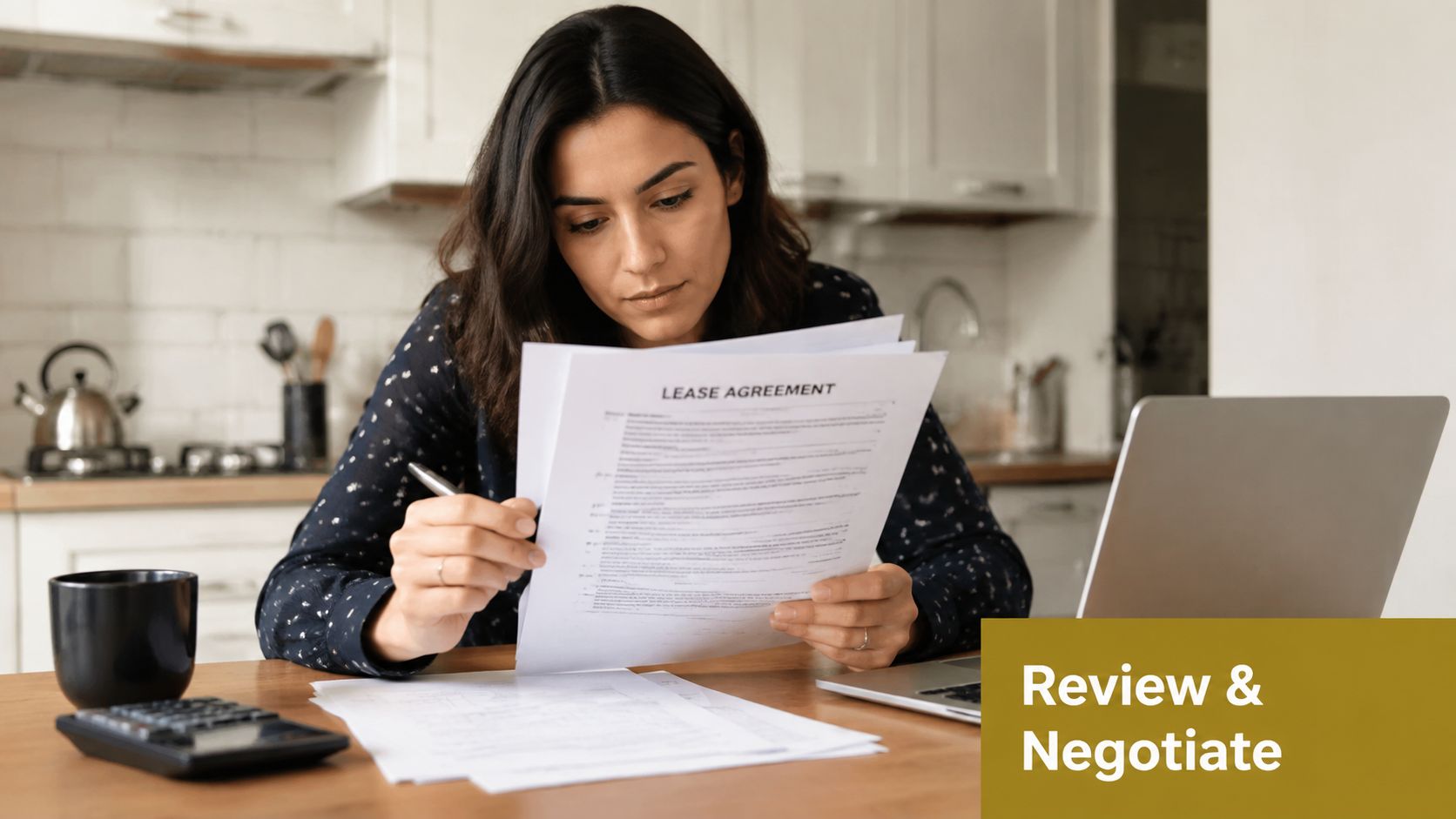
If the total monthly carrying cost looks higher than you expected, check for parking, pet charges, insurance, and any utility share in the lease. Those items can make a rental feel affordable on paper and tighter in real life.
Don't treat the lease as a formality. Treat it like the instruction manual for the unit you're about to live in.
Working With a Local Property Management Team in Maple Ridge
A lease holds up better when a local team knows how to read it and use it day to day. In Maple Ridge and Pitt Meadows, rental homes do not all behave the same way. Detached houses, basement suites, townhomes, and occupied sales each bring their own lease questions, their own repair timing, and their own risks for both sides.
The main ideas stay pretty steady. A lease sets the term, the rent, the use of the property, and the rules that carry the tenancy from one stage to the next. The clauses about utilities, deposits, insurance, notice, and termination often decide whether things stay calm or turn into a dispute later on.
A local property manager turns those clauses into everyday action. That means screening tenants, preparing BC-compliant lease paperwork, setting renewal terms, handling notices, and keeping landlords and tenants on the same page when life changes. If you want another outside perspective on screening, this property managers screening guide is a useful companion read.
For owners who want that support handled in-house, Royal LePage Brookside Realty Property Management offers lease-up and property management services that include contracts, inspections, and lease preparation aligned with local rules. That kind of help matters when a home is already occupied, the timeline is tight, or the rental terms need to be handled carefully from the start.
Whether you are renting your first suite, buying an investment property, or selling a home with tenants in place, the lease is part of the broader real estate picture, not a separate issue. If you want to talk through a Maple Ridge rental, a tenancy problem, or a property you are considering bringing to market, reach out before the paperwork becomes the problem.