
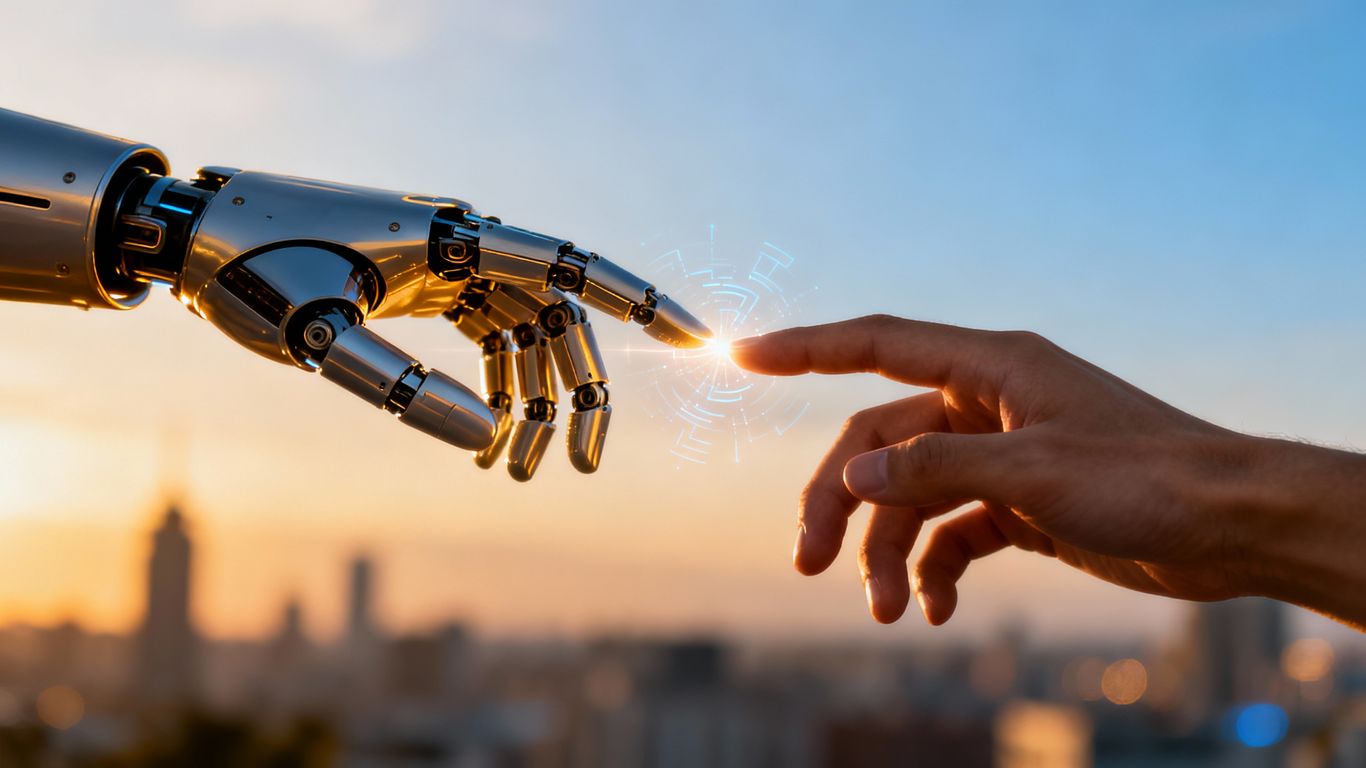
Artificial intelligence is changing the way we work, and it's not just about robots taking over. This discussion explores how AI is actually creating new opportunities and how we can prepare for these shifts. It's less about fear and more about understanding the practical impact on different jobs and industries.
Key Takeaways
- AI is more likely to change jobs than eliminate them.
- New roles are emerging that require human skills like creativity and critical thinking.
- Learning new skills and adapting is key to staying relevant.
- AI can be a tool to help us do our jobs better.
AI Isn't Just Taking Jobs, It's Changing Them
So, everyone's talking about AI, right? And a lot of the talk is about jobs disappearing. But honestly, it's not that simple. Think about it like this: when computers first came out, people probably worried about their jobs too. But instead of just taking jobs, computers changed how we do them and created a whole bunch of new jobs we couldn't even imagine before.
AI is kind of the same. It's not really about AI coming in and saying, 'Okay, you're fired.' It's more about AI changing the tasks within a job. Some tasks might get automated, sure, but that often means the human part of the job can focus on things that AI can't do. Things like being creative, solving tricky problems, or just dealing with people in a human way.
New Jobs Are Popping Up
This shift means we're seeing new kinds of jobs appear. These jobs often need people to work with AI, not against it. Think about people who train AI models, or those who check AI's work to make sure it's accurate and fair. There are also roles focused on figuring out how to use AI in the best way for a company, or even jobs that are completely new because of what AI makes possible.
For example, imagine a graphic designer. AI can help create basic images or suggest layouts. But the designer still needs to have the creative vision, understand what the client wants, and make the final artistic decisions. The AI becomes a tool, like a super-powered assistant, rather than a replacement.
How to Stay Ready for the AI Future
So, what does this mean for you? It means learning is going to be super important. The skills that are valuable are changing. While technical skills are good, things like:
- Creativity: Coming up with new ideas.
- Critical Thinking: Figuring out if information makes sense and solving problems.
- Emotional Intelligence: Understanding and working with other people.
- Adaptability: Being willing to learn new things and change how you work.
These are the kinds of skills that AI struggles with. So, focusing on developing these can really help you stay ahead.
It's also about seeing AI as a tool. Instead of fearing it, think about how it can make your current job easier or more productive. Can it handle the boring, repetitive tasks so you can focus on the more interesting parts? Can it help you analyze data faster?
The Bottom Line
AI is definitely changing the world of work, but it's not the doomsday scenario some people make it out to be. It's more of an evolution. Jobs will change, new ones will be created, and the skills we need will shift. The best thing we can do is stay curious, keep learning, and figure out how to use these new tools to our advantage. It’s about working smarter, not just harder, and focusing on what makes us uniquely human.