
The federal government is championing prefabricated housing as a solution to the affordable housing crisis, but experts in British Columbia are pointing out significant practical challenges. While the concept promises faster construction, the reality on the ground involves complex supply chains, evolving building codes, and the need for modernized procurement practices.
Key Takeaways
- Prefabrication offers speed, as demonstrated by the rapid installation of balconies on a Vancouver project.
- Experts emphasize the need for early supplier involvement in the design phase to align production and project timelines.
- Modernizing public procurement to account for higher upfront costs of prefabrication is crucial.
- Supply chain development, similar to the automotive industry, is needed for building components.
- New building codes and design procedures are being developed to support mass-produced multi-unit buildings.
The Promise and Practice of Prefab
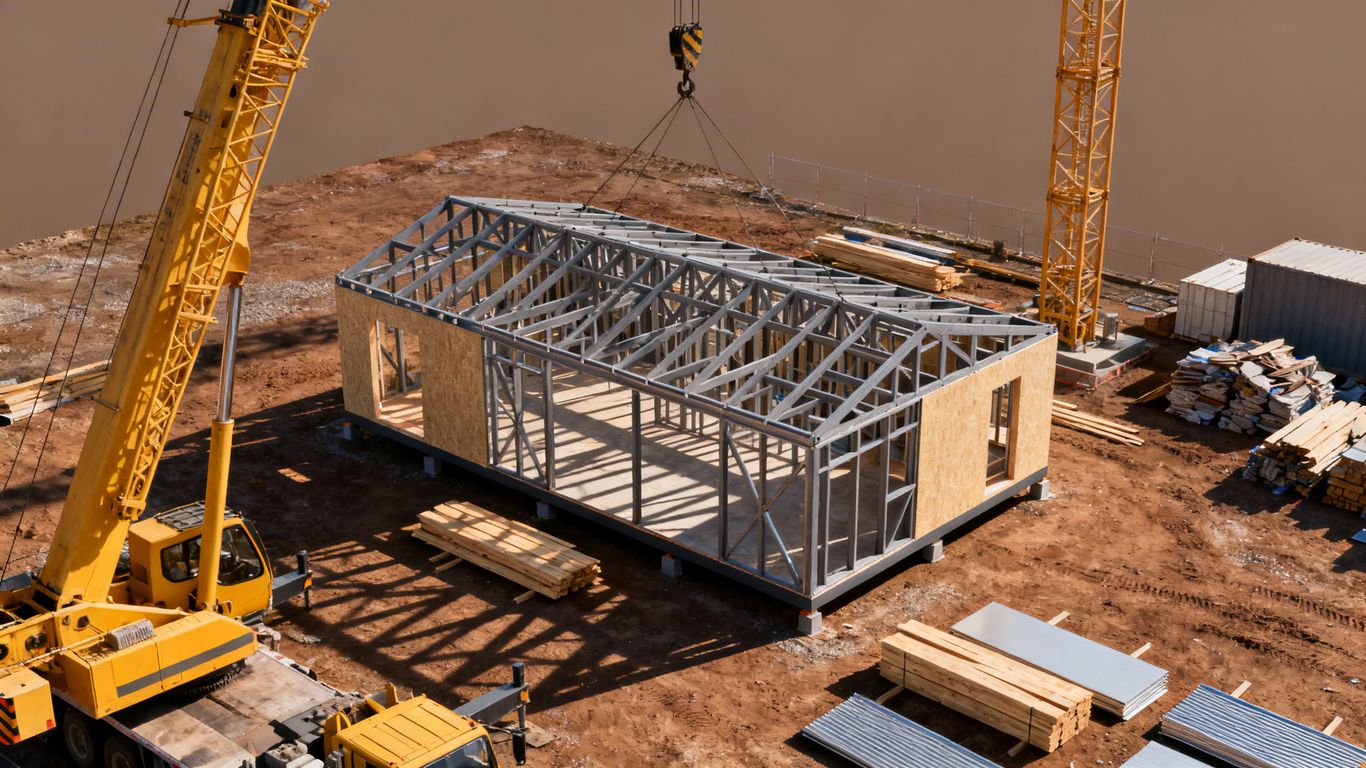
Projects like Vancouver's Vienna House showcase the potential of prefabrication. Here, prefabricated walls, floors, ceilings, and balconies were used, with one company reporting the installation of a majority of prefabricated balconies in just three days. This efficiency is a key driver behind Ottawa's push for off-site construction methods to accelerate housing development.
Navigating the Complexities
Despite the successes, B.C. experts highlight several hurdles. Sean Binns of Kindred Construction emphasizes that suppliers of prefabricated elements must be involved from the initial design phase to ensure production schedules align with project timelines. Without this, prefabrication could paradoxically slow down construction. He also points to the need for "laydown areas" near construction sites for temporary storage of prefabricated components, which can lead to weatherproofing challenges.
Strengthening Supply Chains and Codes
Tony Yang, a professor at the University of British Columbia, stresses the importance of developing robust supply chains for prefabricated building components, ideally using local resources. His research team is working on a new building code specifically for prefabricated modular buildings, expected within two to three years, which will require extensive testing before public use. Yang also notes the necessity for new design procedures to facilitate the mass production of larger, multi-unit buildings.
Industry Initiatives and Future Outlook
Organizations like Modular BC are actively working to address these challenges. They are forming task forces to make bylaws more modular-friendly, disseminating standardized designs, and creating guides for permitting and inspection. A pilot project involving the construction of a fourplex and sixplex in a matter of weeks is planned to demonstrate the technology's potential. While the widespread adoption of prefabrication is not yet a reality, optimism remains high for the future of the industry.