You're probably doing what most Maple Ridge buyers and sellers are doing right now. You're checking listings late at night, comparing neighbourhoods that feel completely different from one another, and trying to make sense of Fraser Valley headlines that don't really tell you what life would look like on your street.
That's the problem with broad market coverage. “Fraser Valley homes” sounds like one category, but anyone who knows this area understands how different West Maple Ridge feels from Silver Valley, or how buying in Hammond is a different decision from buying on acreage near Webster's Corners. The stats matter, but they only help if you know how to apply them locally.
Maple Ridge sits in that sweet spot a lot of people are chasing. You can still find family-oriented neighbourhoods, access to the Golden Ears corridor, sports fields, trails, schools, and a daily pace that feels less compressed than many parts of Metro Vancouver. But choosing well here takes more than scanning asking prices. It takes understanding which pockets fit your budget, your commute, your family stage, and your tolerance for upkeep.
Navigating the Fraser Valley Real Estate Market
A common Maple Ridge scenario looks like this. A family wants more space, but they don't want to move so far east that every weekday becomes a logistics exercise. They need a yard, or at least a place for kids to ride bikes. They want decent access to schools, parks, groceries, and routes out toward Pitt Meadows, Langley, or the Tri-Cities. They also don't want to make a rushed decision because one headline says the market is soft and another says prices are still high.
That's where Maple Ridge often becomes the practical answer. It offers variety in a way many buyers underestimate. Albion appeals to households who want newer family-oriented subdivisions and easy access to neighbourhood parks. Hammond attracts buyers looking for a more established feel closer to the river and transportation routes. Silver Valley draws people who want newer homes and direct access to the outdoor side of Ridge life.
Why broad market noise confuses people
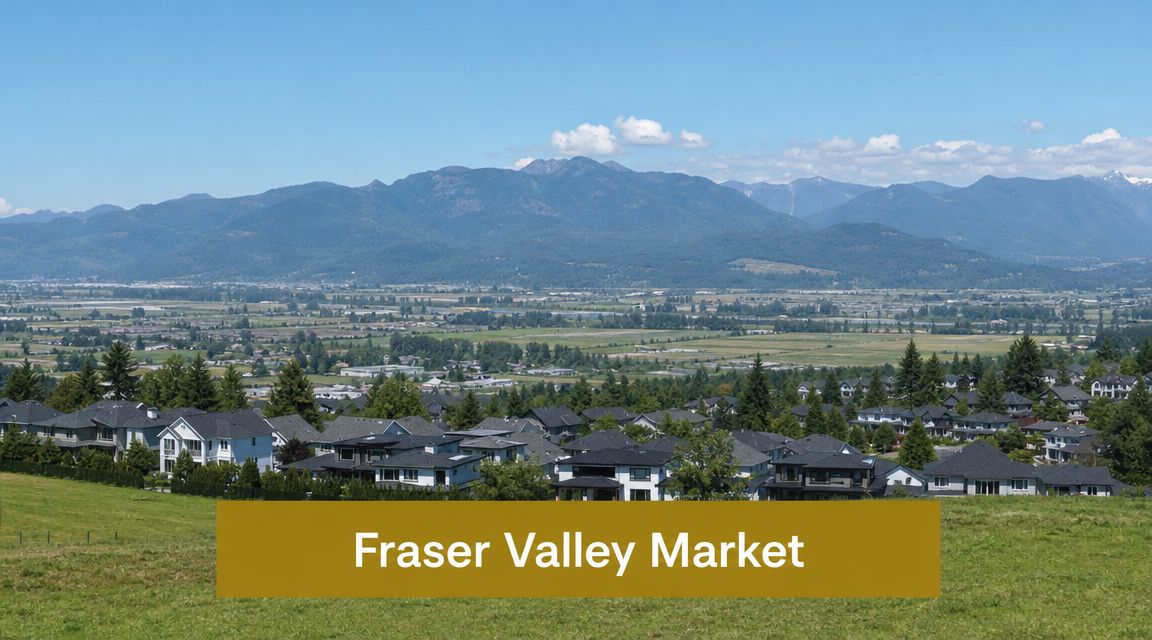
The Fraser Valley covers a large and varied region. Advice that makes sense in one pocket often falls apart in another. A condo buyer near a walkable town centre is solving a different problem than a buyer searching for a detached home near Kanaka Creek Regional Park.
That's why local context matters more than market chatter. If you're trying to decide whether to buy, sell, upsize, or downsize, the useful question isn't just what Fraser Valley homes are doing overall. It's how that trend plays out in Maple Ridge streets, school catchments, property types, and buyer expectations.
Maple Ridge rewards buyers and sellers who get specific. Generic advice usually costs time, leverage, or both.
If you want a feel for how local real estate conversations are evolving, the Maple Ridge real estate news page is a helpful place to keep an eye on area-specific updates instead of relying only on province-wide commentary.
What actually helps
Three things usually cut through the clutter:
- Neighbourhood-first thinking: Start with how you live, not just what you can technically afford.
- Property-type discipline: Detached, townhome, and condo decisions lead to very different monthly realities.
- Street-level judgement: Busy roads, school pickup flow, slope, lot shape, and backyard usability matter more than polished listing copy.
That's how you turn regional information into a useful Maple Ridge plan.
A 2026 Snapshot of the Local Real Estate Market
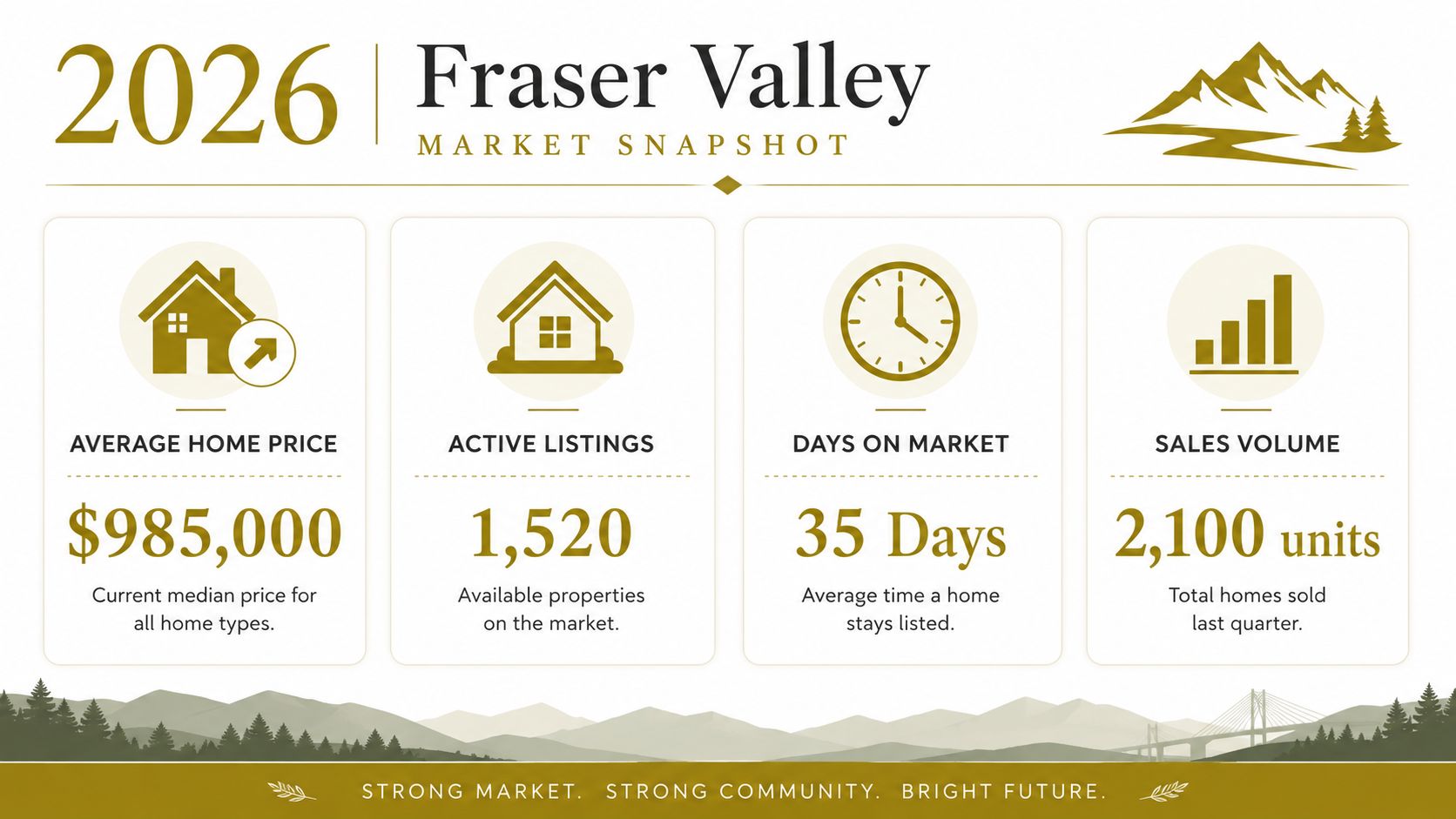
The current Fraser Valley picture is easier to understand if you stop looking for a single headline. This isn't a market where one stat tells the whole story. It's a market where volume has cooled, prices have softened, and buyers have more room to think, but good homes in the right Maple Ridge locations still draw attention.
According to Fraser Valley Real Estate Board reporting summarized by Storeys, 2023 recorded 14,713 home sales, the lowest annual total in 10 years, 23% below the 10-year average, and 4% below 2022. December 2023 posted 837 sales, down from 891 in November. At the same time, benchmark prices were still higher year over year at $1,471,500 for single-family homes, $826,400 for townhouses, and $537,600 for condominiums, with gains of 7.1%, 5.3%, and 6.9% respectively, as summarized by Storeys' Fraser Valley market coverage.
That combination matters. Fewer people were transacting, but values didn't collapse with volume. In practical terms, Maple Ridge sellers couldn't assume urgency, yet buyers also couldn't count on dramatic bargains even though activity had slowed.
What changed heading into 2026
The next shift was more direct on pricing. The Fraser Valley entered 2026 with the benchmark home price at $897,200 in January 2026, down 1% month over month and 6.9% year over year, marking the tenth consecutive monthly decline and the first time the benchmark had moved below $900,000 since spring 2021, according to Fraser Valley January 2026 statistics reported by Vancouver New Condos.
The same report noted broad-based softening by property type:
- Single-family detached: $1,373,100, down 1.1% month over month and 7.4% year over year
- Townhomes: $773,100, down 1.0% month over month and 6.5% year over year
- Apartments: $488,600, down 0.6% month over month and 8.2% year over year
For Maple Ridge buyers, this usually translates into better negotiating conditions than the peak years. You can take a breath, compare options, and press harder on value, especially when a property has location compromises, dated interiors, or a pricing strategy based on yesterday's market. For sellers, the message is less comfortable but straightforward. Aspirational list prices tend to lose traction quickly.
What those numbers mean on the ground
In a Maple Ridge setting, softer benchmarks don't mean every home is suddenly cheap. They mean pricing accuracy matters more than momentum. A well-kept family home near schools in Albion or a nicely positioned property in West Maple Ridge won't be judged the same way as a home backing onto a busy route or one that needs obvious deferred maintenance.
Practical rule: In a balanced or softer market, buyers compare harder. Every weakness in location, layout, or condition gets priced in.
This is also where better systems help. Sellers and agents are using more digital workflow, lead handling, and follow-up tools to stay organized. If you're curious how that side of the business is changing, this overview of the future of real estate AI tools offers useful context on how tech is shaping response times and client communication.
What buyers and sellers should do next
If you're selling, get clear on today's value before choosing a list strategy. A current free home evaluation for Maple Ridge gives you a starting point grounded in what buyers are responding to now, not what the market rewarded in a hotter cycle.
If you're buying, take advantage of this market, not hesitation. The best opportunities usually come from disciplined decision-making, not trying to call the exact bottom.
Exploring Top Maple Ridge Neighbourhoods
Maple Ridge works best when you shop by lifestyle first. Buyers who start with a map and a clear picture of daily life usually make better decisions than buyers who chase square footage alone. School runs, commuting patterns, trail access, lot upkeep, and the feel of the block all matter.
Some buyers want a suburban rhythm with parks and newer homes. Others want an older neighbourhood with easier access westbound. Others are looking for privacy, workshop space, or room to build. All of those are valid Maple Ridge goals, but they belong in different pockets.
A quick neighbourhood snapshot
| Neighbourhood | Dominant Home Type | Typical Price Point (2026) | Best For |
|---|---|---|---|
| Albion | Detached family homes and townhomes | Mid to upper range for Maple Ridge | Families who want parks, schools, and subdivision living |
| Silver Valley | Newer detached homes | Upper range | Buyers who value nature access and newer construction |
| Kanaka Creek | Detached homes and some townhome options | Mid to upper range | Households wanting trails, schools, and family space |
| Hammond | Older detached homes and character properties | Entry to mid range relative to detached options | Buyers focused on convenience, older lots, and renovation potential |
| Webster's Corners | Acreages, custom homes, rural properties | Broad range depending on land and servicing | Buyers wanting land, privacy, shops, or custom-build potential |
Albion
Albion remains one of the most recognisable family-oriented parts of Maple Ridge. Streets are often lined with newer detached homes, front porches, and clusters of townhomes that appeal to first-time buyers and move-up households alike. You'll find people here who want neighbourhood parks, a sense of community, and easier access to schools and day-to-day family routines.
The appeal is practical. Parents like having playgrounds nearby, and the area's layout makes it easier to picture kids growing up without everything revolving around long drives. It's also a neighbourhood where buyers often accept smaller lots in exchange for a newer home and a more structured suburban setting.
Albion suits buyers who want predictability. If your priority is a large private lot with mature trees and room for every toy, this may not be your best fit. If you want a cleaner family framework, it often works well.
Silver Valley
Silver Valley attracts a different buyer profile. The homes often feel more contemporary, the setting leans greener, and the connection to trails and the mountainside is a real part of the appeal. Buyers who spend weekends outside usually notice this area quickly.
There's also a trade-off. Silver Valley can feel more tucked away, which many residents enjoy, but that same quality can make some commutes or daily errands feel less direct than in more central parts of Maple Ridge. Buyers have to decide whether that quieter edge-of-town feel is worth it for their schedule.
Buyers who love Silver Valley usually aren't just buying a house. They're buying the feeling of living closer to the trails and away from heavier traffic.
Kanaka Creek
Kanaka Creek has strong appeal for households that want a family neighbourhood without losing touch with the outdoors. Access to Kanaka Creek Regional Park is a major lifestyle advantage. The area blends residential comfort with a more natural backdrop, which makes it popular with buyers who want room for family life and regular trail time in the same week.
The housing mix gives some flexibility. Detached homes remain a major draw, but the area also appeals to buyers who want a neighbourhood identity more than a specific lot size. It's a good choice for people who want Maple Ridge to feel like Maple Ridge, not just a cheaper substitute for somewhere else.
Hammond
Hammond is one of the more practical conversations in Maple Ridge real estate. It often attracts buyers who care less about polished master-planned surroundings and more about access, lot value, and older-home potential. The area's character comes from established streets, a working-history feel, and proximity that can help westbound commuters.
This is a neighbourhood where inspection judgement matters. Older housing stock can offer opportunity, but buyers need to look carefully at roof life, drainage, electrical work, and renovation quality. The upside is that Hammond can make detached ownership more reachable for buyers willing to accept cosmetic work or a less curated streetscape.
Webster's Corners
Webster's Corners is where many Maple Ridge searches become more ambitious. Buyers here are often looking for land, privacy, detached shops, or the long-term option to build something more custom. It's one of the areas where the dream of “more space” can become real, but it's also where local due diligence becomes more serious.
For custom building in the Fraser Valley, one builder source estimates standard custom-home construction at $280 to $400 per sq ft, while acreage properties needing servicing can add $30,000 to $80,000+ for well, septic, and site servicing. ALR-adjacent acreage can move construction costs to $350 to $450 per sq ft, according to CoreVal Homes' Fraser Valley custom home cost guide.
That's why Webster's Corners buyers need to think beyond the house itself.
- Servicing matters: A property outside full municipal servicing can alter both your budget and timeline.
- Land usability matters: Flat-looking acreage can still bring grading, drainage, or access complications.
- Lifestyle fit matters: Acreage sounds romantic until you realise you don't want the maintenance.
If you're trying to understand how western pockets compare with these more rural-feeling areas, the West Maple Ridge neighbourhood overview is a useful counterpoint.
How to choose the right area
Homebuyers narrow Maple Ridge well when they answer four grounded questions:
How important is the commute?
If daily travel west matters, don't underestimate the value of being positioned accordingly.Do you want newer or established?
Newer subdivisions solve some repair concerns. Established areas often offer different lot character.How much maintenance do you want?
Yards, slopes, trees, septic systems, and acreage all come with work.What kind of weekends do you live?
Sports fields, school events, and playgrounds point some buyers one way. Trails, bikes, and privacy point others another way.
Maple Ridge has enough range that there usually is a fit. The key is making sure the fit is real, not just aspirational.
Decoding Home Types and Price Points in Maple Ridge
Once buyers settle on area, the next decision usually becomes more important than the street name. It's the property type. Detached, townhome, and condo ownership each solve a different problem, and each comes with trade-offs that show up in your monthly life, not just in your offer price.
In March 2026, the Fraser Valley benchmark price was $1,375,600 for a single-family detached home and $772,700 for a townhome, according to CREA's Fraser Valley board statistics. That price gap says a lot about local priorities. Buyers still pay a substantial premium for land, privacy, and separation from neighbours.

Detached homes
Detached homes remain the goal for many Maple Ridge buyers, especially families who want yard space, storage, driveway parking, or suite potential. In areas like Albion, Kanaka Creek, and parts of West Maple Ridge, detached ownership often means more day-to-day freedom. You don't have strata rules, and you control the property decisions.
The trade-off is obvious. You pay materially more to get that freedom, and the ongoing maintenance belongs to you. Roofs, fences, drainage, trees, decks, and exterior upkeep don't wait until the budget feels convenient.
Detached works best for buyers who want long-term stability, need more functional space, or place a high value on privacy.
Townhomes
Townhomes are the strongest middle ground in Maple Ridge. They often let buyers stay in neighbourhoods they like without taking on the full cost and upkeep of a detached property. For young families, move-up buyers, and people who still want multiple levels and a garage, they can be the most balanced option.
What works well about a townhome is efficiency. You usually get more living area than a condo, often some outdoor space, and a more manageable maintenance load than a detached house. What doesn't work for some buyers is strata governance, shared walls, and less flexibility with parking or renovations.
A townhome makes sense when you want the feel of a house, but not the full carrying and maintenance burden that comes with a detached lot.
Condos
Condos serve a different Maple Ridge need. They appeal to first-time buyers, downsizers, and investors who care more about simplicity, lock-and-leave convenience, and access to everyday amenities. In more central parts of Maple Ridge, condo living can reduce maintenance stress and make ownership more attainable.
The compromise is lifestyle. Storage can be tighter, outdoor space is limited, and some households quickly realise they've outgrown condo living once children, hobbies, or work-from-home needs expand.
A practical way to choose
Here's the simplest way to look at it:
- Choose detached if yard use, privacy, and household flexibility matter most.
- Choose a townhome if you want family function with less financial stretch.
- Choose a condo if convenience and lower-maintenance ownership are the priority.
The right answer isn't the “best” property type. It's the one that leaves enough room for your actual life after the keys are handed over.
Buyer Strategies for a Shifting Market
A softer market tempts buyers into one mistake more than any other. They start thinking the win comes from timing the bottom perfectly. In Maple Ridge, the better win usually comes from buying with enough financial resilience to handle the first few years comfortably.
That matters because Fraser Valley homes don't become good buys just because prices have moderated. A home is a good buy when the payment, upkeep, and location fit your real life. If you stretch too far on a detached home and then get squeezed by carrying costs, the “deal” stops feeling like one pretty quickly.

Focus on resilience, not bravado
One useful local angle on market timing is this. A softer buyer environment only helps you if you're financially positioned to use it. The broader Fraser Valley conversation has also highlighted this point, including a market discussion that pointed to a low share of listings selling in a given month and a separate 2025 outlook arguing buyers should keep waiting if housing costs would exceed a manageable share of income or wipe out emergency savings, while those with stable employment and a longer ownership horizon may be better placed to act, as discussed in this Fraser Valley market timing video.
That lines up with what works in practice. Buyers who do best right now usually have stable employment, realistic expectations, and enough cash left after closing to handle repairs, moving costs, and a few surprises.
The hidden costs buyers miss
Many Fraser Valley buyers focus on listing price but get caught off guard by the rest of the ownership picture. Local guidance for first-time buyers notes that in B.C., buyers need to account for Property Transfer Tax on certain price thresholds, and properties in rural-fringe areas may require added due diligence for wells or septic systems, which can affect the true monthly cost and decision quality, as noted in this Fraser Valley homebuyer guide focused on hidden costs.
In Maple Ridge, that usually plays out in a few familiar ways:
- Rural-fringe properties: The home looks appealing, but servicing questions add complexity fast.
- Older detached homes: The purchase price fits, then the first maintenance cycle hits.
- Move-up purchases: Buyers focus on extra bedrooms and underestimate the total carrying difference.
This short video is worth watching if you're sorting through today's buyer decisions in a changing market.
What strong buyers do differently
The buyers with the most confidence usually follow a disciplined sequence:
- Get clear on the full payment: Mortgage is only one part of ownership.
- Match the area to your routine: A good home in the wrong daily location becomes frustrating.
- Leave breathing room: Cash after closing matters more than squeezing into a bigger house.
- Use local guidance early: The Maple Ridge home buying resource is a practical starting point if you want to map costs and property fit before writing offers.
If buying the home leaves you exposed to every minor surprise, you're not buying from strength, even in a softer market.
How to Position Your Maple Ridge Home for a Successful Sale
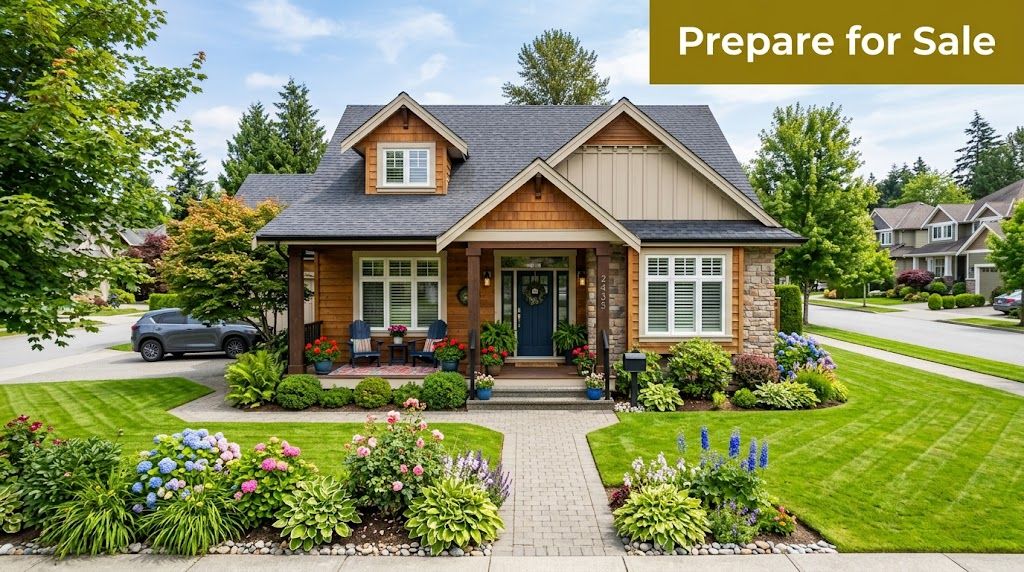
Selling in Maple Ridge now takes more discipline than it did when urgency did most of the work. Buyers are more selective. They compare your home against better-prepared listings, and they don't ignore flaws in price, condition, or presentation.
That doesn't mean sellers can't do well. It means the plan has to be sharper.
Start with price, not hope
The biggest mistake sellers make is choosing a list price based on what they want to achieve rather than what current buyers will support. In a market where purchasers have more room to negotiate, overpricing usually doesn't create bargaining power. It creates staleness.
A stale listing becomes harder to rescue because buyers start asking what's wrong with it. In Maple Ridge, that problem shows up quickly when a home is priced like a prime Albion family listing but backs onto a less desirable road, or when an older Hammond property is priced as though every renovation decision was top-tier.
Presentation still moves the needle
Condition and presentation shape how buyers interpret value. Clean homes, brighter spaces, and uncluttered layouts make it easier for buyers to justify strong offers. That doesn't mean every seller needs a full renovation. It means the home should feel cared for and easy to understand.
If you want practical ideas before listing, these home staging tips for a faster sale offer useful guidance on presentation choices that can improve first impressions.
What usually works best
A good sale plan in Maple Ridge tends to include a mix of preparation, realism, and local positioning.
- Deal with obvious repairs: Dripping taps, damaged trim, poor paint touch-ups, and tired fixtures create doubt.
- Make the layout feel simple: Remove furniture that makes rooms seem smaller or harder to use.
- Highlight the neighbourhood accurately: Walkability, school access, parks, trail networks, and commuter convenience all matter, but they should be matched to the property's real strengths.
- Use targeted marketing: A family home near schools should be presented differently from a low-maintenance downsizer property.
One practical option for owners planning a move is to review the Maple Ridge home selling process before choosing timing, preparation scope, and pricing strategy. Royal LePage Brookside Realty Property Management also provides real estate services for local buyers and sellers, including valuation guidance and listing support, which can help owners compare what level of planning they need before going live.
Seller mindset: Your competition isn't last year's market. It's the other listings buyers can choose from this week.
Your Next Step in the Fraser Valley Property Market
The Fraser Valley story only becomes useful when you bring it down to Maple Ridge streets, housing types, and real household decisions. That's the thread running through all of this. Broad data can tell you that the market has reset. It can't tell you whether Albion or Hammond fits your routine better, whether a townhome is the smarter stepping stone, or whether your detached home is priced in line with what today's buyers will pay.
That's where local judgement matters.
For buyers, the strongest position comes from clarity. Know which neighbourhoods fit your lifestyle. Understand the full cost of ownership, not just the asking price. Be honest about whether detached space is worth the extra stretch, or whether a townhome or condo gives you a better overall result.
For sellers, success comes from accepting the market you're in and preparing for it properly. Price with discipline, present the home well, and market it according to the buyer most likely to value its strengths. That approach works far better than hoping broad Fraser Valley demand will carry the listing.
Maple Ridge remains one of the most interesting places to shop for Fraser Valley homes because it offers range. Family subdivisions, older established streets, rural properties, commuter-friendly pockets, and outdoor-oriented neighbourhoods all exist within one community. That's a genuine advantage if you use it well.
If you're thinking about buying, selling, or trying to understand where your property fits in today's Maple Ridge market, Royal LePage Brookside Realty Property Management is a practical next step for local guidance grounded in neighbourhood knowledge, pricing strategy, and real transaction experience.