
You’ve probably done the same thing most condo buyers do at the start. You open a few tabs, search condos for sale in pitt meadows, save a handful of listings, then realise every unit looks reasonable until you try to compare them properly. One building has lower strata fees. Another has a nicer kitchen. One is closer to the West Coast Express. Another gives you more square footage, but the building itself raises questions you can’t answer from photos.
That’s where buyers usually get stuck.
Pitt Meadows attracts people who want a quieter, more manageable alternative to busier parts of the Lower Mainland. It appeals to first-time buyers who’ve been priced out elsewhere, and to downsizers who want less maintenance without giving up community, green space, and easy access to Maple Ridge, Coquitlam, and Vancouver-bound transit. The challenge isn’t finding reasons to like the area. The challenge is knowing which condo is the smart buy.
National real estate websites won’t tell you what a set of strata minutes is signalling. They won’t tell you which buildings need a closer look at maintenance planning, which layouts tend to work better for downsizers, or why a “good price” can still be the wrong purchase if the strata corporation is poorly run.
A good condo purchase in Pitt Meadows isn’t just about bedrooms, bathrooms, or the list price. It’s about reading the building as carefully as the unit itself. That means understanding neighbourhood fit, building type, strata governance, future costs, and how quickly you need to act when a solid listing comes up.
Your Guide to Finding the Perfect Pitt Meadows Condo
A typical buyer starts with excitement and then runs into uncertainty fast. A unit in Central Meadows looks ideal for commuting. A building in Mid Meadows offers more living space. Another listing seems like a bargain until you notice the strata documents are still “coming soon,” which usually means you don’t yet know the full story.
That’s a normal place to be.
Buyers looking at condos for sale in pitt meadows are usually trying to solve one of three problems. They want to stop renting, they want to downsize from a detached home, or they want a more affordable foothold near Maple Ridge without taking on the upkeep of a house. Those are sensible reasons to look here. Pitt Meadows is compact, practical, and easier to learn than larger markets, but condo buying still has layers that catch people off guard.
What separates a smart condo search from a frustrating one
The buyers who do well usually narrow their search in this order:
- Location first: not just by city, but by daily routine. Commute, groceries, walking routes, and how often you’ll use nearby parks matter more than a staged dining table.
- Building second: age, upkeep, strata culture, parking, storage, and restrictions shape your ownership experience every day.
- Unit third: floor plan, exposure, noise, and condition still matter, but they sit inside the bigger building decision.
Buyers often reverse that order and focus on the prettiest interior first. That’s how people end up chasing cosmetic upgrades while missing expensive building issues.
Practical rule: A renovated condo in a poorly managed building is still a risky purchase.
Pitt Meadows rewards buyers who stay grounded. If your search is disciplined and your due diligence is sharp, this market can offer real value and a lifestyle that suits both first-time buyers and downsizers.
The Pitt Meadows Condo Market Snapshot for 2026
The condo market here has a distinct shape. It isn’t flooded with options, but it isn’t impossible either. That matters because your strategy changes when you’re shopping in a smaller community with limited turnover.
According to Royal LePage’s Pitt Meadows condo market page, condos represent 22.43% of Pitt Meadows’ total housing market, with current inventory ranging between 33 and 55 active listings. The same source reports a median list price of $575,000 and an average price of $617,658.

What the pricing gap actually tells you
That gap between the median and average price matters. It usually points to a market where some larger, better-located, or more upgraded units pull the average upward, while a meaningful part of the condo inventory still sits closer to entry-level pricing.
For buyers, that means two things:
- There’s variety inside the condo segment: you’re not looking at one flat market where every unit trades in the same range.
- You need to compare like with like: a larger corner unit, a top-floor plan, or a newer building can distort your sense of what “normal” pricing is.
A buyer who only looks at asking prices without studying the building and layout can either overpay for finishes or dismiss a good unit that looks plain but has stronger long-term fundamentals.
How inventory affects your approach
When condos make up just over a fifth of the local housing stock, buyers can’t assume the right unit will always be there next week. In Pitt Meadows, condo options tend to appear in clusters and then thin out again. That creates a market that feels balanced on paper but still asks buyers to stay organised.
Here’s the practical read on the market:
| Market feature | What it means for buyers |
|---|---|
| Condos are a defined but limited segment | You need a shortlist of acceptable buildings before the right listing appears |
| Median pricing stays accessible relative to many nearby markets | First-time buyers and downsizers can still find workable options |
| Inventory varies across platforms | Your search should be broad, but your analysis should be local and building-specific |
Buyers don’t usually lose out in Pitt Meadows because there are no options. They lose out because they weren’t ready to assess the right option quickly.
That’s the personality of this market. It’s not chaotic. It’s selective.
A Neighbourhood-by-Neighbourhood Condo Tour
You tour two condos on the same Saturday. One is five minutes from the West Coast Express and the grocery store. The other feels quieter and more residential, but the drive for basic errands is a little less convenient. The floor plans are similar. The list prices are close. For a first-time buyer or downsizer in Pitt Meadows, that choice often comes down to how you live, and whether the building holds up under due diligence.
Pitt Meadows is compact, but condo buyers still feel clear differences from one pocket to another once they start testing commute times, walking routes, and building locations in person. The two areas that come up most often are Central Meadows and Mid Meadows. Both can work well. They just solve different problems.

Central Meadows
Central Meadows suits buyers who want daily convenience to do some of the heavy lifting. If you expect to commute, shop locally, or keep most errands close to home, start here.
This area usually appeals to single professionals, couples, and downsizers who want a simpler weekly routine. The strongest value is often practical rather than flashy. A well-run building near the train, shops, and services can outperform a prettier unit in a less useful location because it keeps working for the next buyer too.
That said, convenience should not distract you from the building file. In Central Meadows, I would pay close attention to strata minutes for recurring elevator issues, parkade water entry, bylaw disputes, and upcoming envelope work. A condo can be well located and still become expensive fast if the strata has been postponing repairs.
As noted earlier from the REBGV benchmark report, Central Meadows has shown strong demand. Use that as neighbourhood context only, not as a shortcut for pricing a specific condo.
Mid Meadows
Mid Meadows often fits buyers who want a quieter setting without giving up access to the core of town. The pace feels a little more residential, which can matter if you work from home, want less traffic around your building, or plan to stay put for a long time.
Here, buyers often find layouts that feel easier to live in day to day. Extra den space, more separation between bedrooms, or a calmer outlook can make a bigger difference than a cosmetic renovation. For downsizers, that can mean better long-term comfort. For younger buyers, it can mean a unit that still works if life changes in a few years.
The same benchmark source referenced earlier also showed Mid Meadows performing well by late 2025. Again, demand at the neighbourhood level does not answer the key question, which is whether the specific building is financially healthy and well maintained.
What buyers often miss
Neighbourhood choice is only half the job. In Pitt Meadows, the more expensive mistake is buying the right area in the wrong building.
Before you get attached to any listing, check for:
- Strata minutes that mention repeated maintenance issues such as leaks, balcony repairs, drainage complaints, or unresolved building envelope work
- A contingency reserve fund that matches the building’s age and condition, not just a low monthly strata fee that looks attractive at first glance
- Special assessment risk, especially in older buildings where owners may have deferred major projects
- Rules that affect daily use, including pet bylaws, rental limits, parking allocations, and storage
- Unit position inside the building, because a good neighbourhood does not fix a condo over the loading area, beside the garbage room, or above a busy entry
A broad Pitt Meadows condo search by neighbourhood and building helps at this stage because it lets you compare patterns across the market, not just react to one unit with nice photos.
How to choose between them
Use your weekly routine as the filter.
- Choose Central Meadows if you want easier access to transit, shopping, and regular errands
- Choose Mid Meadows if you prefer a quieter residential feel and your priority is day-to-day comfort at home
- Look at edge locations carefully if trails, open space, and a less built-up setting matter more than walkability
A kitchen can be updated later. A weak strata, a noisy position in the building, or a daily route that wears on you is harder to fix.
Decoding Condo Types and What They Mean for You
Not all condos ask the same thing from an owner. In Pitt Meadows, many buyers are choosing between low-rise wood-frame buildings, larger low-rise complexes with more amenities, and units where the floor level matters almost as much as the square footage.
Wood-frame living and what that means day to day
A lot of local condo buyers end up in wood-frame buildings. They’re common, familiar, and often work well for entry-level buyers and downsizers. But buyers should understand the trade-offs clearly.
Wood-frame buildings can feel warmer and more residential than larger concrete-style projects in denser urban centres. They also tend to come with more variation in sound transfer. If you’re sensitive to footsteps, hallway noise, or balconies above you, the specific placement of the unit matters a lot.
Look closely at:
- Top-floor versus lower-floor location: top-floor units often reduce overhead noise, but they can come with more heat exposure and sometimes a pricing premium.
- Corner versus interior placement: corner units often feel brighter and quieter, though not always.
- Ground-floor access: patios are useful, especially for pet owners or downsizers, but privacy can be weaker.
Layout matters more than square footage alone
Buyers sometimes chase raw size and ignore whether the layout works. That’s a mistake. A unit with awkward hallway space, undersized bedrooms, or a kitchen that blocks movement can feel smaller than a well-planned condo with less square footage.
When reviewing condos for sale in pitt meadows, ask yourself:
- Does the entry feel cramped or functional?
- Can the living room hold the furniture you already own?
- Is the second bedroom a real room or more of a den in practice?
- Will the balcony or patio get used?
The lifestyle trade-offs buyers underestimate
There’s no perfect unit. There’s only the best trade-off for your life.
| Choice | Upside | Trade-off |
|---|---|---|
| Ground floor | Easier access, outdoor patio use | Less privacy |
| Top floor | Less overhead noise | More exposure to heat and stairs if elevator access is inconvenient during move-in or maintenance |
| Near elevator | Convenient for groceries and mobility | More passing foot traffic |
| Courtyard-facing | Often quieter and more sheltered | Sometimes less open outlook |
A buyer who knows their essential requirements usually chooses better than one who keeps chasing “nice to have” features.
The Buyer's Guide to Essential Condo Due Diligence
This is the part of condo buying that protects you from expensive surprises. A listing can look polished, the photos can be excellent, and the floor plan can fit your needs. None of that tells you whether the building is being managed responsibly.
As of early 2026, Pitt Meadows had 33 to 42 active condo listings, with some platforms reporting just 2 new listings in the past 30 days, according to REW’s Pitt Meadows condo listings page. In practical terms, that means buyers don’t have endless time to start learning due diligence after they find a unit they like. You need to know how to read the paperwork before the right condo appears.
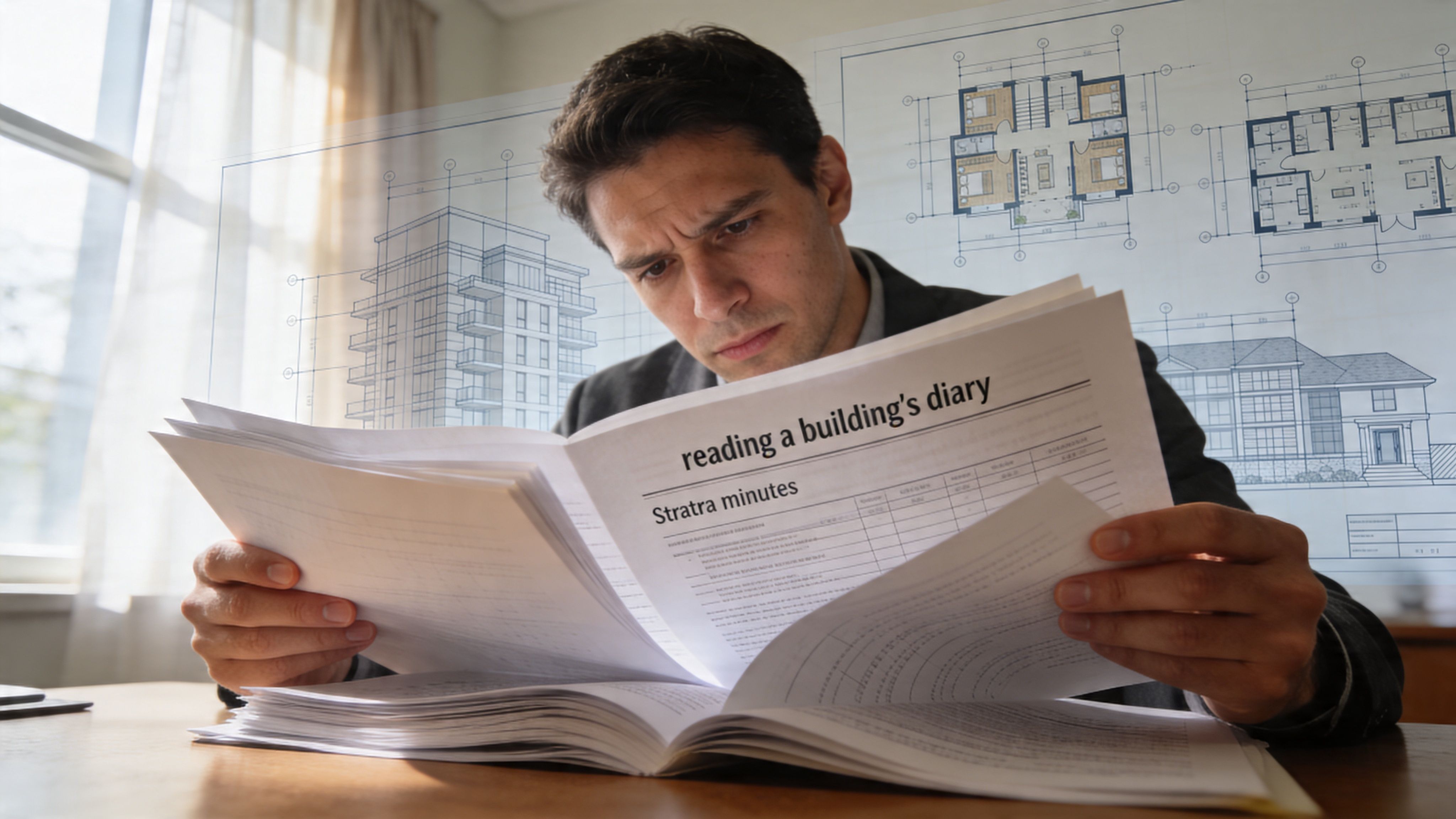
Read the strata minutes like a building diary
Strata minutes tell you what people in the building have been dealing with repeatedly. You’re not just looking for dramatic red flags. You’re looking for patterns.
Pay attention to recurring mentions of:
- Water penetration issues
- Roof concerns or building envelope discussions
- Elevator problems
- Resident complaints about noise or bylaws
- Deferred maintenance
- Insurance or legal disputes
One isolated complaint may mean very little. The same issue appearing month after month means the building hasn’t solved it.
If the minutes keep returning to the same problem, assume you’re reading a habit, not a one-time incident.
Review the budget and reserve fund with common sense
Buyers often hear “contingency reserve fund” and tune out. Don’t. You don’t need to be an accountant to spot whether a strata seems prepared or reactive.
Look at whether the budget appears to cover expected maintenance realistically, whether major work is being discussed without a clear funding plan, and whether the strata seems to lurch from issue to issue. Special assessments rarely feel sudden to people who have read the documents carefully. The clues are usually there.
A practical document checklist helps. Many buyers use mortgage and offer tools before they write, and local resources like Brookside’s home buying tools can help organise the process.
Don’t confuse low strata fees with low ownership cost
Cheap monthly fees can attract buyers quickly. Sometimes that’s fine. Sometimes it means the building has been under-collecting for years and pushing costs into the future. A condo with higher but sensible fees can be healthier than one with artificially low fees and a deferred maintenance problem.
Here’s a simple framework:
| What you see | What to ask |
|---|---|
| Low fees | Is the building still funding maintenance properly? |
| Recent fee increases | Was the increase proactive or caused by neglected upkeep? |
| Planned repairs | Are they funded, or is a special assessment likely? |
A short explainer can also help buyers understand what professionals look for in condo paperwork and building condition before subjects come off.
The fastest way to make a bad condo decision
Rushing because the unit looks clean.
The best buyers move quickly on opportunity, but they don’t skip analysis. They shorten the learning curve in advance. That’s different from being careless. If you treat strata records like fine print, you can miss the most important part of the purchase.
From Pre-Approval to Possession Day A Step-by-Step Plan
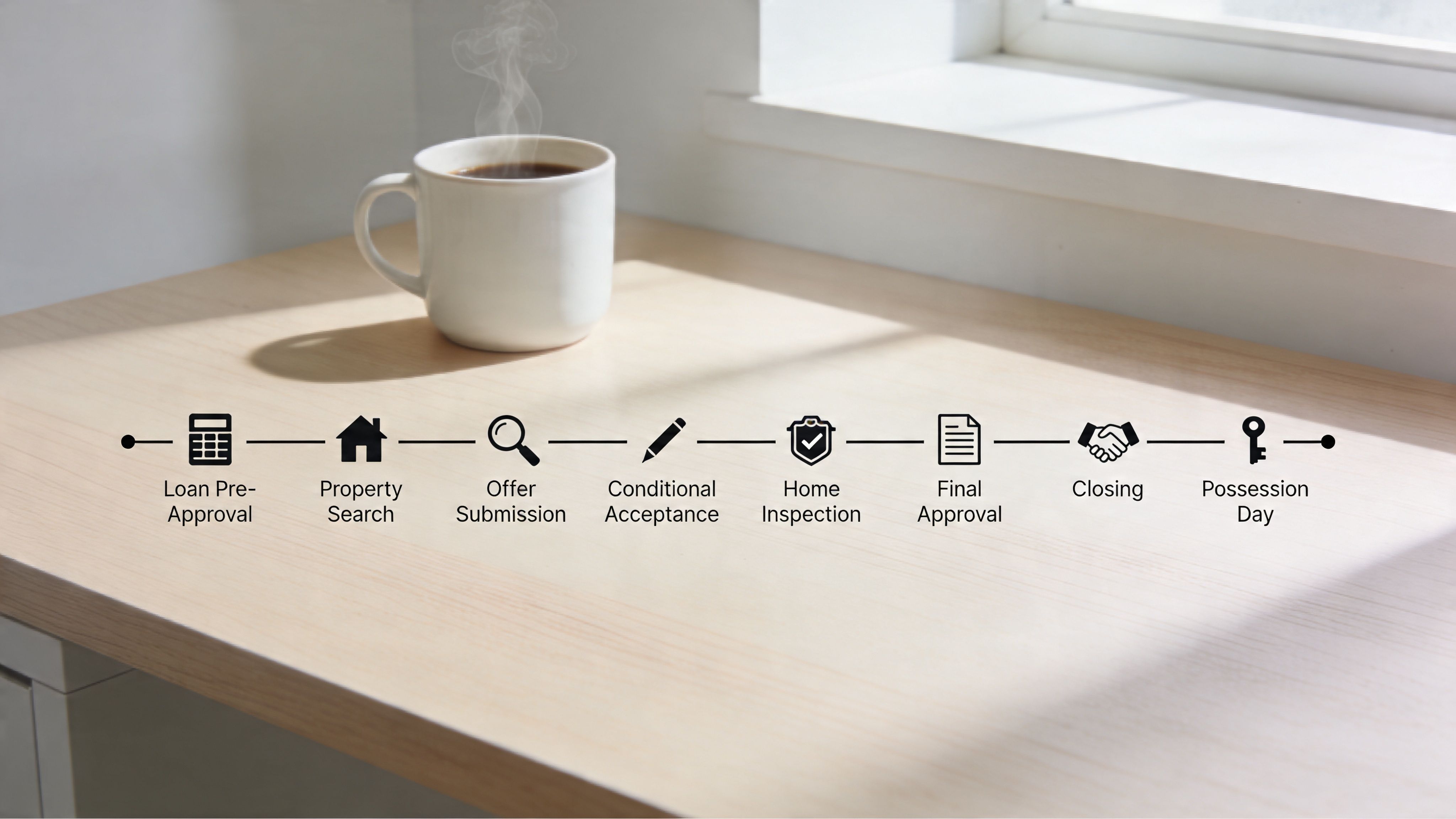
A condo purchase feels less stressful when you treat it like a sequence instead of one giant decision. Most problems happen when buyers jump ahead emotionally and only later catch up on financing, documents, or inspection details.
Step one starts before the search
Get pre-approved before you tour seriously. Not because it sounds responsible, but because it changes how you shop. You stop guessing, you narrow the right price band, and you can make decisions without scrambling when a suitable listing appears.
Once financing is clear, start searching with criteria that reflect real life. A focused buying a home resource page can help buyers map out the sequence from search to closing.
The offer stage is where discipline matters
When you find the right condo, structure the offer around the risks that matter. Price matters, of course, but so do document review, financing certainty, inspection scope, possession timing, parking and storage confirmation, and any included fixtures or appliances.
Some buyers benefit from using a broad checklist before they write. A general homeowner resource like Top 10 Questions to Ask Before Buying a House can be useful here, especially for thinking through property condition and ownership questions that people forget in the rush.
Offer advice: Confidence wins more often than speed alone. A clean, organised offer usually lands better than a rushed one with unanswered questions.
Inspection, subject removal, and closing
A condo inspection isn’t only about what’s inside the unit. Buyers should also think about visible signs connected to windows, balconies, moisture, ventilation, and any common property concerns that affect ownership experience.
The final stretch usually looks like this:
- Review all strata and property documents
- Complete financing and inspection steps
- Remove subjects only when your questions are answered
- Arrange insurance, legal conveyancing, and deposits
- Confirm move-in procedures with the building before possession
Possession day feels simple when the earlier work was organised properly. That’s the reward for doing the unglamorous parts well.
Let Brookside Realty Guide You Home
Buying one of the condos for sale in pitt meadows can be a strong decision for the right buyer. The appeal is clear. You get a smaller community, practical access to Maple Ridge and commuter routes, and condo options that can still make sense for first-time buyers or downsizers. The part that needs care is everything beneath the listing photos.
That’s where local guidance makes a real difference. The work isn’t just identifying available units. It’s helping buyers assess neighbourhood fit, notice which building details deserve more scrutiny, read strata records properly, and structure offers with clear eyes.
Royal LePage Brookside Realty Property Management is one local option buyers can use for purchase guidance, neighbourhood search support, and transaction help in Maple Ridge and Pitt Meadows. If you want to talk through your search, compare buildings, or get a grounded opinion on a specific listing, you can contact the local team here.
A good condo purchase should feel informed, not improvised.
Frequently Asked Questions About Pitt Meadows Condos
Are condos in Pitt Meadows good for first-time buyers
They can be. Pitt Meadows often appeals to buyers who want a more manageable entry point than larger nearby markets while still staying connected to transit, parks, and everyday services. The biggest mistake first-time buyers make isn’t choosing the wrong city. It’s underestimating strata review.
Are pet and rental rules the same in every building
No. They vary by strata corporation. Some buildings are more flexible, while others are stricter about the number, size, or type of pets, as well as rental conditions. Always read the bylaws and any amendments yourself. Never rely on a summary line in a listing.
Should I buy in Pitt Meadows or Maple Ridge
That depends on your routine. Pitt Meadows often feels quieter and more contained. Maple Ridge offers more neighbourhood variety and a broader range of housing choices. If you’re comparing monthly ownership costs, a tool like this mortgage payment calculator for local buyers helps you compare options more realistically than list price alone.
What should I worry about most in an older condo building
Not age by itself. Plenty of older buildings are well run. The issue is whether the strata has stayed ahead of maintenance, documented decisions clearly, and funded future work sensibly. A well-managed older building can be a better purchase than a newer one with weak governance.
Do I need a local agent for a condo purchase
If you’re buying in a smaller market with building-by-building differences, local context helps. The value isn’t just opening doors. It’s knowing where to slow down, where to dig deeper, and when a listing deserves fast action.
If you're buying, selling, or weighing your options in Pitt Meadows or Maple Ridge, Royal LePage Brookside Realty Property Management can help you sort through the practical details with clear local guidance and no-pressure advice.