

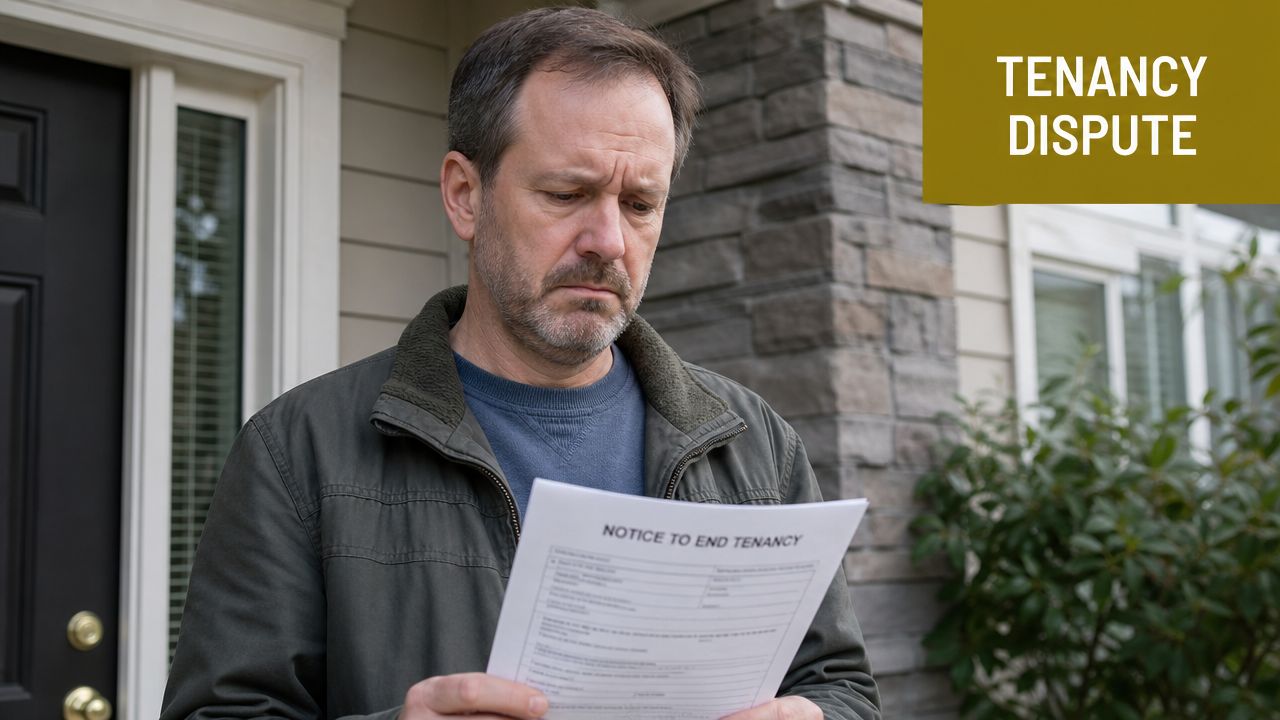
You've served a Notice to End Tenancy on a rental in Albion, Silver Valley, or a condo near downtown Maple Ridge. The notice is done. The tenant isn't happy. Now the part that decides far more cases than most landlords expect kicks in. Can you prove service cleanly, clearly, and in a way the Residential Tenancy Branch will accept?
That's where landlords get into trouble. Not because the underlying issue was weak, but because the paperwork around delivery was sloppy. A notice that was valid in your mind can still become a problem in a hearing if the dates, names, address, or service method don't line up.
This is why the RTB-34 matters so much in practice. For landlords in Maple Ridge and Pitt Meadows, especially those managing basement suites, townhomes in Cottonwood, or single-family rentals near Kanaka Creek, this form is often the document that turns a tenant's “I never got it” into a clear evidentiary record.
Navigating Tenancy Disputes in Maple Ridge
A common local situation looks like this. A landlord has a rental in Silver Valley. Rent has gone sideways, communication is getting tense, and the landlord serves notice quickly because they don't want more delay. A few weeks later, the dispute lands at the RTB. The conversation isn't just about unpaid rent or utilities anymore. It shifts to service. Who served it. When. How. Whether the right person received it. Whether the address on the proof matches the notice.
That's why experienced property managers treat the RTB-34 as more than a formality. It's the record that supports the notice. If the notice is the legal step, the RTB-34 is often the proof that the step happened properly.
Why local landlords feel this pressure
Maple Ridge rentals vary a lot. A newer building in West Maple Ridge has different delivery realities than a rural property on a larger lot, or a townhouse in Cottonwood where notices are often posted at a unit entry. In each setting, landlords need clean documentation that holds up later, not just a rough memory of what happened.
A few practical truths apply almost every time:
- Disputes become detail-driven: Broad statements like “I served it that day” don't carry much weight if the tenant challenges service.
- Timing controls strategy: If your service record is weak, your next step can stall.
- Small mismatches hurt credibility: A missing unit number, a shortened tenant name, or a wrong date can create a bigger problem than landlords expect.
Good tenancy files are built at the moment of service, not at the hearing table weeks later.
If you manage your own rental, this guide should help you complete the form properly and avoid the mistakes that force landlords to restart the process.
What Is the RTB-34 Form and Why It Is Your Key Evidence
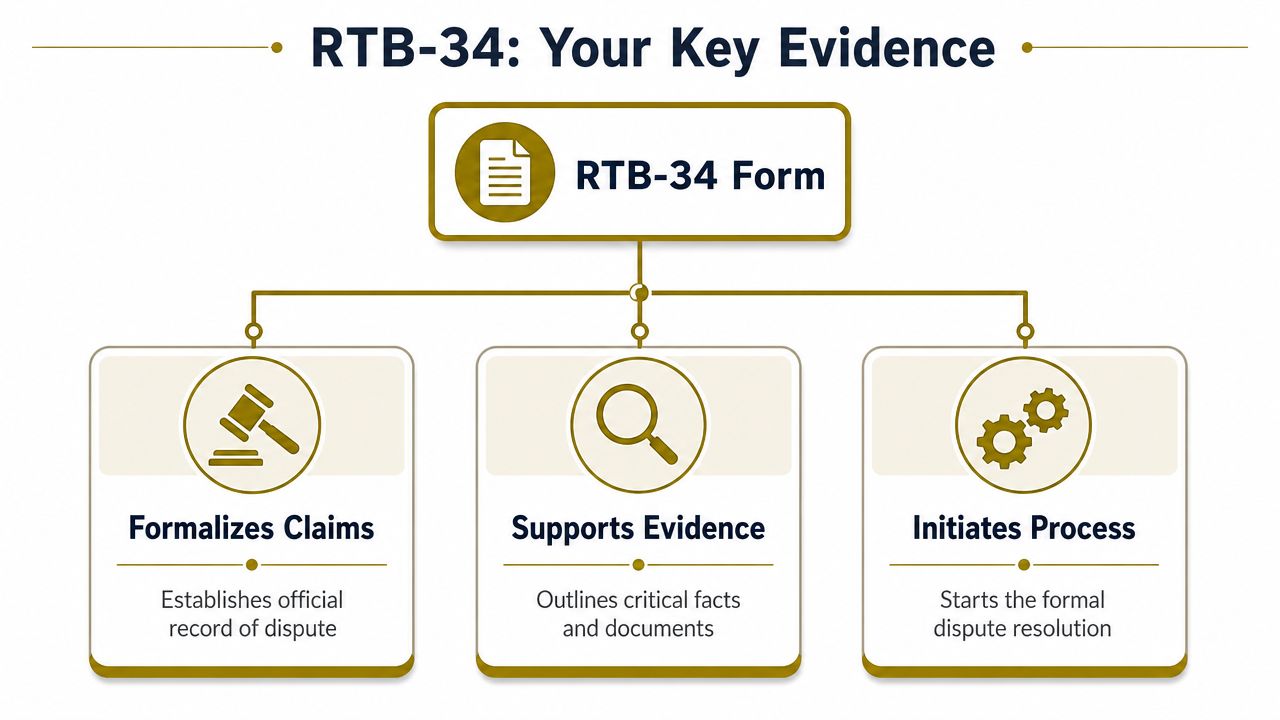
The RTB-34 is a British Columbia Residential Tenancy Branch proof-of-service form used to document how and when a landlord served a Notice to End Tenancy or a Written Demand to Pay Utilities, as described on the RTB-34 form overview and official form summary. The province's official forms page identifies it as a March 2021 PDF, and its job is simple. It helps prove that service was done properly.
What the form actually does
This is not a tenancy agreement. It does not create rights by itself. It records the facts of service. That distinction matters.
The RTB uses the form when deciding whether a notice was valid. Service dates affect when legal timelines start running, so the form captures the service method, date, parties, and property details. In a hearing, that can become the key evidence if a tenant argues they never received the notice or received it later than you claim.
Why landlords lose ground without it
If the service record is weak, everything downstream gets harder. The RTB-34 has value because it creates a consistent paper trail. The names, address, and dates on the form need to match the underlying notice exactly. If they don't, you've handed the other side a credibility argument.
In practical terms, the form is most important in files involving:
- End of tenancy notices: Where the landlord needs to show the notice was delivered in a recognised way.
- Utility demand disputes: Where the landlord must prove the written demand was served.
- Contested timelines: Where the hearing turns on when the tenant is deemed to have received the document.
Practical rule: Fill out the RTB-34 right after service, while the details are fresh. Completing it later from memory is where avoidable errors start.
What works and what doesn't
A disciplined service record works. That means same-day completion, matching names, full address details, and backup documents where required.
What doesn't work is treating proof of service like an afterthought. Landlords often spend all their attention on the notice itself and leave the service evidence vague. That's backwards. In many hearings, the notice isn't the fragile part. The service record is.
If you keep your tenancy paperwork organised, it helps to store RTB-34 forms alongside the notice, tenancy agreement, and any supporting correspondence in one file. Brookside's landlord resources are a useful starting point for that kind of file discipline.
A Section-by-Section Guide to Filling Out the RTB-34
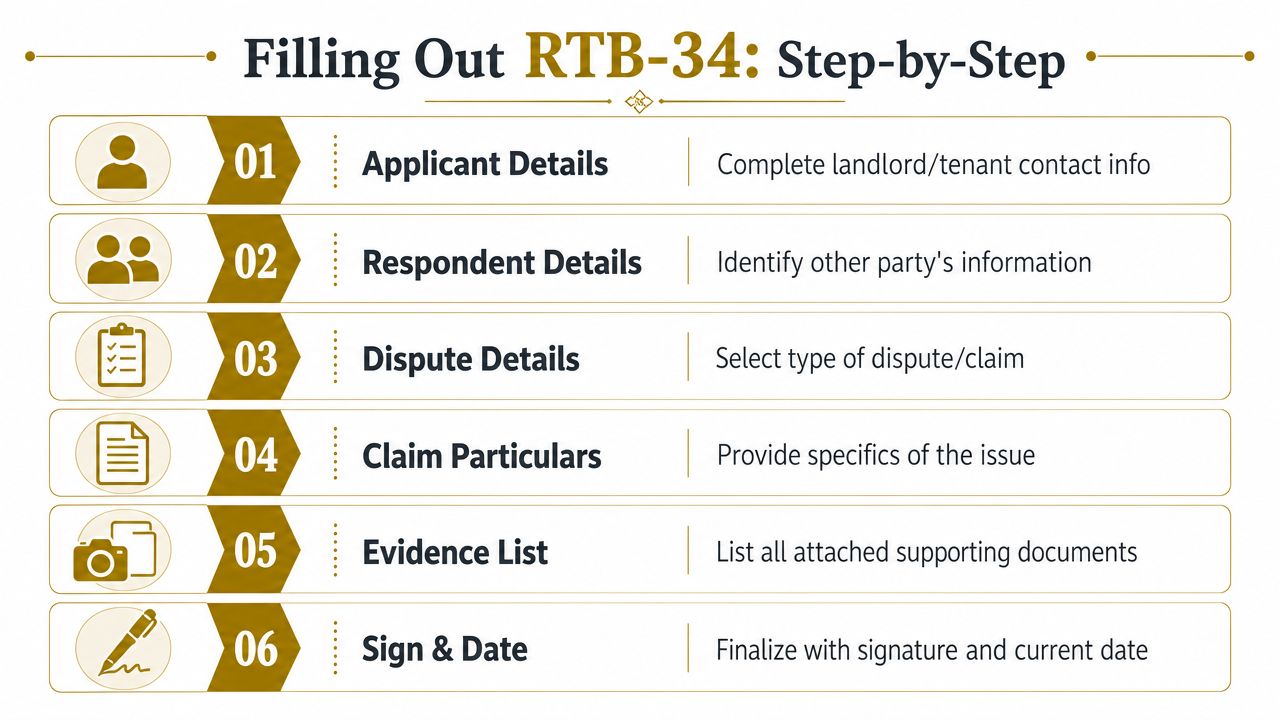
The best way to complete the RTB-34 is to treat it like evidence, not admin. Every line should answer a question an arbitrator might ask later.
Match the parties exactly
Start with names. Use the tenant's full name exactly as it appears on the tenancy agreement and on the notice you served. If the tenancy agreement says “Jonathan David Smith,” don't shorten it to “John Smith” on the RTB-34.
The same rule applies to landlords and authorised agents. If a property manager served the document, record the correct legal or business identity used in the tenancy file.
For local rentals, condo and townhouse files often go wrong when a landlord writes a familiar version of the tenant's name rather than the formal one on the signed agreement.
Use the full rental address
The service address needs to be complete and consistent. Include unit number if there is one. That sounds obvious, but it's a common weakness in newer developments where unit formatting can vary.
A rental in West Maple Ridge might require a precise unit, building number, and street line. A rural address outside the denser core may need extra care so the property is unmistakably identified. Don't rely on shorthand that only makes sense to you.
Use this quick check before you move on:
- Unit accuracy: Include the full unit identifier if the property has one.
- Street consistency: Copy the civic address exactly as shown in the tenancy documents.
- Local clarity: If the property has multiple structures or entrances, make sure the rental unit itself is clearly identified.
Identify the document served
The RTB-34 is used for a Notice to End Tenancy or a Written Demand to Pay Utilities. Be precise about which document you served.
The proof form supports the underlying document. If the form is vague, but the notice is specific, the file starts to feel disconnected. In a dispute, disconnected paperwork creates avoidable questions.
If you served more than one document at different times, keep each proof of service tied clearly to the specific document served.
Record the service method carefully
Landlords need to slow down, as the service method is not just a checkbox; its proper handling affects whether the RTB accepts service at all.
If you served the document in person, record that clearly. If service was by another permitted method, the details need to line up with what occurred. Don't choose a box because it seems close enough.
A useful internal process is to complete the form with the served document still in front of you, then compare both line by line.
For landlords who like checklists, Brookside's property management tools and planning resources can help build repeatable file systems around service and notices.
Record the date immediately
Write the date of service immediately after delivery. Don't leave it for the evening, and don't wait until the next day if the file is becoming contentious.
Memory slips are rarely dramatic. Usually it's a small issue. Wrong day of the week. Uncertain time. A guess about when the document was posted. Those small errors become bigger when the tenant disputes service.
A practical habit that works well is this:
- Serve the document
- Write the service details at once
- File the proof with the notice copy immediately
Attach supporting evidence where needed
Some service methods require more than the form itself. If your method calls for supporting proof, include it in the file right away rather than hunting for it later.
Keep the package together. One folder. One PDF set. One evidence chain.
A simple working table helps:
| Service detail | What to focus on |
|---|---|
| Names | Match the tenancy agreement and notice exactly |
| Address | Use the full rental unit address with no shorthand |
| Document type | Identify the exact notice or written demand served |
| Service method | Record the actual method used, not an approximation |
| Date | Enter it immediately after service |
| Backup proof | Store related supporting documents in the same file |
Sign as the person who actually served it
The person who served the document should be the one completing and signing the form. If an agent or property manager handled service, that person should sign. Don't have someone else complete it second-hand.
That matters because the form is strongest when it comes from the person with direct knowledge of what happened.
Sample Completed RTB-34 Form for a Local Scenario
A realistic Maple Ridge example helps more than abstract instructions. Take a townhouse in Cottonwood, where a landlord serves a notice after a tenancy issue has escalated and the file may end up before the RTB. The landlord isn't trying to create a perfect legal memo. They're trying to produce a service record that's clean, believable, and easy to follow.

What a strong local example looks like
In this scenario, the landlord uses the full tenant names from the tenancy agreement, the exact townhouse address including the unit, and the precise document title from the notice served. Nothing is abbreviated unless it already appears that way in the tenancy file.
The service section is completed right away. That matters because the RTB-34 becomes more persuasive when it reads like a contemporaneous record instead of a reconstruction written later.
A solid sample form usually has these traits:
- The tenancy details line up: Same names, same property details, same document description.
- The method is specific: No vague wording, no informal explanation replacing the actual service method.
- The file is coherent: The notice copy, RTB-34, and any related evidence all support each other.
Why this matters in an actual hearing
Arbitrators read a lot of disputed paperwork. A file that is internally consistent is easier to accept. A file with mismatched details invites questions the landlord didn't need.
For example, if the notice says one address format, the RTB-34 says another, and the evidence package uses a third shorthand version, the tenant's challenge becomes easier. Not because the landlord necessarily served it wrong, but because the file looks less reliable.
A good RTB-34 doesn't try to sound legal. It simply makes the facts easy to verify.
A practical narrative example
A landlord in Cottonwood serves the notice, then immediately completes the RTB-34 while still at the property. They double-check the tenant names against the signed tenancy agreement on their phone, confirm the unit address, and save a scanned copy of both documents in the same folder before the day ends.
That process works because it reduces friction later. If the dispute moves forward, the landlord isn't rebuilding the file from memory or searching through texts and loose paperwork. They already have a coherent record.
If you want to see how local property management content approaches tenancy process issues more broadly, Brookside's Maple Ridge property management blog is a useful reference point.
Common RTB-34 Mistakes That Can Derail Your Case
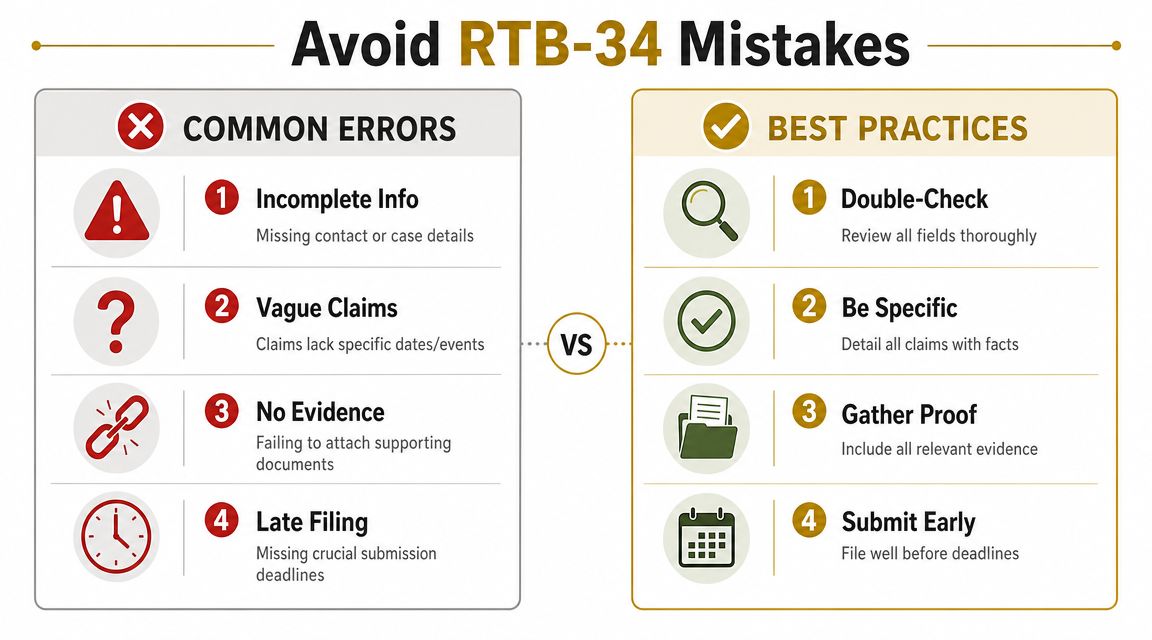
Most RTB-34 mistakes aren't dramatic. They're administrative. That's why they're dangerous. Landlords often assume minor paperwork issues can be explained away later. Sometimes they can't.
Mismatched names and addresses
This is one of the fastest ways to weaken your evidence. If the tenant's name on the RTB-34 doesn't match the notice or tenancy agreement, the tenant can argue the form doesn't clearly prove service of that notice to that party.
The same goes for addresses. A missing unit number in a townhouse complex, a different spelling of the street, or a casual shorthand for a secondary suite can all create doubt.
Using a method without the required proof
Technical compliance is essential. For BC tenancy disputes, the RTB-34 requires method-specific evidence. For registered mail, the sender must attach the purchase receipt and tracking report, and for email or fax, the landlord must show prior written authorisation to serve by that channel, such as an RTB-51 or other written proof, according to the official RTB-34 PDF requirements.
That means the trade-off is clear. Some service methods may feel convenient, but they create extra proof requirements. If you can't satisfy those requirements, convenience doesn't help you.
Filling it out later from memory
This happens constantly. A landlord serves the notice, gets busy, and completes the RTB-34 later. By then, certainty fades. Time, sequence, and details become less sharp.
That's not just a credibility issue. It can also lead to internal inconsistency between the form, the notice, and the landlord's later testimony.
Practical mistakes that come up often
The most common failure points usually look like this:
- Incomplete service record: The form leaves out a detail the landlord assumes is obvious.
- Inconsistent paperwork: The RTB-34 and the notice don't mirror each other.
- Weak backup documents: Receipts, tracking, or written authorisation are missing where the service method requires them.
- Overconfidence about informality: The landlord thinks a text thread or verbal exchange will patch over a weak proof-of-service form.
Watch for this: If a tenant disputes service, the RTB doesn't reward “close enough” paperwork.
What works better in practice
The landlords who protect themselves best usually follow a disciplined routine:
| Common problem | Better practice |
|---|---|
| Form completed later | Complete it immediately after service |
| Informal naming | Use exact names from the tenancy agreement |
| Partial address | Use the full civic and unit address |
| Missing proof | Gather receipts, tracking, or written consent at the same time |
| Scattered file | Store notice, RTB-34, and support together |
The RTB-34 is simple on the surface. But simple forms often carry high consequences because they support legal timelines. In a dispute, sloppiness on a simple document can overshadow the landlord's larger case.
The Role of RTB-34 in the Dispute Resolution Hearing
Once a dispute reaches the Residential Tenancy Branch, the RTB-34 stops being office paperwork and becomes hearing evidence. That's the shift landlords need to understand. The form is no longer just your internal record. It is one of the documents an arbitrator may rely on when deciding whether your notice stands.
In BC, tenancy disputes generally go through the Residential Tenancy Branch rather than the courts. Under dispute-resolution rules summarised by TRAC and Clicklaw, monetary claims above $35,000 usually move outside RTB jurisdiction, and the RTB's general limitation period is two years from the end of the tenancy for most claims. The province also changed purchaser-occupancy notice rules on July 18, 2024, when those notices began requiring the RTB's web-portal-generated RTB-32P form instead of a paper version, as outlined in TRAC's summary of alternatives to dispute resolution and RTB jurisdiction. The broader lesson for landlords in Maple Ridge and Pitt Meadows is that tenancy disputes are highly timeline-driven.
How arbitrators use the form
An arbitrator doesn't look at the RTB-34 in isolation. They compare it against the notice, the tenancy file, and any challenge raised by the tenant. If the tenant says they didn't receive the notice, the RTB-34 helps the arbitrator test that claim against a documented service record.
That's why coherence matters so much. A tidy, consistent package is easier to follow and easier to trust.
What the hearing context feels like
Most landlords experience the hearing as a focused review of documents, dates, and procedure. That can surprise people who expected a broad discussion about fairness or frustration. Those issues may come up, but documentary evidence still carries the file.
A well-prepared landlord usually brings a package that lets them answer practical questions quickly:
- What document was served
- Who served it
- How it was served
- When service occurred
- What evidence supports that service
In a hearing, the RTB-34 often does one job above all others. It anchors the service timeline.
Why this affects strategy before the hearing
Knowing the form will be tested later changes how landlords should use it now. You don't complete it just to tick a box. You complete it in a way that another person, months later, can understand without needing your memory to fill in gaps.
If you're dealing with a developing dispute and want help reviewing the practical next steps around your file, Brookside's property management contact page is one local point of contact for that conversation.
Protecting Your Investment Beyond the Paperwork
The RTB-34 is a small form with a large role. If the notice is important, the proof of service is what helps the notice survive scrutiny. That's the main takeaway for any landlord working through a BC tenancy dispute.
The practical approach is straightforward. Serve carefully. Complete the form immediately. Keep the notice, proof, and supporting records together. Review every line for consistency before the file ever reaches a hearing.
Paperwork is only one layer of protection
Good landlords don't just react at the dispute stage. They build systems that reduce avoidable mistakes long before a notice is served. That includes organised tenancy files, clear communication records, and consistent processes for notices and evidence retention.
When a dispute continues past the hearing stage, the stress usually comes from procedure, deadlines, and enforcement questions. That's why many local owners decide they don't want to manage the full lifecycle alone.
One option available to Maple Ridge and Pitt Meadows landlords is Royal LePage Brookside Realty Property Management, which handles residential property management services including tenancy administration and landlord support. Whether you use a professional manager or self-manage, the principle stays the same. The landlord who documents carefully protects the asset better.
For owners thinking beyond one tenancy dispute, this is part of a bigger real estate decision too. A well-managed rental property is easier to hold, easier to sell, and less likely to drain time and energy when the market or tenant relationship gets difficult.
If you own a rental in Maple Ridge or Pitt Meadows and want practical help managing notices, tenant issues, or the day-to-day demands of protecting your property, Royal LePage Brookside Realty Property Management is a local resource worth contacting.