
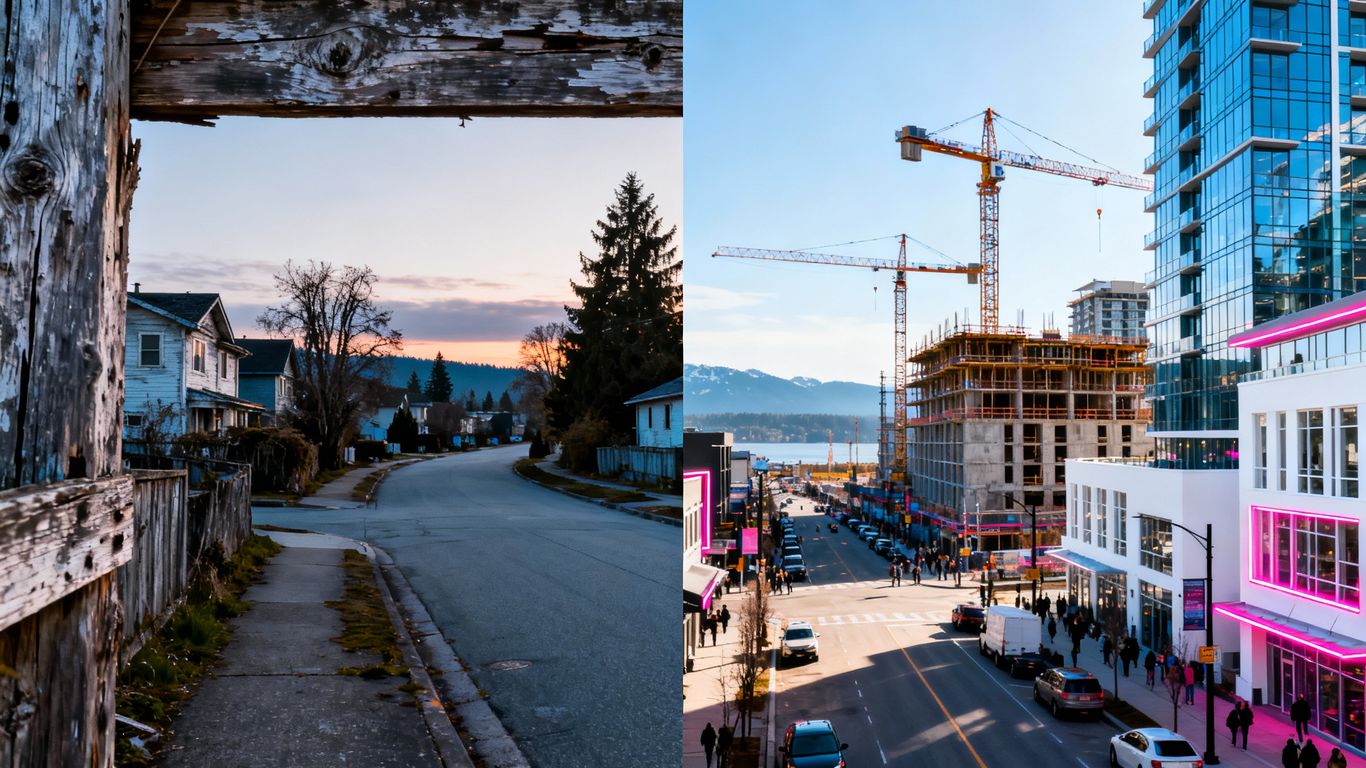
Recent B.C. Assessment Authority data reveals a notable divergence in real estate values across the province. Homeowners in the Lower Mainland are bracing for decreases in their property assessments, with many expecting drops between 10 and zero percent. Conversely, the northern regions of British Columbia are experiencing a rise in property values, bucking the provincial trend.
Key Takeaways
- Lower Mainland property values have seen an overall decrease.
- Northern B.C. real estate values have generally increased.
- Detached homes in the Lower Mainland experienced significant drops, particularly in areas like White Rock.
- Condo values also declined across the Lower Mainland.
- The North Central region of B.C. saw substantial gains in detached home values.
Lower Mainland Market Trends
Across the Lower Mainland, which encompasses Greater Vancouver, the Fraser Valley, the Sea to Sky area, and the Sunshine Coast, the total value of properties fell from $2.01 trillion on July 1, 2024, to $1.92 trillion on July 1, 2025. This represents a $90 billion decrease in the province's total property value. However, this figure includes $24 billion in new builds and subdivisions, meaning the value of existing properties actually decreased by $114 billion year-over-year.
Detached homes in White Rock saw the most significant drop, falling nine percent to an average of $1.58 million. The University Endowment Lands, the City of Langley, and Richmond each experienced an eight percent decrease. Surrey detached homes declined by six percent to an average of $1.464 million, while Vancouver saw a five percent drop to $2.092 million. Whistler and Hope reported no change, though Squamish saw a two percent increase.
For condominiums in the Lower Mainland, Surrey experienced an average drop of seven percent, with Richmond and White Rock seeing six percent declines. Vancouver condos fell by an average of three percent, settling at $772,000.
Northern B.C. Market Performance
In contrast, the North Central region of B.C., which covers a vast 70 percent of the province's landmass, has seen its real estate market remain stable, with some communities experiencing value increases of up to 15 percent. B.C. Assessment assessor Bryan Murao noted that most homeowners in this region can expect value changes ranging from minus five percent to plus 15 percent.
Specifically, the average value of a detached home in Fort St. James rose by 14 percent to $244,000, while Hazelton saw a 10 percent increase. Prince George reported a two percent gain for detached homes, reaching an average of $459,000, and Prince Rupert saw a three percent increase.
Assessment Context
B.C. Assessment's figures reflect property values as of July 1 of the preceding year. The softening housing market is a key factor influencing the 2026 property assessments. Homeowners can check their updated assessments online.