
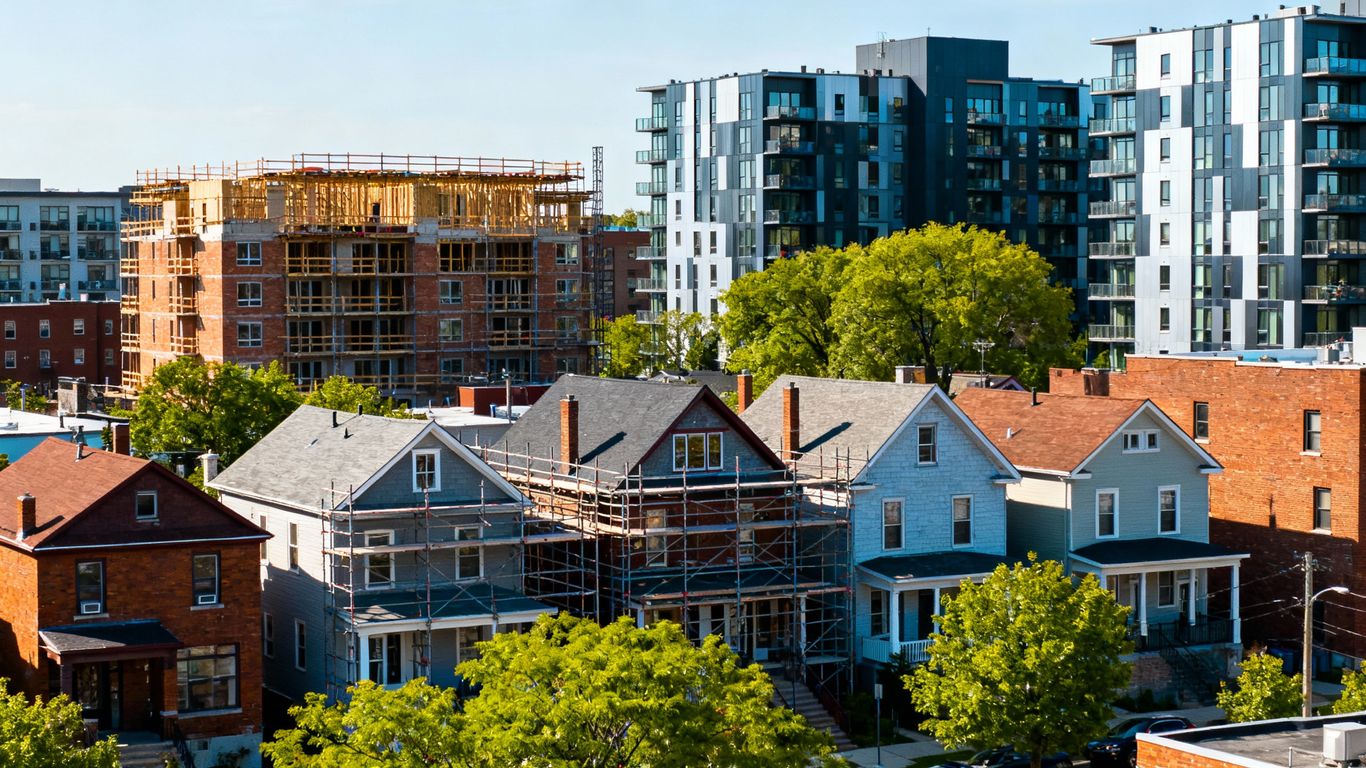
British Columbia's housing landscape is undergoing a significant transformation as multi-unit buildings, often referred to as 'multiplexes,' gain traction on lots previously zoned exclusively for single-family homes. This shift, mandated by provincial legislation, is sparking heated debate, with some hailing it as a necessary evolution for affordability and others decrying the new structures as 'monstrosities' that disrupt established neighborhoods.
Key Takeaways
- Provincial legislation now requires B.C. municipalities to allow at least three or four homes per residential lot, and up to six units near frequent transit.
- The introduction of these 'missing middle' housing types has been met with both enthusiasm for increased housing options and strong opposition from some residents and local officials.
- Data from several B.C. cities shows a notable increase in applications and permits for these multi-unit developments since the new zoning rules took effect.
A Divided Community
Long-time residents like Byron Cook in North Burnaby express dismay, calling the new three- and four-storey buildings "monstrosities" that distort the neighborhood's character, exacerbate parking issues, and cast shadows on existing homes. His concerns are echoed by others who have launched petitions and seen local councils, like Burnaby's, respond by reducing allowable building heights and sizes.
The Province's Mandate
In 2023, the B.C. NDP government introduced legislation, known as Bill 44, to address the housing crisis by ending the exclusive zoning for single-detached houses in many areas. The province aims to increase housing supply and affordability by encouraging small-scale, multi-unit developments. Housing Minister Christine Boyle remains committed to the policy, stating, "We're not going backward."
Shifting Neighborhoods: Data and Perspectives
While the province does not track the exact number of these developments, data from key municipalities reveals their growing prevalence:
- Burnaby: Issued 126 permits for multi-unit homes not previously allowed since July 2024, representing about 40% of permits in those areas.
- Kelowna: Has seen 476 permits for "ground-oriented infill" projects since 2018, with a 155% increase in applications after new zoning in March 2024.
- Vancouver: Received 549 applications for multi-unit buildings since November 2023, with 218 approved and 22 completed.
- Victoria: Initially saw low builder interest but, after policy overhauls, received 38 applications and 10 permits since December 2023.
- Surrey: Received 604 applications and issued 317 permits for small-scale, multi-unit projects since July 2024.
Evolution or Disruption?
Advocates like Akua Schatz, co-owner of Smallworks, view this period as a necessary, albeit disruptive, transitional phase. She points to historical precedents where new housing types, like basement suites and laneway houses, initially faced backlash but eventually gained acceptance. Dan Winer of Small Housing B.C. highlights polling data suggesting broad public support for small-scale multi-unit housing, despite vocal opposition.
Political Divide
The policy has created a political rift. While the provincial government champions the changes, some municipal leaders and the B.C. Conservatives, who have pledged to repeal Bill 44, criticize the top-down approach. Linda Hepner, B.C. Conservative housing critic, argues that neighborhood design should remain a local government responsibility, emphasizing the importance of community conversation over provincial edicts.
A Glimpse of the Future
Architect Xeniya Vins sees Bill 44 as "aggressive" but necessary, enabling more affordable housing options for families. Kelowna's experience, where medium-density housing has become routine after a gradual implementation, suggests that with time and adaptation, these new housing forms can integrate into existing communities.