
You open your BC Assessment notice, see the number, and immediately start comparing it to the home down the street that just sold. If the numbers are far apart, it's easy to think something is off. In Maple Ridge, that confusion is normal.
Homeowners in Albion, Silver Valley, Cottonwood, West Maple Ridge, and Kanaka Creek run into this all the time. They want one clear number that tells them what their home is worth, what they should list at, and what they'll pay in taxes. The problem is those are different questions, and they often lead to different answers.
The practical version is simple. Assessed value helps set your property taxes. Market value helps set your selling price. If you mix them up, you can make poor decisions on both sides. A seller can anchor too low or too high. A buyer can misread whether a home is fairly priced. An owner can ignore a tax assessment issue that may deserve a closer look.
That Letter from BC Assessment What Does It Really Mean
Every January, Maple Ridge homeowners open that envelope and ask the same thing. Is this what my home is worth right now?
Usually, no. It's a useful number, but it is not a live estimate of what buyers would pay today in the open market. If you've recently looked at nearby sales in areas like Hammond or Cedar Ridge and noticed they don't line up with your notice, that doesn't automatically mean the notice is wrong.
The first thing to understand in any assessment vs market value conversation is that the two numbers are built for different jobs.
| Question | Assessed Value | Market Value |
|---|---|---|
| What is it for | Property taxation | Buying and selling |
| Who uses it most | BC Assessment and municipalities | Buyers, sellers, lenders, and realtors |
| Does it move with the market right now | No | Yes |
| Should you use it to set your list price | Usually no | Yes |
Two numbers, two decisions
If your main concern is your annual tax bill, the assessed value matters. If your main concern is what your home in Maple Ridge could sell for this season, the market value matters more.
That distinction sounds basic, but it affects real decisions. A seller in Silver Valley might feel encouraged by a high assessment and list too aggressively. A seller in West Maple Ridge might see a lower assessment and worry they've lost value, even when current buyer demand says otherwise.
Your assessment can start the conversation. It shouldn't finish your pricing strategy.
If you're reviewing this year's notice, BC property owners can now access 2026 assessment values, which makes it easier to check the public record early. That's helpful for taxes. It still doesn't replace a current pricing analysis if a sale is on your horizon.
Understanding Assessed Value in British Columbia
In British Columbia, assessed value is the value used for taxation. That's its job. It is not designed to function like an up-to-the-minute listing recommendation.
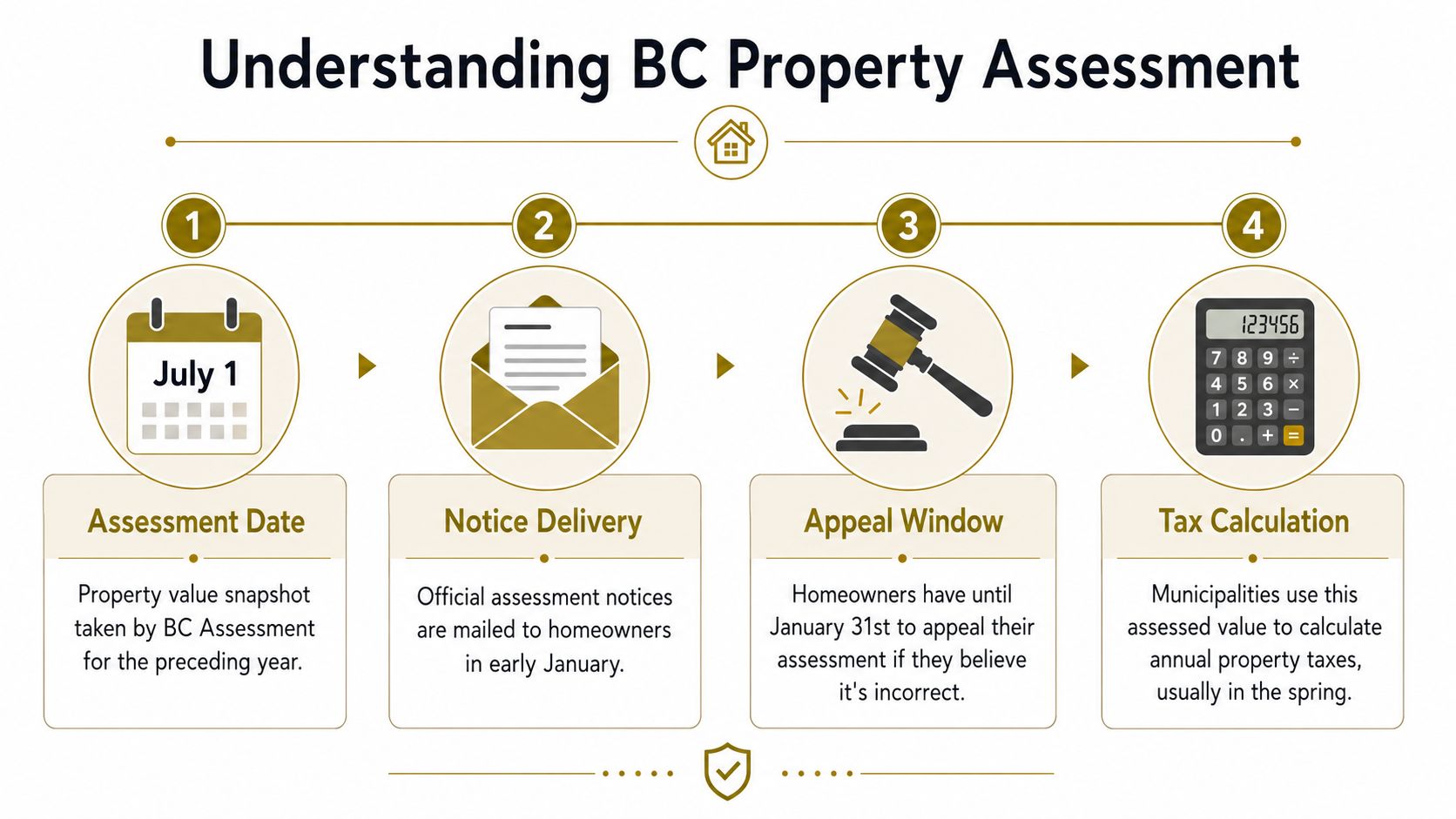
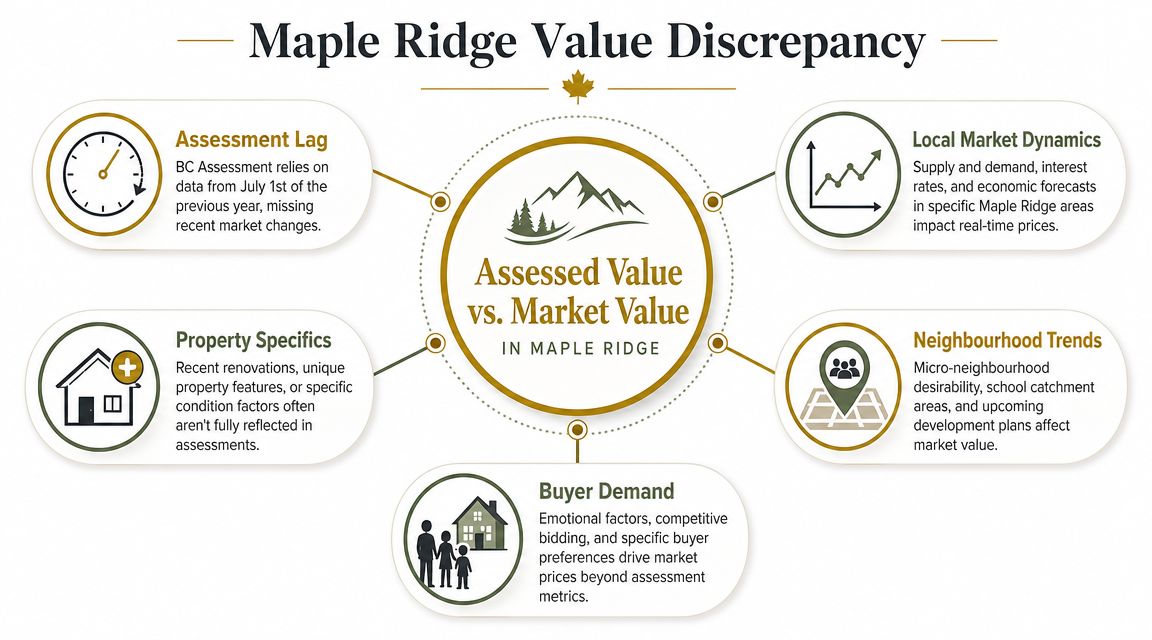
BC Assessment states that it estimates property values for taxation purposes using the property's condition and sales data as of July 1 each year, with notices typically sent in January. In practice, that makes the assessment a snapshot in time rather than a live listing price, which is why an assessed value can diverge materially from what buyers are willing to pay in fast-moving markets like Maple Ridge, as explained in this overview of tax assessments versus market value.
Why the timing matters
That lag is where most homeowner frustration comes from. If market conditions changed after the valuation snapshot, your notice may feel disconnected from what you're hearing from neighbours, seeing on listings, or watching in recent sales.
Take a common Maple Ridge scenario. A homeowner in Albion improves the home's presentation, local demand shifts, and buyer competition changes between the valuation date and the day that property hits the market. The assessment won't behave like a real-time pricing tool because it wasn't built to do that.
What assessed value is good for
Assessed value still matters, just in a narrower way than many people assume.
- Property tax planning: Municipalities use it when calculating annual property taxes.
- Consistency across properties: It gives owners and local governments a standard framework for taxation.
- Appeal review: It gives you a starting point if you believe your property has been assessed incorrectly.
A lot of owners also watch assessments as a rough benchmark. That's reasonable, as long as they don't confuse a benchmark with a sale strategy. If you want a broader local read on how assessments fit into public sentiment, this piece on B.C. property assessments as a mirror to economic hopes and fears is worth a look.
Practical rule: Use assessed value to think about taxes. Use current market evidence to think about selling.
Defining True Market Value in the Maple Ridge Context
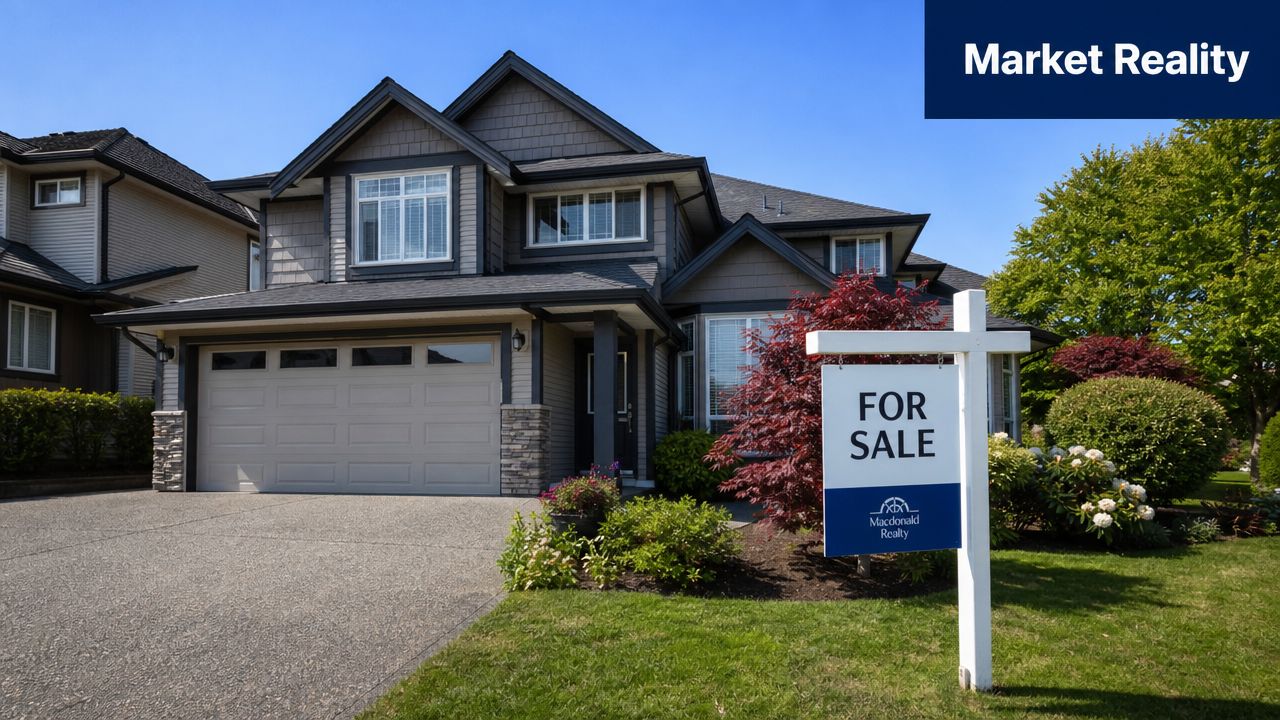
Market value is the price a knowledgeable buyer is willing to pay under current market conditions. It is live, negotiable, and shaped by what's happening now.
That makes it very different from the number on your assessment notice. In Maple Ridge, market value can shift based on buyer competition, available inventory, financing conditions, and what similar homes have recently sold for in your immediate area.
What goes into a real market estimate
A proper Comparative Market Analysis, or CMA, looks at more than one headline number. It weighs several factors together:
- Recent comparable sales: Not just any sale in Maple Ridge, but homes with similar size, style, lot characteristics, and condition.
- Active listings: These are your competition. If similar homes are sitting, buyers notice.
- Expired or cancelled listings: These often show where pricing missed the mark.
- Location details: A home near Kanaka Creek trails, a sought-after school catchment, or a quieter street in West Maple Ridge may attract different buyer responses than a similar home elsewhere.
- Property-specific appeal: Renovations, suite potential, layout, views, privacy, and yard usability all matter.
Why local nuance changes everything
The limitations of general advice become apparent. Two homes can look similar on paper and still land at different market values because buyers don't buy paper. They buy a street, a feel, a school route, parking, sunlight, privacy, and how move-in ready the place seems.
That's also why homeowners who want a current number should look at a Maple Ridge home evaluation instead of relying on the tax notice alone.
If you're curious how assessed value is treated in other tax systems, this explainer on help lowering your Texas property taxes is a useful contrast because it shows the same core principle. Tax value and sale value are not the same thing, even if owners often treat them that way.
A Side-by-Side Comparison
The cleanest way to understand assessment vs market value is to compare them directly.
Assessed Value vs Market Value at a Glance
| Attribute | Assessed Value | Market Value |
|---|---|---|
| Main purpose | Property taxation | Sale pricing and negotiation |
| Timing | Fixed annual valuation cycle | Current market conditions |
| Who determines it | BC Assessment | Buyers and sellers, guided by current evidence |
| What it reflects | Mass valuation for tax purposes | Most probable open-market sale price |
| Best use | Reviewing tax burden and possible appeal | Setting list price and evaluating offers |
| Main risk if misused | Assuming it predicts sale price | Ignoring broader tax implications |
The practical difference
Assessed value is built for system-wide consistency. Market value is built by live buyer behaviour. One is administrative. The other is transactional.
In British Columbia, an assessment date of January 1 and sales analysis from the prior year create a built-in timing gap between assessed value and current market value, so in rising markets the assessed value typically lags the market and can be lower than what a buyer will pay. In declining markets, the opposite can occur, with assessed value staying above market value until the next cycle catches up, as explained in this BC assessment timing overview.
Your assessment is what you talk about with the tax office. Your market value is what you talk about with your realtor.
What this looks like in real life
A seller sees an assessment below current demand and worries they can't justify a stronger asking price. That can lead to underpricing.
Another seller sees an assessment above current buyer appetite and assumes buyers will meet it. That can lead to stale days on market, price reductions, and a weaker negotiating position.
A fast decision test
Use this simple filter when you're deciding which number matters:
- Thinking about your tax bill: Start with assessed value.
- Thinking about listing your home: Start with market value.
- Thinking about refinance or lender expectations: Expect current evidence to matter more.
- Thinking about whether your notice seems off: Compare the assessment with relevant sales from the proper timeframe, not just current headlines.
Why the Gap Exists in Maple Ridge Neighbourhoods
In Maple Ridge, the gap between assessed value and market value doesn't happen for one reason. It happens because real homes are messy, local, and highly specific.
For pricing and negotiation in Maple Ridge and Pitt Meadows, market value is the more actionable benchmark because it reflects the most probable open-market sale price under current competition, while assessed value is mainly a taxation input. Using assessed value as a listing anchor can misstate sellability when recent comparable sales have moved materially since the assessment date, as outlined in this guide to tax appraisal versus market value.
Renovations change buyer response quickly
A renovated kitchen, better outdoor living space, fresh flooring, or a legal suite setup can change what buyers are willing to pay. In West Maple Ridge, suite flexibility can heavily shape interest. In family-oriented pockets of Cottonwood, layout and yard usability can matter just as much as square footage.
An assessment may not fully capture how buyers react to those features in the moment. The market often does.
Micro-neighbourhoods don't move in lockstep
Maple Ridge isn't one uniform market. Silver Valley, Albion, Hammond, and central condo pockets attract different buyers for different reasons. Some want trail access and newer construction. Others want a larger lot, a shorter commute, or walkability to schools and services.
That creates uneven pricing behaviour. Even within the same broader area, one street can perform differently from another if traffic, privacy, topography, or presentation changes the buyer experience.
Market mood shifts faster than assessment cycles
Rates change. Inventory changes. Buyer confidence changes. Those shifts can affect pricing quickly, especially when move-up buyers start hesitating or first-time buyers become more payment-sensitive.
If you want a recent read on how local conditions can vary, this roundup on Maple Ridge real estate seeing mixed fortunes in 2025 as neighbourhoods experience varied price swings gives useful neighbourhood-level context.
A home isn't priced by its tax notice. It's priced by what the next qualified buyer thinks it's worth today.
How to Use These Values Strategically
The smartest way to handle assessment vs market value is to stop asking which one is “right” and start asking which one is useful for the decision in front of you.

If you're selling
Don't use your assessment as your list-price formula. It can point you in the wrong direction in both active and cooling conditions.
Instead, look at current comparable sales, active competition, and how your home presents against nearby alternatives. If your property backs onto green space in Kanaka Creek, has a more functional basement layout than competing homes, or sits in better condition than similar listings, those details belong in your pricing strategy.
If you're buying
Don't assume a low assessment means value. Don't assume a high assessment means the seller is unrealistic either.
A more nuanced question is how much assessed value can be “wrong” before it becomes actionable, because in Canada assessment-to-market gaps are common and not always intuitive to homeowners. The practical question is less “what is my assessment?” and more “what evidence would a buyer, lender, or appraiser accept today?” as discussed in this NBER digest on property tax assessments versus market values.
That's the lens buyers should use too. What supports the offer in today's market?
If you're watching your tax bill
Assessed value directly matters. You can't argue your annual taxes using what you wish the market was doing today. You need to look at whether the assessment itself appears fair within the proper framework.
A review can make sense if there are factual errors, if your property was valued differently from relevant comparables, or if the notice doesn't line up with the evidence BC Assessment should be considering.
For a quick visual primer, this short video walks through the distinction in a way many homeowners find easier than reading policy language:
Challenging Your Assessment and Finding Your True Market Value
If your BC Assessment notice looks off, deal with it as a tax issue first, not a resale argument.
Assessment appeals can matter more than market-price debates in BC because assessed values are often based on a January 1 valuation date and may lag fast-moving local markets. That timing gap matters because homeowners often wonder whether they should use their tax assessment, a CMA, or an appraisal when pricing for a sale, as noted in this discussion of assessment appeals and market-price debates in BC.
A practical path if you want to appeal
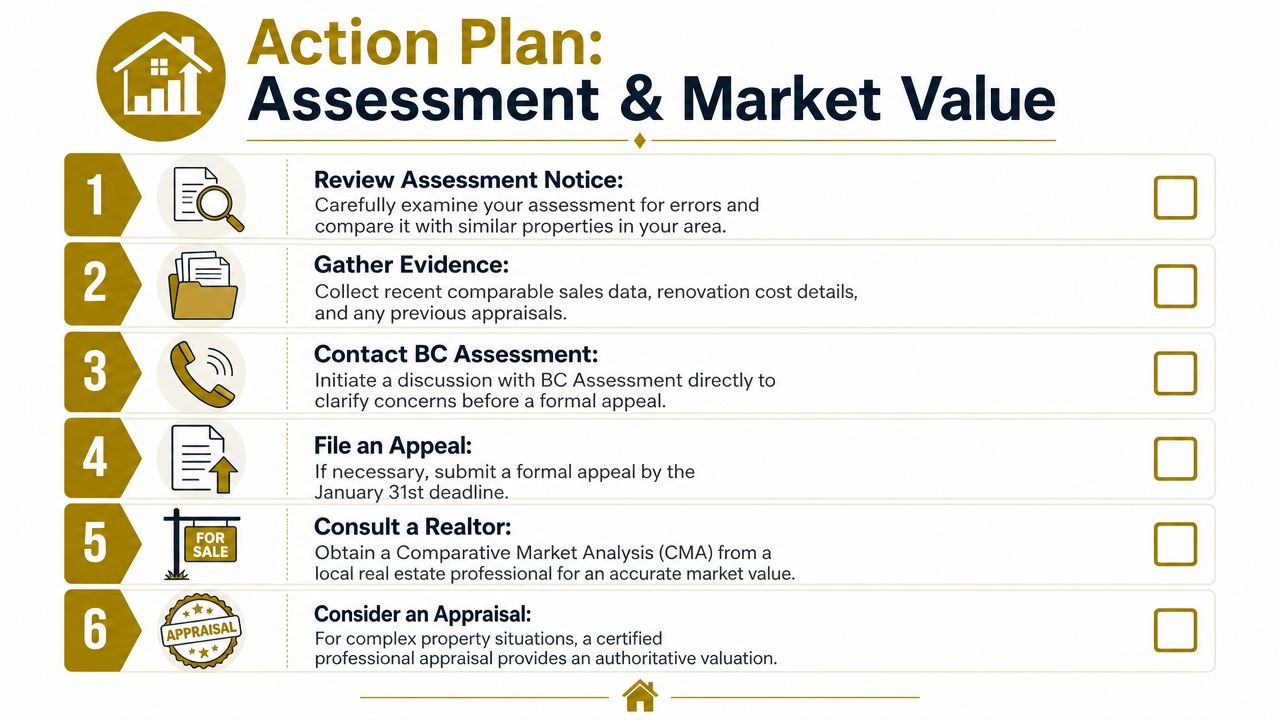
- Review the notice carefully: Check basic property details first. Errors in size, condition, or classification matter.
- Gather the right comparable evidence: Focus on sales relevant to the assessment framework, not just what's happening this week.
- Contact BC Assessment early: Sometimes clarification resolves the issue faster than people expect.
- Watch the deadline: The appeal window is time-sensitive, and the typical deadline is January 31 as shown in the infographic above.
If you've followed local stories about owners disputing repeated tax-assessment problems, this case involving a B.C. landowner taking tax assessment woes to the premier after repeated errors shows why documentation matters.
A different path if you want to sell
Finding your true market value is a separate exercise. That means looking at current comparables, buyer demand, competition, property condition, and neighbourhood-specific factors that affect what someone will pay today.
If you're planning a move in Maple Ridge or Pitt Meadows, the best next step is usually a current CMA, and sometimes a professional appraisal for more complex properties. That gives you a pricing conversation based on the market you're entering, not the tax system you're already in.
If you're trying to sort out what your BC Assessment notice means, what your home could realistically sell for, or whether now is the right time to make a move in Maple Ridge or Pitt Meadows, Royal LePage Brookside Realty Property Management can help with practical local guidance, current market insight, and a clear valuation strategy suited for your property.