

Condo sales in Abbotsford rose 43.9% year over year to 59 in March 2026, while new condo listings were nearly unchanged, according to this March 2026 Abbotsford market update. That one number tells you more about the Abbotsford real estate market than any broad headline does.
A lot of buyers and sellers still talk about Abbotsford as if it's one market moving in one direction. It isn't. Detached homes, townhomes, and condos are behaving differently, and that changes how you price, how you negotiate, and how quickly you need to act.
If you're buying, selling, or holding property in Abbotsford, the useful question isn't “Is the market up or down?” It's “Which segment am I in, and what's working there right now?”
The Current Pulse of the Abbotsford Market
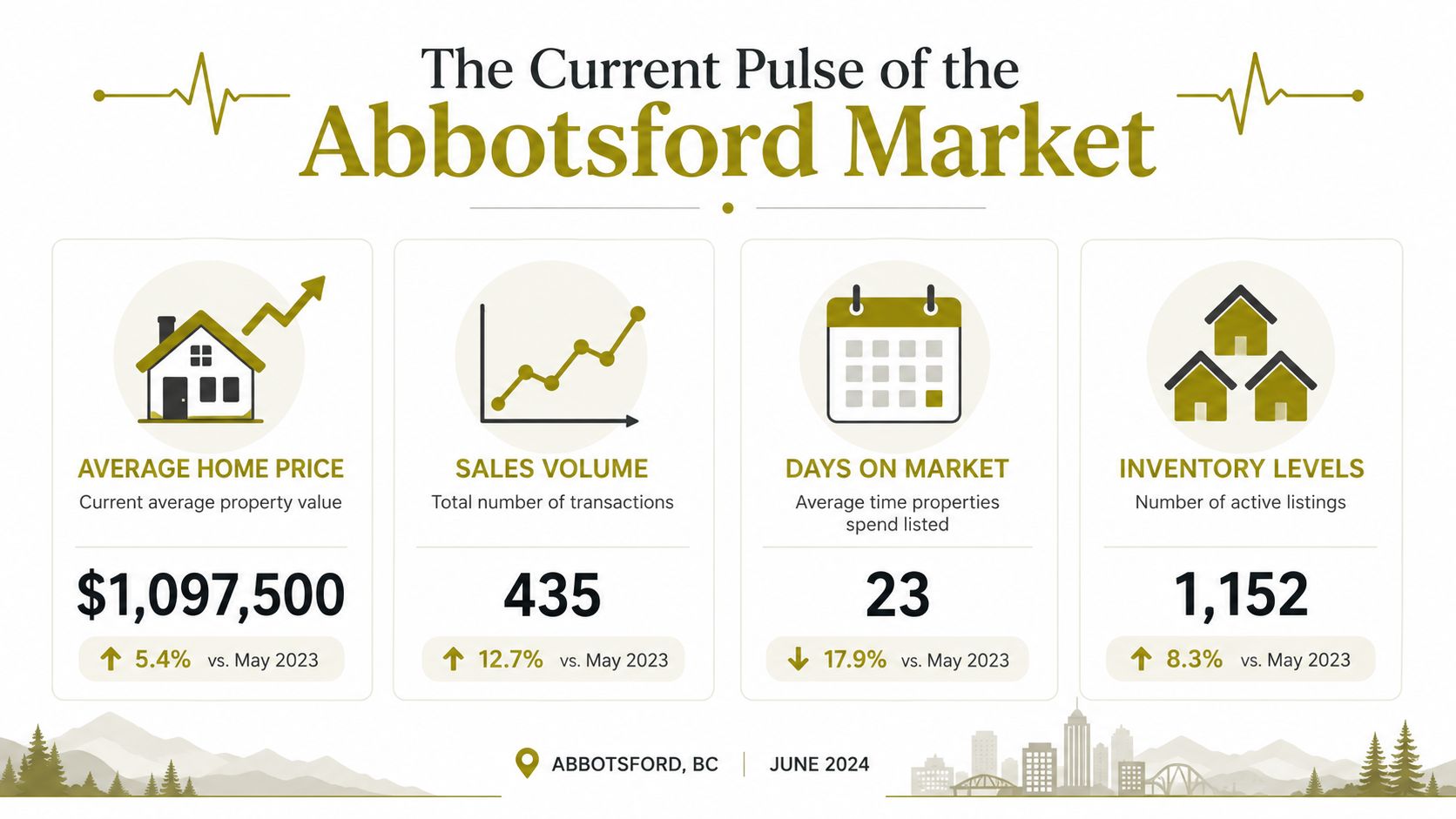
The Abbotsford real estate market is better described as balanced to buyer-favoured than seller-driven. One market snapshot describes conditions as “Stable” with about 11% sold rate and a 96% sell/list ratio, while another classifies Abbotsford as a Buyer Market with about 9% sold rate and a 95% sell/list ratio, as shown in this Abbotsford market conditions report.
That matters because these aren't numbers you'd associate with easy over-asking sales across the board. In practical terms, buyers still have room to negotiate, and sellers don't have much margin for lazy pricing. A listing can look fine on paper and still sit if it isn't positioned properly against competing inventory.
What those market ratios mean in real life
A sell/list ratio in the mid-90s usually means sellers can't rely on list price alone to carry the negotiation. Buyers often push on price, but just as often they push on terms. Subjects, financing timelines, inspection windows, and completion dates all matter more when the market isn't absorbing listings quickly.
Practical rule: In a balanced-to-buyer-favoured market, the first pricing decision does most of the heavy lifting.
For buyers, this is usually a market where patience can pay off. That doesn't mean every property is negotiable by the same amount. It means discipline still works, especially when a home has been compared against several similar options.
For sellers, the main risk isn't just “getting a lower offer.” The bigger risk is becoming stale. Once that happens, buyers start asking why the property hasn't moved, and your negotiating position weakens.
Why headline trends miss the point
A broader market trend guide for agents is useful. Supply and demand tell you more than dramatic headlines do, especially in a city where one property type can tighten while another softens.
If you've also been watching nearby regional movement, this Metro Vancouver housing market overview for May 2026 gives helpful context for how buyer psychology and inventory patterns can spill across community lines.
The short version is simple. Abbotsford isn't frozen, and it isn't surging everywhere. It's selective. Sellers who understand that can still do well. Buyers who assume every listing is weak will miss the homes that are attracting real competition.
A Tale of Three Different Markets
In March 2026, attached housing clearly outpaced detached in Abbotsford. Detached sales rose modestly, while townhome and condo sales showed much stronger year over year gains, based on the FVREB market statistics package.
That gap matters because buyers and sellers are not dealing with one market. They are dealing with three.
Abbotsford Market Snapshot by Property Type
| Property Type | Sales Change | New Listings Change |
|---|---|---|
| Detached | 3.9% | -14.8% |
| Townhome | 20.5% | Flat |
| Condo/Apartment | 43.9% | Essentially unchanged |
Detached homes are still selling, but the pace is more selective. In practical terms, detached buyers usually have more room to compare layouts, review property history, and negotiate around condition. That is a different experience from the attached segments, where stronger sales and limited fresh supply can shorten decision time.
Townhomes sit in the middle, but they often attract the widest buyer pool. First-time buyers moving up from condos, young families priced out of detached, and downsizers who still want multiple levels all compete here. If a townhome has a good floor plan, reasonable strata fees, and two or more parking spots, it can move faster than headline market reports would suggest.
Condos are showing the strongest momentum of the three categories. That usually points to an affordability-driven market. Buyers who cannot stretch into a townhome are still active, especially if they want newer construction, lower maintenance, or a location close to shopping, transit, or the university area.
What the split means on the ground
Detached sellers need to be sharper on pricing and more honest about product weaknesses. A home with an older kitchen, awkward floor plan, or backing onto a busy road can still sell, but the price has to reflect that immediately. Buyers in this segment tend to notice deferred maintenance and overpricing quickly because they have enough choice to pass and wait.
Attached sellers have a different advantage. Strong demand helps, but it does not cover up poor presentation or missing documents. Clean staging, clear strata information, and a price that makes sense against recent comparables still make the difference between getting early action and sitting through the first two weeks.
For buyers, strategy should change by property type.
If you are buying detached, use the extra breathing room well. Check the roof, plumbing, electrical updates, drainage, and suite status. Detached purchases carry bigger repair risk, so a slower segment gives buyers a chance to ask better questions instead of chasing speed.
If you are buying a condo or townhome, preparation matters more than bargaining range. Financing should be lined up before showings. Strata documents should be reviewed quickly. Buyers who hesitate in the attached segments often lose the better units, then end up comparing against weaker inventory a week later.
This type of split is one reason regional averages can miss what is happening in communities like Abbotsford. The pattern is similar to what we have seen in smaller markets defying the Lower Mainland real estate slump, where local affordability and product mix shape demand more than broad headlines do.
Tracking Inventory and New Construction
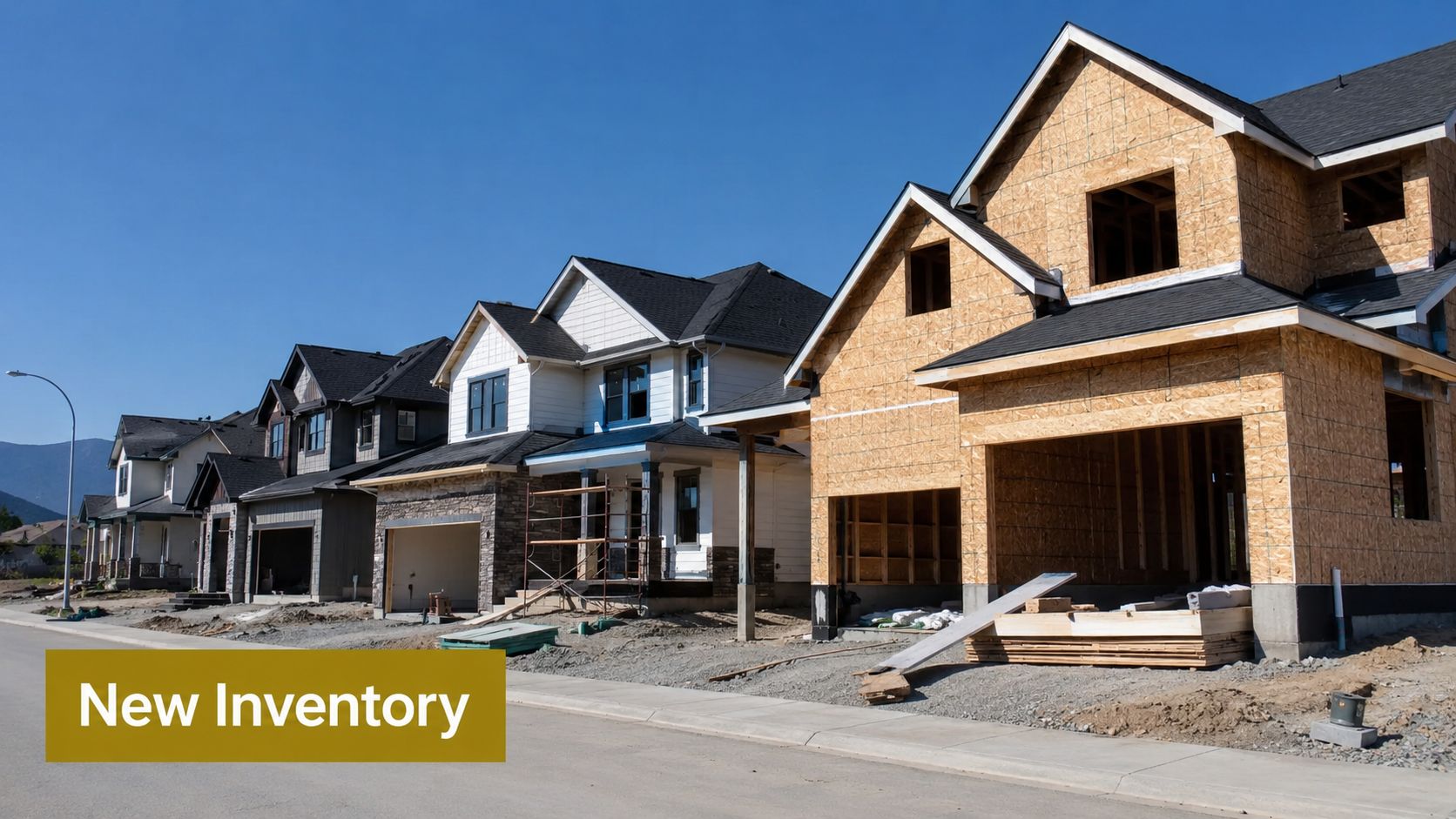
Supply changed the tone of the Abbotsford real estate market at the start of 2026. In January 2026, Abbotsford had 783 active listings, up about 19% from 661 in December 2025, and new construction inventory from projects such as Cooper Meadows, Rail District, UPTerra, and Sage was adding further supply, according to this January 2026 Abbotsford inventory update.
That's important because resale sellers aren't only competing with other resale sellers anymore. They're competing with developer inventory, display suites, incentives, modern finish packages, and the appeal of “brand new.”
More choice changes buyer behaviour
When buyers have a wider menu of options, they become less forgiving. They compare layouts more aggressively. They notice storage, parking, strata structure, finishing quality, and whether a home feels move-in ready.
That doesn't mean resale loses. It means resale has to compete on a clear advantage.
Where resale can still win
A resale property can still outperform new construction when it offers something the new-build product doesn't. In practice, that often means:
- Better location: Established streets, mature landscaping, and easier access to day-to-day amenities.
- More usable space: Larger rooms, more flexible floor plans, or better storage.
- Clear value: Pricing that reflects competing supply instead of ignoring it.
- Immediate certainty: Buyers can inspect the exact home they're purchasing instead of relying on plans and renderings.
Sellers who ignore new construction tend to overprice. Sellers who study it can position their listing properly.
New supply doesn't just pressure prices. It raises the standard buyers use when judging every listing they see.
If you're comparing newer product with alternative building approaches, this article on prefab housing in B.C. and the practical hurdles around supply chains and code adds useful background on why adding housing isn't as simple as it sounds.
Abbotsford Neighbourhood Highlights
Market conditions only tell part of the story. Neighbourhood fit still drives a lot of buying decisions, especially in a city as varied as Abbotsford.
Recent local coverage makes that segmentation clear. Detached homes have been slowing while condo demand has been rising, with townhome listings up 20.3% and condo sales up 6.5% in February 2026, according to this February 2026 Abbotsford market update. That split shows up differently depending on where you're looking.

Downtown Abbotsford
Downtown appeals to buyers who want character, walkability, and a stronger connection to local cafés, shops, and a more urban feel than many suburban pockets offer. You'll find a mix of older housing stock, condos, and properties that attract first-time buyers, investors, and people who value convenience over lot size.
For condo buyers, this is one of the places where rising demand makes sense. Lifestyle is a major driver. If you want a lower-maintenance ownership option and don't need a large yard, Downtown often stays on the shortlist.
East Abbotsford
East Abbotsford tends to attract families looking for a more traditional detached-home setting. People are often drawn to established streets, access to schools, parks, and a neighbourhood feel that supports longer-term ownership.
The trade-off is straightforward. Buyers usually expect to pay more for location quality, school access, and larger family-oriented homes. Sellers in East Abbotsford still need to respect current market conditions, but well-kept detached homes in strong family pockets usually hold attention better than average listings in weaker locations.
McMillan and nearby established pockets
McMillan remains a familiar name for buyers who want mature neighbourhood appeal rather than brand-new subdivision product. These areas often suit move-up families and long-term owners who care about lot use, street character, and homes that feel rooted.
Neighbourhood choice also affects how buyers interpret the same property type. A condo near established amenities can feel very different from a condo in a more isolated setting. A detached home in a sought-after school area won't be judged the same way as a detached home where buyers see more compromise.
For anyone looking at housing pressure through a wider community lens, this piece on Abbotsford's housing strain and homelessness pressures gives useful context on how local housing needs extend beyond resale headlines.
Smart Strategies for Buyers and Sellers in 2026
Attached homes and detached homes are not rewarding the same strategy in Abbotsford. Buyers who shop all segments the same way usually overpay in one category or miss their window in another. Sellers make the same mistake when they rely on a headline market read instead of competing against the homes buyers are cross-shopping.

For buyers
Start with financing, especially if you are targeting townhomes or well-priced condos. In those segments, hesitation costs more than hard negotiation usually saves. A clear mortgage pre-approval before you start writing offers lets you act on the right unit instead of scrambling on approval timelines.
Then match your strategy to the product type.
- Detached buyers: Push harder on price, repairs, and subjects where the listing has been sitting or where the home competes with several similar options. This is usually where buyers have the most room to negotiate.
- Townhome buyers: Stay disciplined on monthly strata costs, parking, and layout efficiency. A cheaper purchase price can be offset quickly by weaker functionality or higher carrying costs.
- Condo buyers: Pay close attention to depreciation reports, bylaws, and future resale appeal. Entry price matters, but building quality and management matter just as much when it is time to sell.
The practical question is not just, “Can I buy this?” It is, “Will this still fit in three to five years, and will the next buyer want it too?”
This video is a useful companion if you're trying to sort out timing and approach in the current environment.
For sellers
Price against current competition, not against your ideal outcome. That matters even more in 2026 because detached, townhome, and condo buyers are comparing very different pools of inventory and reacting differently to overpricing.
For detached sellers, condition and pricing discipline matter more than they did during faster markets. Buyers in this segment tend to have alternatives, so a stale listing sends the wrong message quickly. If your home needs work, account for that upfront instead of waiting for the market to forgive it.
For townhome and condo sellers, speed and presentation carry more weight. Clean photos, a sharp first week on market, and clear documentation around strata, parking, storage, and fees help reduce buyer hesitation. Attached buyers often decide between several similar properties, so friction in the listing package can cost you more than a small pricing adjustment.
A seller checklist that works in this market looks like this:
- Launch with complete information: strata documents, utility details, parking, storage, and any known upgrades.
- Compare to active listings first: pending sales matter, but buyers are shopping what they can see today.
- Set terms before you list: possession timing, inclusions, and repair boundaries should be clear before the first offer arrives.
Owners who are undecided between selling and holding as a rental should also compare management workload, expected rent, vacancy risk, and maintenance exposure. Tools such as the Lighthouse reviews of property apps can help frame that side of the decision. Royal LePage Brookside Realty Property Management also handles real estate and property management services in the Fraser Valley, which can be relevant for owners weighing both options.
Investment Potential and the Long-Term Outlook
Short-term softness doesn't erase long-term value. That's one of the most important things investors and end users miss when they focus only on current negotiating conditions.
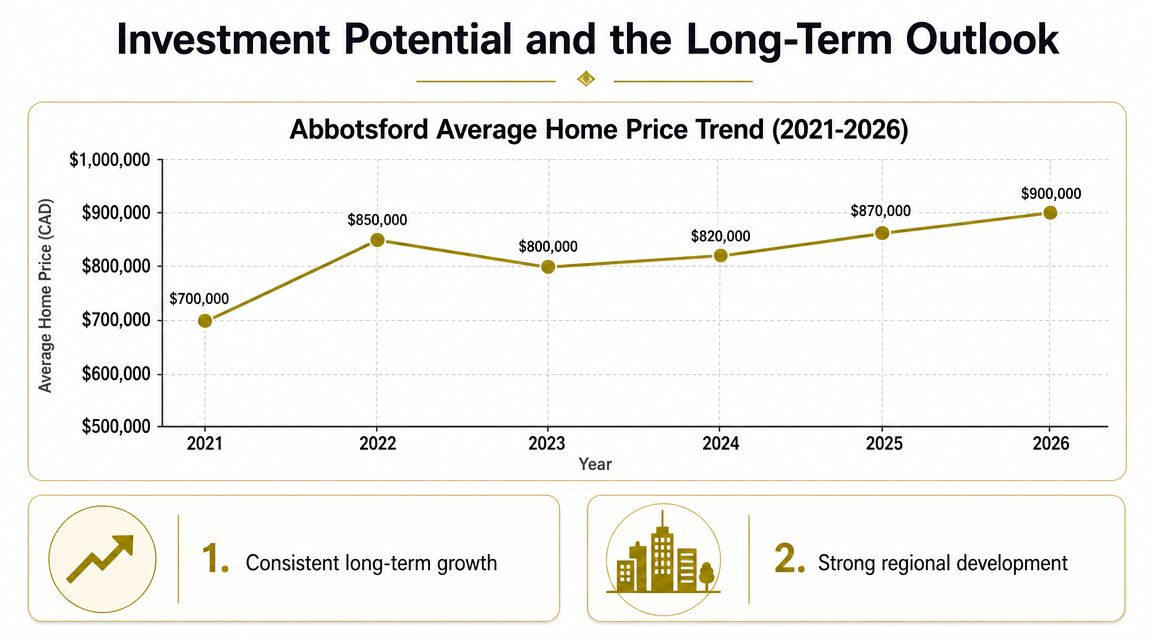
In January 2025, the Fraser Valley Real Estate Board reported a benchmark price of $653,700 for Abbotsford townhomes, which was 2.8% higher year over year and 48.6% higher over five years. Abbotsford condominiums were benchmarked at $440,900, down 1.4% year over year but still 55.1% higher over five years, according to this Fraser Valley benchmark summary for Abbotsford in 2025.
Why attached housing deserves attention
Those numbers tell a clear story. Even with short-term variation, attached housing in Abbotsford has shown strong long-range appreciation. That's a meaningful point for first-time buyers, downsizers, and investors who need a lower entry point than detached housing usually offers.
Townhomes often sit in a practical middle ground. They give buyers more space than many condos, lower maintenance than many detached homes, and broad appeal for future resale. Condos remain an access point for people who want ownership without carrying the cost and upkeep of a house.
A long-term view is more useful than a hot-take forecast
Real estate decisions in Abbotsford usually work better when they're tied to a multi-year plan. If you're buying for a quick flip, today's segmented conditions require precision. If you're buying for use, hold, or gradual equity growth, Abbotsford still has a strong case within the Fraser Valley because it offers a wide range of housing and a more flexible entry point than some neighbouring markets.
Investors also need better systems now than they used to. If you're comparing tools for tracking rentals, maintenance, and operations, these Lighthouse reviews of property apps are a practical place to start.
The best long-term purchases usually aren't the ones with the loudest headlines. They're the ones that still make sense when the market stops being easy.
Navigating Your Next Move in the Fraser Valley
The Abbotsford real estate market makes more sense once you stop treating it as a single story. Detached homes, townhomes, and condos aren't moving in lockstep. Buyer advantage, competition, pricing risk, and time pressure all change depending on the segment.
That's why generic advice tends to fail here. A detached seller using a condo strategy can sit too long. A condo buyer using detached-style patience can miss the right unit. The same city requires different playbooks.
That's also true across the Fraser Valley. Buyers and sellers often compare Abbotsford with communities such as Maple Ridge, Pitt Meadows, Mission, and Langley because affordability, commuting patterns, inventory, and lifestyle priorities overlap. In practice, a lot of clients don't make their final decision based on one city alone. They weigh space, schools, neighbourhood feel, and what their budget buys in each market.
For anyone making that comparison, local knowledge matters more than broad market commentary. Street-level differences, school catchments, property type supply, and neighbourhood character shape outcomes just as much as headline stats do.
If you're planning a move in Maple Ridge and using Abbotsford as part of your comparison, Royal LePage Brookside Realty Property Management can help you evaluate the trade-offs clearly. Whether you're buying your first home, selling a family property, or deciding which Fraser Valley community fits your budget and lifestyle best, a local conversation can save you time and help you make a more confident next move.