

You've probably done this already. You're driving through Albion, Cottonwood, or an older pocket of West Maple Ridge, you pass a house with waist-high grass, peeling trim, maybe a sagging carport, and you think: if I could get that place before everyone else notices it, maybe there's a deal there.
Sometimes there is. Most of the time, though, abandoned houses for sale aren't hidden treasure. In Maple Ridge and Pitt Meadows, they're usually a narrow, messy category with legal, financing, and renovation problems attached. The buyers who do well with them aren't the ones chasing a fantasy discount. They're the ones who go in with patience, cash reserves, and a very clear eye on risk.
The Reality of Abandoned Homes in Maple Ridge
The first thing to understand is simple. In a market like Maple Ridge, a neglected house doesn't automatically mean an available bargain.

A lot of buyers assume there must be a growing pool of vacant homes waiting to be picked off. The broader data points the other way. In Canada, the number of vacant homes for sale fell from about 1.3 million in 2005 to fewer than 850,000 in 2024, according to the U.S. Census housing vacancy overview. That matters locally because it supports what buyers feel on the ground here. Long-vacant, purchasable homes are usually a niche segment shaped by scarcity, not surplus.
What “abandoned” usually means here
In Maple Ridge and Pitt Meadows, the word abandoned often gets used loosely. The property might be:
- An estate sale where family members are still sorting out authority to sell
- A court-ordered or distressed sale with extra legal steps
- A heavily deferred-maintenance home that's occupied part time
- A vacant rental or investor-owned property that isn't listed publicly yet
That distinction matters because the strategy changes depending on the situation. A true owner-abandoned property is one thing. A probate file in Hammond or a dated rancher near Glenwood Elementary is another.
A weathered exterior is easy to spot. The expensive problems are usually title, possession, insurance, and systems behind the walls.
Local buyers also need to separate curiosity from action. Seeing a rough property on your commute doesn't mean it's acquirable. Someone may already have a builder lined up, an estate lawyer involved, or family disagreement stalling the sale.
For a broader perspective on how investors think through neglected-property screening in other jurisdictions, this piece on assessing Illinois abandoned property risks is useful. The legal rules differ, but the discipline is the same. You don't start with romance. You start with risk.
If you're weighing whether this niche even fits your goals, it helps to understand the wider Maple Ridge real estate landscape first. In a tight local market, distressed inventory can work, but it rarely behaves like a simple discount shelf.
How to Find Distressed Properties in Maple Ridge and Pitt Meadows
Many individuals start in the wrong place. They start by waiting for the perfect boarded-up house to hit the MLS with an obvious bargain price. That's not how most worthwhile opportunities appear here.
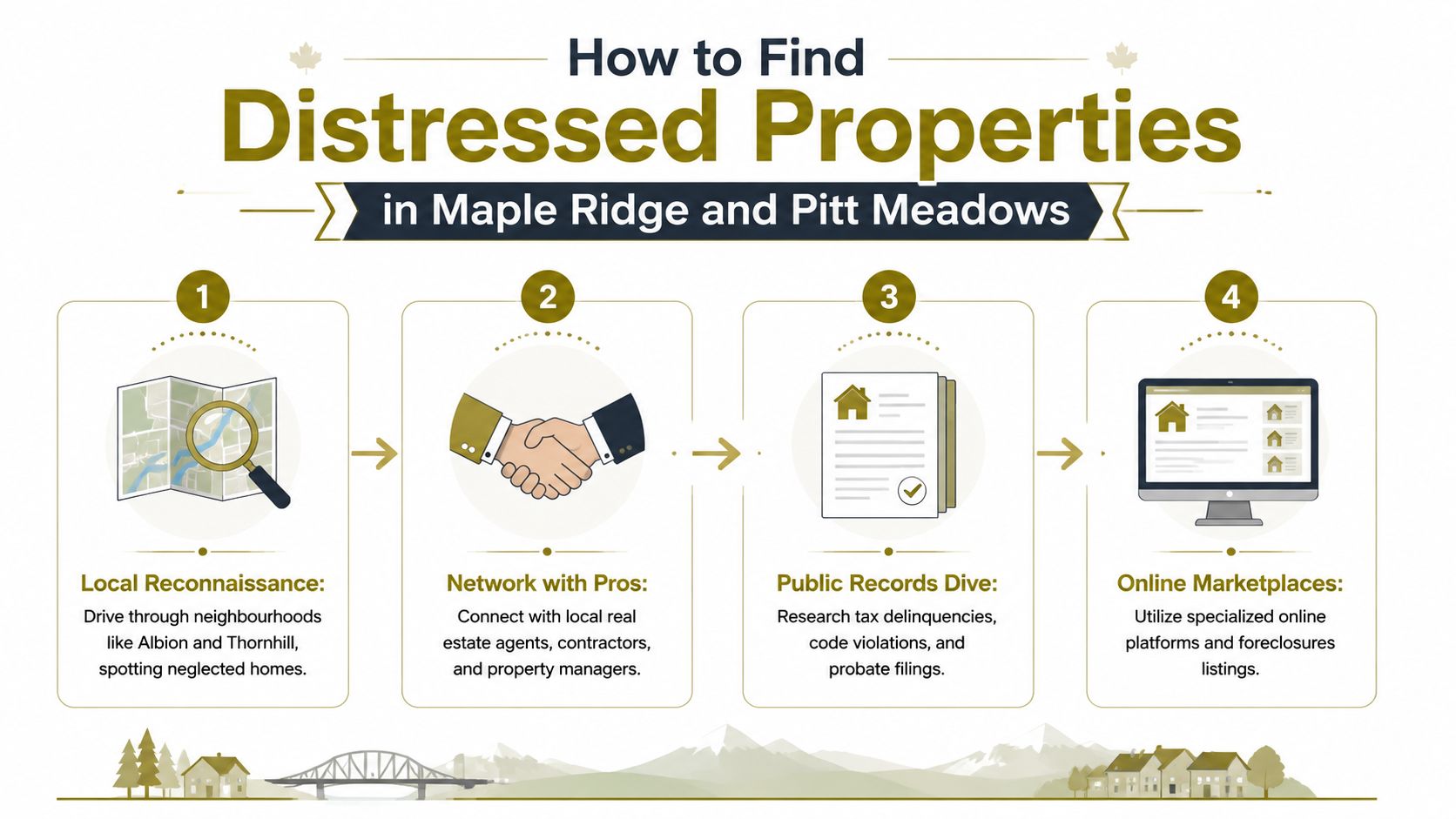
The practical workflow is more grounded. You identify likely candidates through public records and neighbourhood signals, then verify ownership and liens through title records. The big mistake is underestimating property condition and title risk, which is why distressed-property specialists recommend budgeting at least 20% above the initial renovation estimate for unexpected costs in the acquisition planning stage, as outlined in this guide to finding abandoned homes for sale.
Where buyers actually find leads
In Maple Ridge and Pitt Meadows, the search usually comes from four channels working together.
MLS language
Watch for wording like “as is, where is,” “estate sale,” “court order sale,” “handyman special,” “value in land,” or “requires TLC.” Those phrases don't guarantee an abandoned property, but they often signal deferred maintenance or a seller who won't do repairs.
Street-level observation
Albion, Thornhill, older sections of East Central, and parts of Hammond can reveal homes that stand out for the wrong reasons. Overgrown frontage, piled mail, posted notices, unsecured sheds, tarped roofs, and obvious exterior neglect are all clues worth checking further.
Professional networks
Contractors, junk removal companies, roofers, probate lawyers, mortgage brokers, and property managers often hear about potential sales before the public does. Those conversations don't replace due diligence, but they can get you to the front of the line.
Public-record digging
Tax issues, estate files, and municipal compliance concerns can point you toward properties worth watching. The goal isn't to harass owners. It's to identify patterns before a listing becomes obvious to every investor in town.
For readers who like seeing how off-market hunting is approached elsewhere, this article on how to find off market properties in Florida is a decent example of the mindset. The local rules are different, but the principle applies. Good opportunities usually come from organised prospecting, not luck.
A local search still needs a current read on inventory, and reviewing new listings in Maple Ridge helps you compare a rough property against what conventional homes are offering in the same week.
What to look for on the ground
A neglected home in Pitt Meadows looks different from a teardown on a rural edge of Maple Ridge. Context matters.
Use this quick field checklist:
- Neighbourhood fit: Is the house rough, or is the whole block struggling? A distressed home beside well-kept properties near Kanaka Creek or Silver Valley can be a different opportunity than one in a location where resale appeal is limited.
- Lot behaviour: Look for drainage issues, standing water, retaining wall movement, and slope concerns. Those can matter as much as the house.
- Signs of prolonged vacancy: Covered windows, utility shutoff clues, moss-heavy roofs, unsecured access points, and repeated bylaw-style notices often tell you the property has been sitting.
- Renovation signal versus structural signal: Cosmetic neglect is one category. Roofline sag, visible settlement, or chronic water intrusion is another.
This video gives a helpful visual primer on what distressed-property hunting can look like in practice:
What doesn't work well
Cold assumptions are expensive. Buyers lose money when they assume the ugliest house is the best deal, the owner will be easy to contact, or the repairs are mostly cosmetic.
Field rule: Don't evaluate a distressed property from the sidewalk as if you're judging paint colour and landscaping. Evaluate it like a stack of unknown invoices.
Your Pre-Offer Due Diligence Checklist
Here, buyers either protect themselves or walk into a slow-moving mess.

In British Columbia, many searches for abandoned houses for sale are really searches for court-ordered sales, estate properties, or long-vacant homes. These listings tend to be slower and less common because BC's judicial foreclosure system adds complexity, and buyers need much tighter due diligence around title, possession, and repairs before writing an offer, as noted in the material on homes for sale and distressed inventory context.
Start with ownership and title
Before you get attached to the lot, the layout, or the upside, confirm who has the right to sell.
A proper review should answer:
- Who is on title
- Whether there are registered charges or encumbrances
- Whether the sale is tied to probate, litigation, or court approval
- Whether possession could be delayed by occupants or unresolved legal issues
If the property is in an estate, ask who has authority to sign. If it's a court sale, ask what schedules and disclosures are being used. If the listing language feels vague, assume there's a reason.
If title is messy, the lowest price on paper can become the highest-cost purchase in practice.
Check with the city before you offer
For Maple Ridge or Pitt Meadows properties, municipal records can reveal issues a casual showing won't.
Call or inquire with the relevant planning or building department about:
- Outstanding permits
- Open work orders
- Known bylaw issues
- Zoning constraints
- Whether prior alterations appear unpermitted
This matters a lot on older homes near Hammond, central Maple Ridge, or larger lots where owners may have added structures over time. Buyers sometimes focus on the house and miss the detached shop, enclosed patio, or basement work that creates permit headaches later.
Walk the property like a problem-solver
A distressed walkthrough shouldn't feel like a normal showing. You're not asking whether the kitchen feels bright enough. You're trying to identify what can derail financing, occupancy, and renovation plans.
Here's the short version I'd use with a serious buyer:
- Foundation and structure: Look for major cracks, sloping floors, misaligned doors, and signs of movement.
- Roof and water entry: Staining, soft spots, moss overload, damaged soffits, and active leaks matter more than dated finishes.
- Electrical system: Older panels, exposed wiring, and signs of patchwork repairs raise immediate questions.
- Plumbing and moisture: Water damage under sinks, musty odours, stains around windows, and visible mould need more than a shrug.
- Heating and habitability: If core systems are missing or non-functional, some lenders won't touch the file.
- Pests and environmental concerns: Long-vacant properties often need deeper review for mould or pest issues.
If you want a more complete buyer-side screening tool for conventional and distressed homes alike, this home inspection checklist for buyers is a good companion.
A practical pre-offer screen
| Check | Why it matters |
|---|---|
| Authority to sell | Prevents offers on properties that can't close cleanly |
| Title review | Surfaces encumbrances and legal issues early |
| City file review | Flags permits, bylaw concerns, and open orders |
| Contractor walk-through | Helps separate cosmetic work from structural work |
| Insurance check | Confirms whether coverage will be available post-closing |
The red flags that deserve a pause
Some problems are manageable. Some should stop you until specialists weigh in.
Bring in extra eyes if you see recurring moisture, visible structural movement, or evidence that prior work was done without approval. Those aren't small surprises. They're project-shaping issues.
Financing and Negotiating the Purchase
Distressed properties create a financing problem before they create a renovation problem.
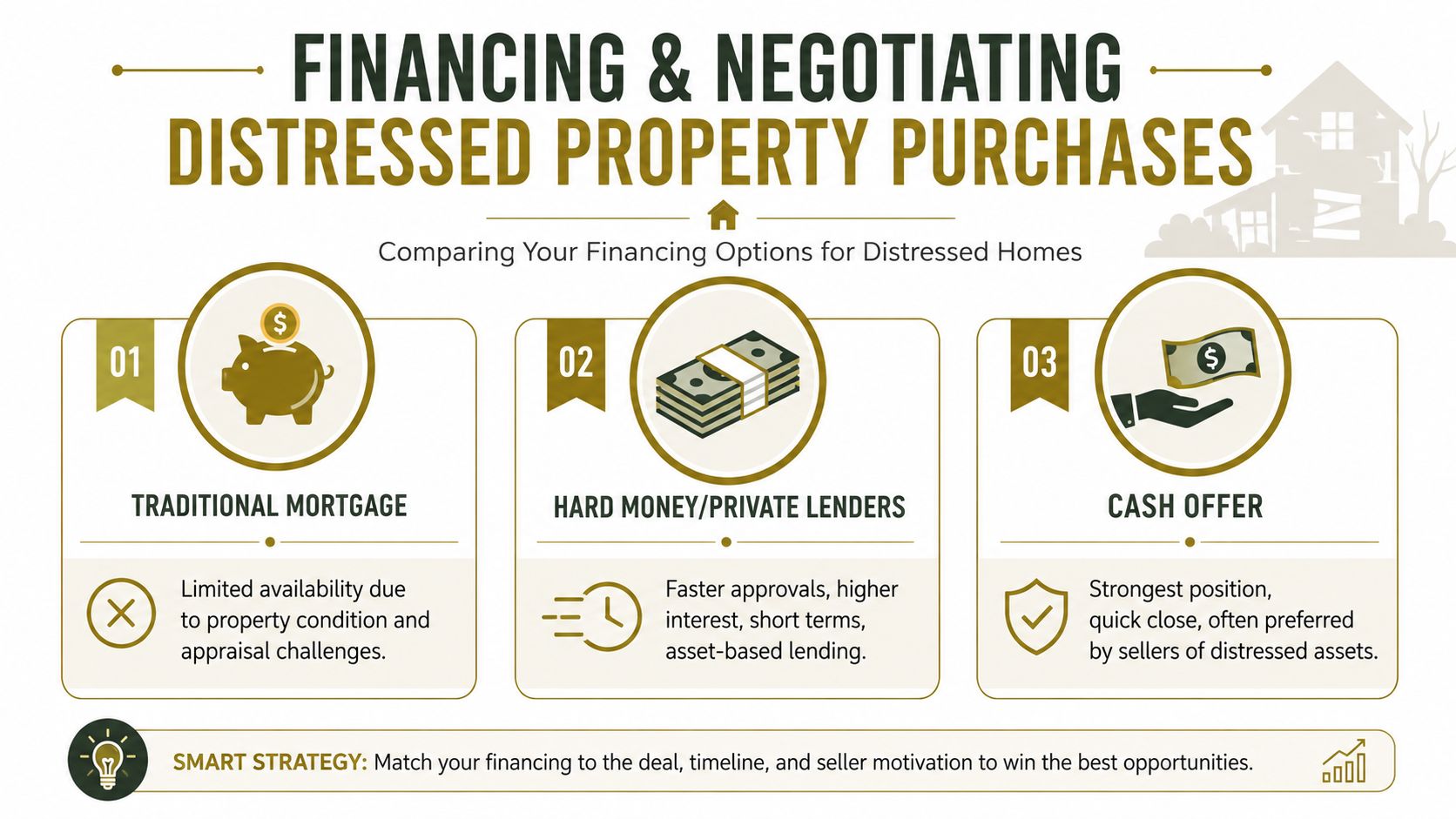
A buyer may love the location. The lender may hate the condition. That's common.
The strongest fact to keep in mind here is that in distressed transactions, cash offers often win because they offer certainty, but some sellers prefer a longer closing if they need time to resolve title issues. In other words, offer structure can matter more than headline price when the file is messy, as discussed in this review of vacancy rates and distressed-sale dynamics.
Comparing the main financing paths
Not every buyer needs cash, but every buyer needs a Plan B.
| Option | Where it helps | Where it struggles |
|---|---|---|
| Traditional mortgage | Better for homes that remain basically habitable | Appraisal, condition, and lender property standards can kill the deal |
| Purchase-plus-improvements style financing | Useful when the house needs work but still fits lender parameters | Requires coordination, documentation, and lender approval of the renovation scope |
| Private or alternative lending | Useful when banks won't move fast enough or won't finance the condition | Higher carrying pressure and less room for renovation delays |
| Cash | Strongest negotiating position and cleanest close | Ties up capital and shifts more repair risk directly to the buyer |
Why banks hesitate
A conventional lender wants a marketable asset. If a property has major moisture damage, missing fixtures, safety hazards, or questionable occupancy status, the lender may see it as poor security.
That's why buyers chasing abandoned houses for sale often hit a wall after viewing. They assume pre-approval covers any property. It doesn't. Pre-approval is about you. The lender still has to approve the house.
If you're early in the process, getting clear on what mortgage pre-approval means helps, especially if you're comparing a distressed purchase with a standard resale option.
Negotiation isn't just about going low
The wrong approach is swagger. The right approach is precision.
A few examples of terms that can matter more than shaving the offer price:
- Flexible closing date for an estate that needs time to organise documents
- Clean subjects with targeted inspections rather than a long list that signals uncertainty
- Acceptance of “as is, where is” language only when the price and risk justify it
- Proof of funds or lender readiness to reassure a seller that you can perform
- Realistic possession planning if title clearance or occupancy issues might delay handover
Negotiation reality: The seller of a distressed property often fears a failed deal more than a firm deal at a slightly lower price.
A buyer looking at an older home near downtown Maple Ridge may beat a higher number by presenting fewer moving parts. On the other hand, there are times when patience wins. If title work is still being sorted, trying to force a lightning-fast close can make your offer less attractive, not more.
The best negotiating posture is calm, informed, and unemotional. Distressed sellers and their representatives usually respond better to certainty than theatre.
Budgeting the Real Costs of Renovation
Here, the dream either survives or falls apart.

The key question in Maple Ridge isn't “can I buy it cheap?” It's “what is the all-in cost versus a conventional home?” That's especially important with long-vacant properties, where hidden costs can include code upgrades, mould remediation, utility reconnection, and bylaw-related work, all of which can erase an apparent discount, as described in this overview of foreclosure-style property considerations.
What buyers miss when they budget
Most first-pass renovation budgets focus on finishes. Floors, cabinets, paint, appliances. That's the wrong order.
In older Maple Ridge houses, especially those that have been vacant or neglected, the first money often goes below the surface:
- Bringing electrical and plumbing up to standard
- Fixing active water entry
- Addressing mould, pests, or rot
- Securing permits and professional reports
- Clearing debris and making the site safe
- Reconnecting services and correcting deferred exterior maintenance
A house near Silver Valley can still need basic drainage and envelope work before anyone talks about quartz counters. A larger lot in Thornhill may come with site cleanup, outbuilding issues, or access concerns that don't show up in the listing photos.
The three budget-busters
Watch these first: hidden moisture damage, unpermitted prior work, and systems that need full replacement rather than patch repairs.
Those three items change projects fast. A buyer thinks they're updating a dated house. Then an electrician opens the panel, a contractor opens a wall, or the city file reveals work that was never signed off.
That's why experienced buyers leave room in the budget from day one. If you need a practical framework for building estimates, this guide on tips for estimating remodeling project costs is a useful outside reference for organising scopes, trade categories, and contingency thinking.
A smarter way to think about the numbers
Don't build your plan around best-case assumptions. Build it around the point where the project still works if things go sideways.
Ask these questions:
- If repairs grow beyond the original scope, does the project still make sense?
- If permits or contractor schedules delay completion, can I carry the property comfortably?
- If resale value lands closer to ordinary neighbourhood comparables, is there still enough margin?
That earlier rule about carrying extra renovation cushion matters here too. A distressed property punishes optimism. It rewards disciplined underwriting.
Compare the project against the boring alternative
This is the comparison a lot of buyers avoid because it kills the fantasy.
| Option | Typical appeal |
|---|---|
| Distressed property | More control, possible upside, chance to force appreciation through renovation |
| Conventional resale | Faster move-in, easier financing, fewer unknowns, cleaner timeline |
Sometimes the neglected home in Cottonwood is still the right move. Sometimes the better decision is the boring, well-maintained split-level a few blocks away with a stronger inspection report and no legal baggage.
Buyers make the best decisions when they compare total project reality against a normal home purchase, not against the sticker price alone.
Next Steps From Project to Profit or Home
Once the hard part is done well, you're left with two paths. Sell the finished product or hold it.
If the goal is resale, think like a Maple Ridge end buyer, not like a flipper watching renovation shows. Buyers in areas like Kanaka Creek, Albion, and West Maple Ridge usually respond to practical improvements first. Good layout flow, dry basements, updated windows, reliable heating, functional family space, and clean exterior presentation beat flashy finishes if the fundamentals still feel uncertain.
If you plan to sell
The renovated home has to make emotional sense and financial sense. It should feel better than the older competing stock nearby, but it also needs to fit the neighbourhood.
A smart resale plan usually includes:
- Finishes that match the area, not luxury choices that overshoot local expectations
- Clear permit history and contractor documentation
- Simple, durable improvements that photograph well and hold up in buyer inspections
- A pricing strategy based on true comparables, not on what the renovation felt like to complete
If you plan to rent
A good rental strategy starts with a different question. Will a fully repaired property attract stable tenants who want to stay?
The broader vacancy context supports that idea. Investor-owned homes had a vacancy rate of 3.5% in Q1 2025, according to ATTOM's vacant property and zombie foreclosure report. For local investors, the useful takeaway isn't that abandoned properties are common. It's that a well-managed, newly renovated rental can stand out in a competitive market when many distressed properties never get brought back properly.
Pitt Meadows and Maple Ridge both attract renters who want access to schools, parks, commuter routes, and family-oriented neighbourhoods. A clean, dependable house near Golden Ears Elementary, Thomas Haney area amenities, or the West Coast Express corridor can appeal far more than a half-finished “investment special.”
The final decision
There's no single right exit. There's only the one that fits your capital, timeline, and tolerance for risk.
If you're unsure which route makes more sense, run the property through a proper rental property ROI calculator and compare it against a realistic resale plan. That exercise usually brings clarity fast.
A distressed purchase can work in Maple Ridge or Pitt Meadows. But it works best when you treat it as a niche strategy, not a shortcut. The buyers who come out ahead are the ones who stay disciplined from the first drive-by to the final decision to sell or hold.
If you're thinking about buying, selling, renovating, or holding a property in Maple Ridge or Pitt Meadows, Royal LePage Brookside Realty Property Management can help you weigh the local market, spot the risks early, and make a decision that fits your real budget and goals.