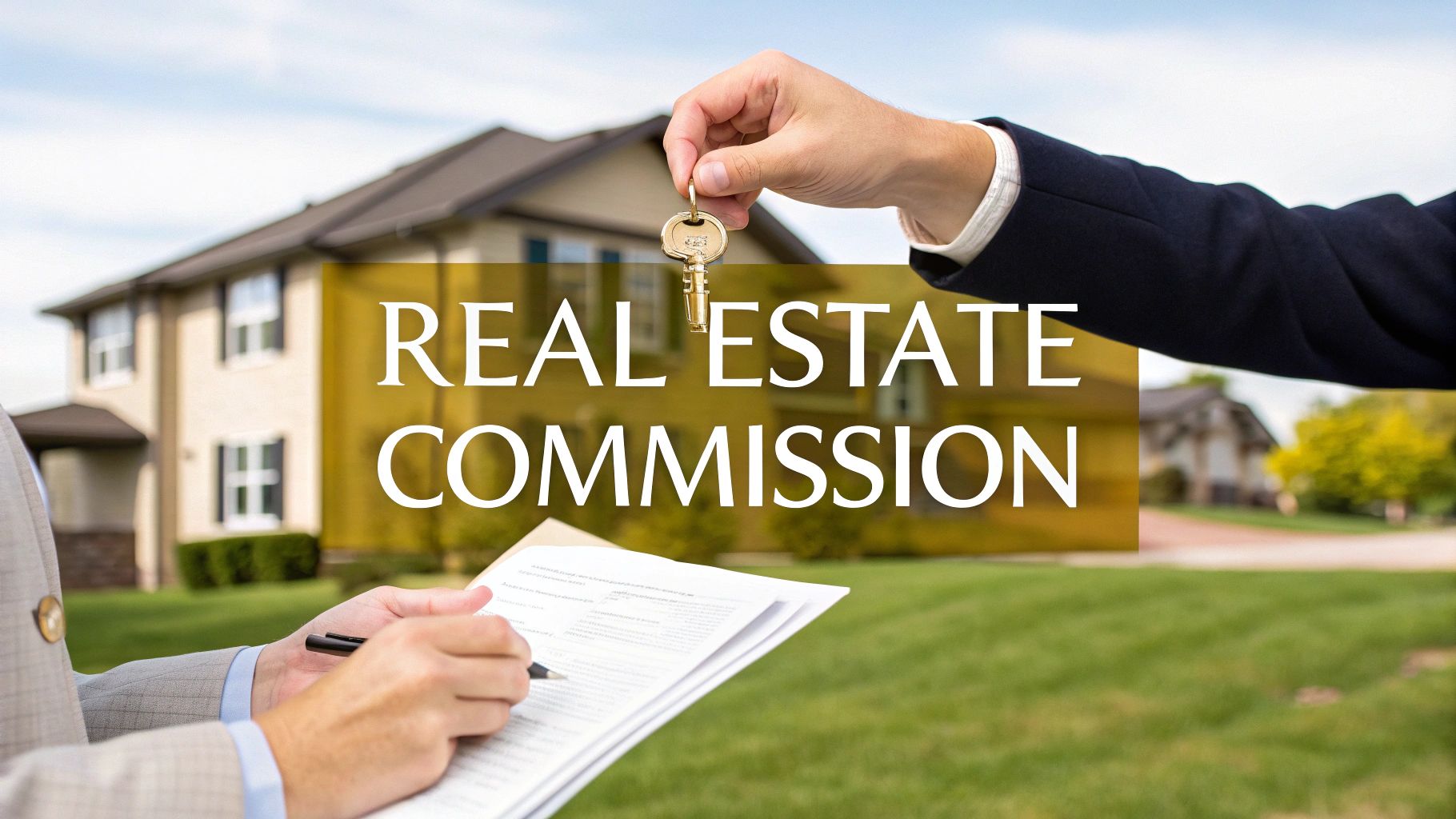
When you're getting ready to sell your home, one of the first things people wonder about is the agent's commission. It's often misunderstood, so let's clear it up. Think of the real estate commission not as an extra fee, but as the professional service fee paid to real estate agents for successfully getting your property sold.
This isn't an hourly wage. It’s the payment for a whole team of experts managing a massive financial transaction from the starting line to the finish.
Decoding Real Estate Commission in British Columbia

Hiring a real estate professional is like bringing on a project manager for one of your biggest assets. The commission covers the entire scope of work needed to guide your property from a "For Sale" sign to a "Sold" sticker.
In lively markets like Vancouver and across the Fraser Valley, you'll often see a tiered commission structure. A very common model is 7% on the first $100,000.00 of the sale price and 3.5% on the balance. This approach makes sure the agent is fairly compensated for all the foundational work that goes into every single sale, no matter the final price tag.
So, what does that fee actually pay for? It funds a whole machine working behind the scenes.
- Strategic Marketing: This isn't just a sign on the lawn. It's professional photography, targeted online advertising campaigns, and coordinating all the property showings.
- Expert Negotiation: Your agent is in your corner, working to get you the best possible price and the most favourable terms.
- Administrative Management: The mountain of paperwork is real. The commission covers the careful handling of all contracts, disclosures, and legal documents.
As local experts, James and Nicole Isherwood make it a priority to ensure their clients see the value packed into that commission. Successfully selling your home is a complex process, and this guide will break down exactly how that fee is calculated, who pays it, and the incredible value it brings to your sale.
Calculating Commission in Vancouver and the Fraser Valley

Figuring out how real estate commission is calculated in British Columbia is actually pretty straightforward once you see the numbers in action. Around here in Vancouver and the Fraser Valley, a common and long-standing industry structure is what’s known as a tiered rate.
This typical model is 7% on the first $100,000 of the home's sale price and then 3.5% on the remaining balance. This blended rate makes sure agents are compensated for the foundational work that every single sale requires, while keeping the fee on the larger part of the home's value more moderate.
Let's break it down with a practical example so you can see exactly how it works.
A Real-World Calculation Example
Imagine you've sold your home for $950,000. An experienced real estate team like James and Nicole Isherwood would walk you through a clear breakdown of the commission calculation, making sure there are absolutely no surprises.
Here’s how the math unfolds:
- Tier 1 (First $100,000): $100,000 x 7% = $7,000
- Tier 2 (Remaining Balance): $950,000 - $100,000 = $850,000
- Tier 2 Calculation: $850,000 x 3.5% = $29,750
Now, you just add those two amounts together to get the total commission before any applicable taxes like GST.
Total Commission Calculation:
$7,000 (from Tier 1) + $29,750 (from Tier 2) = $36,750
This step-by-step process takes the mystery out of what real estate commission is and shows exactly how that final number is reached. This kind of transparent approach is fundamental to how professionals like James and Nicole Isherwood operate, giving their clients complete clarity and confidence.
Of course, knowing your property's current market value is the first step in estimating these costs. To get a handle on your home's potential sale price, it's a great idea to get a free home evaluation from a local expert. This gives you a solid foundation for all your financial planning.
Who Actually Pays the Real-Estate Commission?
It’s one of the most common questions in any property sale: who’s on the hook for the real estate agent’s commission? The answer is surprisingly straightforward. The seller pays the entire commission fee. This payment comes directly out of the sale proceeds when the deal officially closes.
But here’s where a common misunderstanding pops up. That total commission doesn't just land in one agent's bank account. Think of it like a concert promoter who uses ticket sales to pay both the headliner and the opening act; the money flows from a single source but gets split to make sure everyone who did the work gets paid.
This structure ensures both the buyer and the seller have a dedicated professional in their corner, guiding them through what can be a pretty complicated process.
The Commission Split Explained
So, how is that fee divided? The total commission is first split between the two real estate brokerages involved in the sale:
- The Listing Brokerage: This is the firm that represents the seller. Their agent—the listing agent—is responsible for marketing the property, running open houses, and negotiating for the best possible price for the seller.
- The Cooperating Brokerage: This firm represents the buyer. Their agent—the buyer's agent—helps their client find the right home, navigate inspections, and negotiate favourable terms.
This is the foundational model for how real estate works here in British Columbia. It creates a clear incentive for agents on both sides to cooperate and bring qualified buyers to a seller's property, which ultimately helps everyone involved. If you're just starting out, understanding the role of a buyer's agent is one of the first crucial steps in the process of buying a home.
The commission isn't some "extra fee" tacked on at the end. It's a built-in cost of selling a home, paid for by the seller, that compensates the professionals representing both sides of the deal.
As local experts James and Nicole Isherwood often point out, this system is designed to provide comprehensive support throughout the entire transaction. It’s what ensures a smooth and fair process, from the first offer right through to closing day.
How the Real Estate Commission Is Divided
So, once a deal closes, the seller pays the commission from the sale proceeds. But where does that money actually go? It’s a common misconception that the entire chunk lands directly in your agent's pocket. In reality, that single payment is about to start a journey, splitting off in a few different directions.
First, the total commission is divided between the two real estate brokerages involved in the sale. This is a crucial first step in how things work here in British Columbia. One piece goes to the listing brokerage (the company your seller's agent works for), and the other goes to the cooperating brokerage (the buyer's agent's company). This structure makes sure both sides are represented by professionals who are motivated to see the deal through to the end.
But the journey doesn't stop there.
From Brokerage to Agent
After that initial split, each brokerage takes its share of the commission and then pays its agent. The specific amount an agent like James or Nicole Isherwood takes home is based on the agreement they have with their brokerage. Think of it like this: the brokerage provides the office space, administrative support, marketing muscle, and the brand name, and their cut covers all of that.
What the seller agrees to pay is the total commission. How it’s sliced and diced is laid out in the listing agreement and advertised on the Multiple Listing Service (MLS®). This public offer of compensation is what gets buyer's agents from all over the Fraser Valley and Vancouver excited to bring their clients to your property. For rental property owners considering a sale, getting a handle on these details is just as important as managing the nuts and bolts of residential services for your tenants.
This diagram helps visualize the flow of the commission from the seller all the way down to the individual agents.
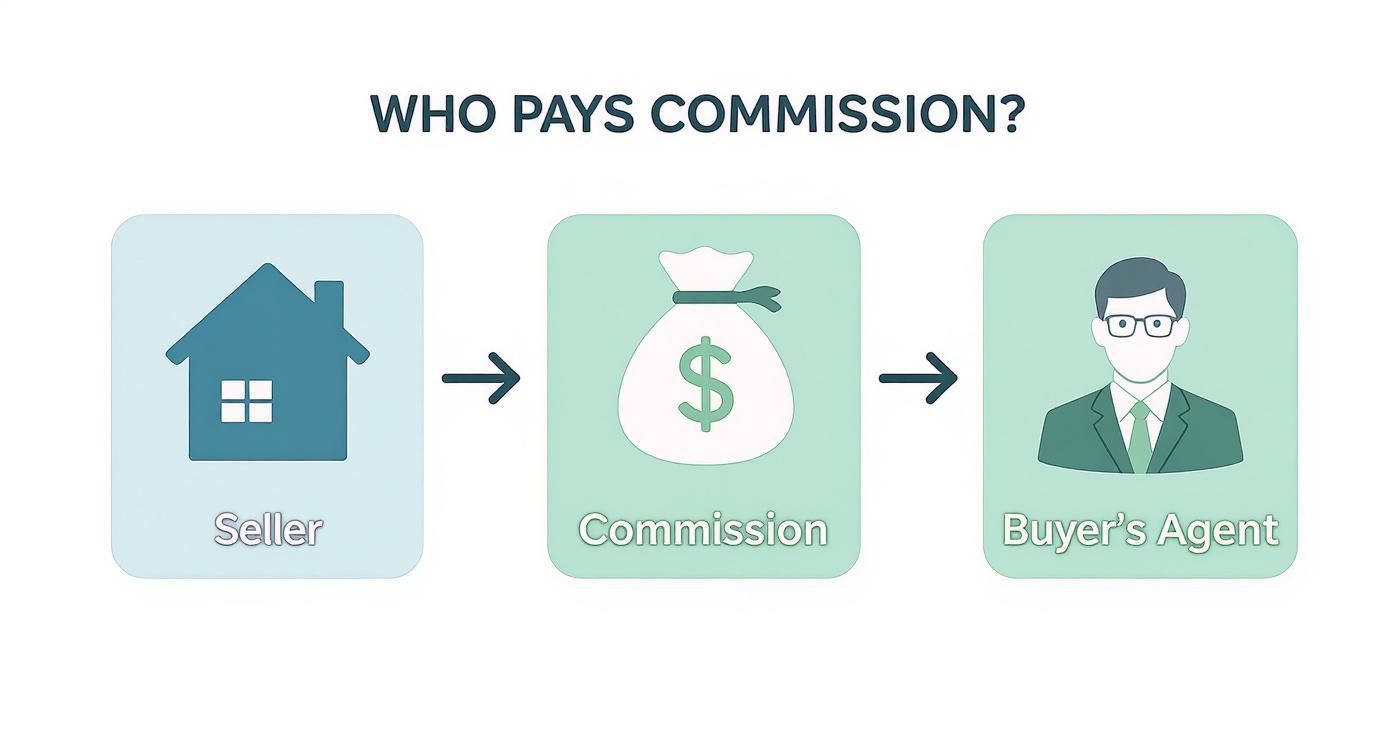
As you can see, the agent you hire ultimately receives a percentage of the total fee, not the whole thing. It's a team effort, and the commission structure reflects that.
The Value Packed into Your Commission Fee
It’s easy to look at a commission fee as just a percentage, but to really understand its value, you need to see what's behind that number. Think of it less as a simple payment and more as an investment in a full-service package designed to get your home sold seamlessly, successfully, and for the best possible price.
The real work starts long before a "For Sale" sign ever touches your lawn. As experts in the Vancouver and Fraser Valley markets, James and Nicole Isherwood stress that their commission is a direct reflection of their commitment to delivering comprehensive, tangible results for their clients.
Laying the Groundwork: Strategy and Marketing
The first, and arguably most critical, step is nailing the price. This involves a deep dive into market analysis to position your property perfectly from day one. Get the price right, and you attract serious, qualified buyers. Get it wrong, and your home could linger on the market, losing momentum.
Once the price is set, a professional marketing plan kicks into high gear. This isn't just about putting a listing on a single website; it's a multi-pronged, coordinated effort to make your property shine.
This includes things like:
- Professional Photography and Videography: First impressions are everything online. High-quality photos, videos, and virtual tours are non-negotiable for making your home stand out.
- Targeted Online Advertising: Your home is strategically promoted across multiple digital platforms, ensuring it gets in front of the people most likely to be interested.
- Managed Property Showings: Every single showing is handled professionally to showcase your home’s best features and expertly field any questions from potential buyers.
A huge part of an agent's value, and a key justification for their commission, is their skill in effective real estate lead generation, which is all about connecting sellers with the right buyers.
From Offers to Closing: Negotiation and Expert Guidance
When the offers start rolling in, your agent's role shifts to that of an expert negotiator. Their job isn’t just to get you the highest price—it’s also about securing the most favourable terms, like a closing date that works for you or minimizing difficult conditions.
The real value of a great agent is often realized during negotiations. Their skill in navigating offers and counter-offers can add thousands to your final sale price, far outweighing the commission cost.
After you've accepted an offer, the complex administrative work begins. Your agent becomes your project manager, handling all the legal paperwork, coordinating with lawyers and notaries, and making sure every single deadline is met. They guide the sale smoothly all the way to the official closing day.
This all-in dedication is why so many clients have great things to say about their experience, as you can see from these testimonials.
Are Real Estate Commissions Negotiable in BC?
It’s one of the biggest questions on any seller’s mind: are real estate commissions set in stone? In British Columbia, the answer is a straightforward yes, real estate commissions are negotiable. No law dictates a standard or fixed rate, which means you have the freedom to discuss the fee structure with any agent you interview.
But here's something to keep in mind: approaching this conversation with a value-focused mindset is key. The commission an agent charges often directly reflects the level of service, marketing firepower, and expertise they bring to the table. Chasing the lowest possible rate can sometimes be a costly mistake.
The Value vs. Cost Mindset
Opting for a discounted commission might feel like a win upfront, but it could mean sacrificing the very things that lead to a higher sale price. This could translate to a less aggressive marketing campaign, weaker negotiation skills, or a smaller advertising budget—all of which can potentially leave money on the table.
A lower commission doesn't benefit you if it results in a lower final sale price. The goal should always be to maximize your net proceeds—the amount you walk away with after all costs are paid.
Experienced professionals in the Fraser Valley, like James and Nicole Isherwood, structure their commission to fuel a proven strategy. This is an investment that supports extensive marketing and expert negotiation designed to get you the best possible outcome. Their approach shows that the right expertise isn't just an expense; it’s an investment in your final profit.
Got Questions About BC Real Estate Commissions?
Even after you see the numbers laid out, a few specific questions always seem to come up when you're dealing with real estate commissions in British Columbia. Getting clear, straightforward answers is the key to feeling confident about your transaction. Let's tackle some of the most common questions we hear from both sellers and buyers in the Vancouver and Fraser Valley markets.
Do I Have to Pay GST on Real Estate Commission in BC?
Yes, you do. Real estate services in British Columbia are subject to the 5% Goods and Services Tax (GST).
This tax is calculated on top of the total commission amount. It's paid by the seller from the sale proceeds when the deal closes, so it's a crucial extra cost to factor into your budget when you're planning to sell your home.
What Happens If My Property Doesn't Sell?
This is a big one, but the answer is usually straightforward: no sale, no commission. Real estate commission is almost always contingent on your agent successfully selling your property.
If your listing agreement expires and your home hasn't sold, you typically don't owe your agent a dime in commission. However, you'll want to read the fine print in your agreement. Some contracts might state that you're responsible for certain marketing expenses that you approved upfront, so always review that clause carefully before you sign.
Why Is the Commission Rate Higher on the First $100,000?
That tiered structure—7% on the first $100,000 and a lower rate on the rest—is a long-standing industry standard here in BC. It’s designed to make sure agents are fairly compensated for all the initial work that goes into any listing, no matter the final price.
Think of all the significant upfront costs, time, and professional services required to list, market, and manage a property. This model creates a stable foundation for the agent's work while keeping the fee on the larger portion of the home's value more moderate. For more discussions on topics like this and other industry insights, you can often find valuable content on TitleTrackr's blog.
Can I Sell My Home Myself to Avoid Commission?
You can certainly try! Selling your home as a For Sale By Owner (FSBO) is always an option. While it lets you avoid paying a listing agent's commission, you'll probably still need to offer a commission to attract agents who are bringing qualified buyers to the table.
Plus, when you go the FSBO route, you're on your own for all the marketing, negotiations, and wading through complex legal paperwork. Data often shows that homes sold with professional representation, like the kind James and Nicole Isherwood provide, end up selling for a higher price that more than covers the commission fee anyway.
Navigating the complexities of a real estate transaction requires expert guidance. For personalized advice and a transparent approach to buying or selling in the Fraser Valley, trust the experience of Royal LePage Brookside Realty Property Management. Learn more about how their dedicated team can help you achieve your real estate goals at https://www.brookside-pm.ca.