
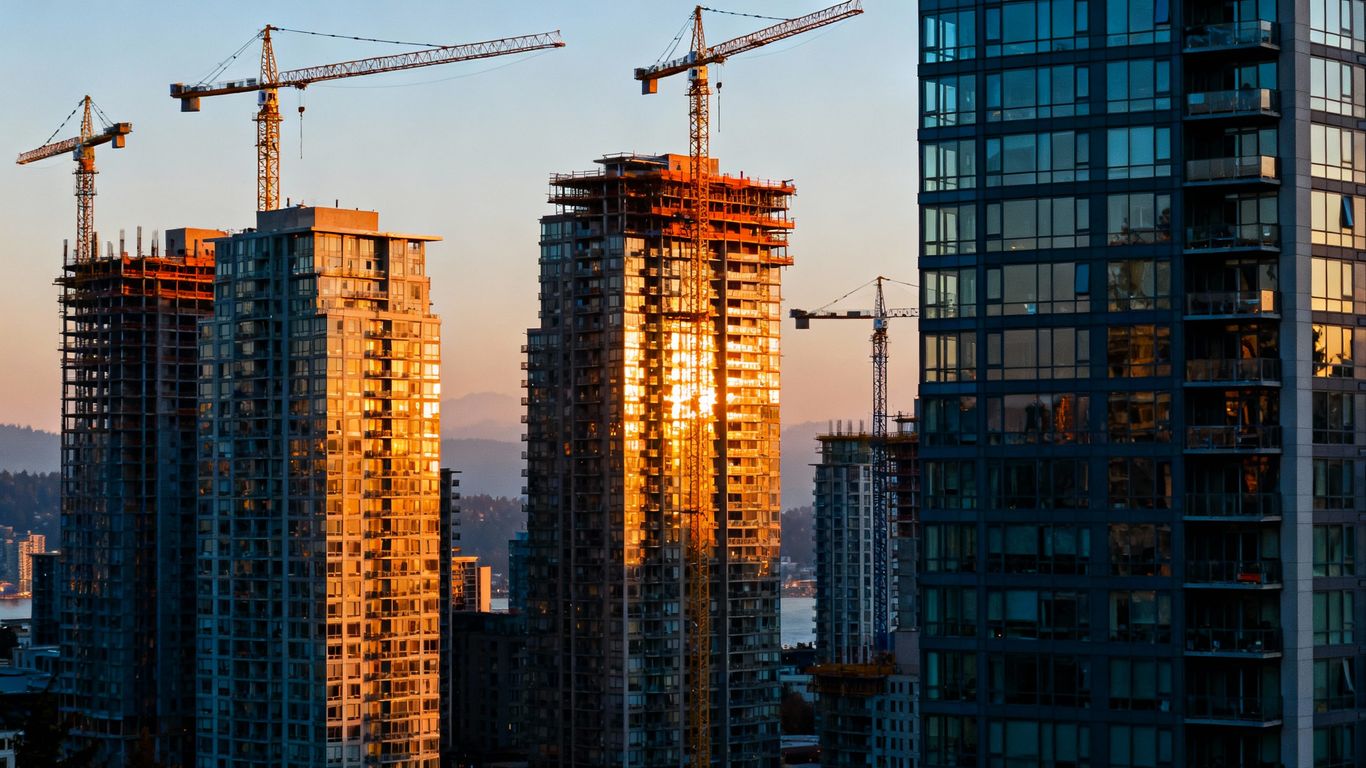
Metro Vancouver's rental housing market is experiencing a significant surge, with the largest number of purpose-built rental units ever recorded either under construction or in the planning stages. This "renaissance" in rental construction, as described by Rennie & Associates Realty Ltd., is a response to decades of underbuilding and is being fueled by favorable financing options and a shift in developer focus.
Key Takeaways
- Metro Vancouver's rental pipeline is at a record high, with over 18,000 units under construction and more than 75,000 in planning.
- Government incentives and less favorable economics for ownership projects are driving this boom.
- Despite the surge, rents have softened, creating a tenant-friendly market with increased choice and incentives.
- The long-term outlook suggests a more balanced market as supply catches up with demand.
A Record Pipeline For Rental Homes
According to Rennie's fall 2025 landscape report, the region had over 18,000 purpose-built market rental homes under construction and an additional 75,000 units in various stages of planning by the end of the second quarter. When non-market rentals are included, the number under construction approaches 23,000 units. If these projects proceed as planned, a significant portion could be delivered by 2030 and 2031. Even accounting for potential project cancellations, a substantial number of future rental units are expected.
Factors Driving The Rental Renaissance
Several factors are contributing to this surge in rental construction. Lower-cost financing and insurance through Canada Mortgage and Housing Corporation (CMHC) programs have significantly boosted rental supply. Concurrently, the economics for ownership and multi-family strata projects have become less attractive, prompting some developers to pivot towards building rental properties. This marks a significant shift, as Metro Vancouver has seen very little rental construction over the past three decades, necessitating a period of catching up.
Current Market Conditions And Future Outlook
The current abundance of new rental supply has led to a tenant-friendly market. Developers completing new buildings are offering incentives like free rent and discounted packages to attract tenants. Rental rates across Metro Vancouver have decreased over the past 18 months and are expected to continue this trend through the next year. Rents may begin to rise again around 2027, but likely at a more moderate pace than in previous years.
The Rennie report also notes that demand is softening due to negative national GDP growth, reduced interprovincial migration, and a decrease in the non-permanent resident population. This "perfect storm" benefits tenants with more choices and lower rents. However, the market is anticipated to move towards greater balance as population growth stabilizes, supply growth moderates, and a more consistent, albeit reduced, pipeline of new rentals emerges.